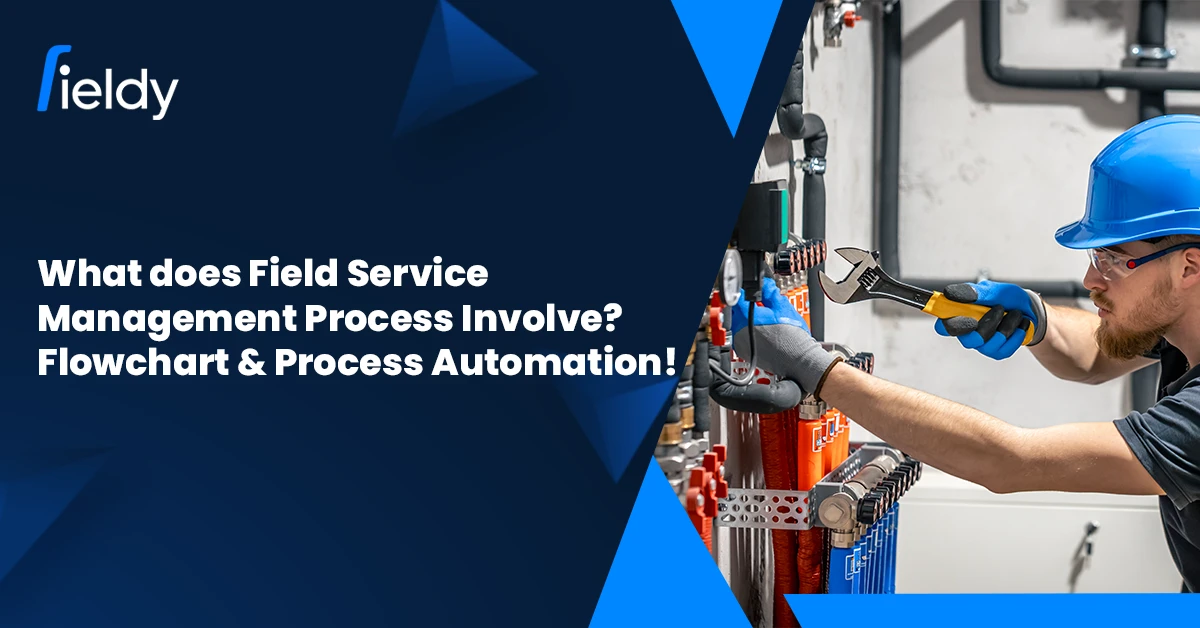
What Does Field Service Management Process Involve? Explained with Flowchart & Process Automation for 2026

๐ŸŒŸ Introduction

Speed,โ€‹โ€โ€‹โ€Œโ€โ€‹โ€โ€Œโ€‹โ€โ€‹โ€Œโ€โ€‹โ€โ€Œ accuracy, and customer experience have been the main factors that decide the success of a business in the service industry, which is highly competitive in nature. Field service management (FSM) is a solution that helps companies to have a methodical and consistent approach in their operations, going from job creation and technician scheduling to service execution and billing.

Basically, field service management (FSM) is about the efficient coordination of resources, equipment, and staff that are either to be sent out or are already outside the office. In any case, whether it is HVAC servicing, elevator maintenance, pest control, or equipment repair, a well-defined workflow is what guarantees smooth operations, less downtime, and, most importantly, customer satisfaction to the highest degree.

Today, companies have chosen to use such an automation-driven FSM platform as Fieldy to effectively handle their entire process steps, and thus, the service department is at the same time digitally available and data-driven. This software enables the community that is involved in field service to enjoy a fully digital, transparent, and data-driven ecosystem, without any hassle of manual โ€‹โ€โ€‹โ€Œโ€โ€‹โ€โ€Œโ€‹โ€โ€‹โ€Œโ€โ€‹โ€โ€Œcoordination.

๐Ÿ”„ Understanding the Field Service Management Process Flow

Aโ€‹โ€โ€‹โ€Œโ€โ€‹โ€โ€Œโ€‹โ€โ€‹โ€Œโ€โ€‹โ€โ€Œ field service process flow is the series of events that are closely linked and control the movement of a service request through various levels of the organization until the final closure. It also involves recording the request, scheduling the work, dispatching, service performing, completing, and giving feedback.

This process, when rightly fitted, is the guarantee that technicians, stock, and customer communications are operating in harmony to the highest โ€‹โ€โ€‹โ€Œโ€โ€‹โ€โ€Œโ€‹โ€โ€‹โ€Œโ€โ€‹โ€โ€Œdegree.

For example:

  • In HVAC services, when a maintenance request comes through the portal, the HVAC FSM software automatically assigns a qualified technician nearby. 
  • In elevator maintenance, service history and parts inventory are fetched in real-time to ensure compliance via elevator maintenance software. 
  • In pest control, route optimization helps technicians cover multiple locations efficiently in a day via pest control software.

Such efficiency is powered by modern Field Service Scheduling Software, which automates job allocation, route planning, and time tracking, the foundation of any effective FSM process.

๐Ÿ“Š Field Service Process Flowchart โ€“ Step-by-Step

Flowchart Steps:

Step 1๏ธโƒฃ: Service Request Initiation โ†’ Requests can be from field service CRM software, websites, or customer calls and are automatically logged into the FSM system.

Step 2๏ธโƒฃ: Job Creation & Assignment โ†’ Based on a technician’s abilities, availability, and location, the system self-assigns the work to him/her.

Step 3๏ธโƒฃ: Dispatch & Route Optimization โ†’ With the help of the system, the technician’s route is optimized for the least amount of time and fuel use.

Step 4๏ธโƒฃ: On-Site Service Execution โ†’ Technicians, through an FSM mobile app, can keep track of parts used, job time, and service notes even if they are in offline mode.

Step 5๏ธโƒฃ: Job Completion & Quality Check โ†’ Supervisors assess the work through their digital platform; customers sign job cards electronically.

Step 6๏ธโƒฃ: Invoice & Payment โ†’ Automatically, invoices are created by the FSM platform and are integration-ready with the field service invoicing software.

Step 7๏ธโƒฃ: Customer Feedback Loop โ†’ Instantly, customer satisfaction is gauged through post-service surveys.

Step 8๏ธโƒฃ: Reporting & Analytics โ†’ With the help of digital tools, management can see performance trends, bottlenecks, and find new ways of speeding up their work.

By combining all these stages, the field service process forms a closed-loop workflow that links every operational level, thus producing an ecosystem where efficiency can not only be gauged but also โ€‹โ€โ€‹โ€Œโ€โ€‹โ€โ€Œโ€‹โ€โ€‹โ€Œโ€โ€‹โ€โ€Œincreased.

CTA Banner 1

๐Ÿค– Field Service Workflow Process Automation โ€“ The Next Evolution

Fieldโ€‹โ€โ€‹โ€Œโ€โ€‹โ€โ€Œโ€‹โ€โ€‹โ€Œโ€โ€‹โ€โ€Œ service workflow process automation is essentially the next level of this well-organized flow, where digital triggers and AI-driven workflows replace the repetitive manual steps.

FSM automation does not depend on human intervention at every stage, thus it guarantees that the next work will be started automatically as soon as one is finished. Therefore, this error-free handoff, which is done at a great speed, allows the response time to be doubled.

Here is a short description of how the Fieldy’s Field Service Management Software is used to automate the most urgent workflows:

  • โš™๏ธ Job Scheduling & Dispatch: AI automatically performs the job allocation based on the technician’s availability and skill match. 
  • ๐Ÿ“… AMC & Contract Renewals: Fieldy is auto-generating renewal reminders, quotes, and invoices. 
  • ๐Ÿ“ข Notifications & Communication: Support technicians, customers, and other stakeholders are kept informed through regular SMS and email alerts, which are sent out automatically. 
  • ๐Ÿ“ˆย Reporting & Analytics: Fieldyโ€™s smart dashboards display operational indicators and SLA adherence in an easy-to-understand manner. 
  • ๐Ÿ“ฆ Inventory & Asset Tracking: The predictive alerts enable the team to be updated about the low stock or the need for maintenance long before it is able to affect the โ€‹โ€โ€‹โ€Œโ€โ€‹โ€โ€Œโ€‹โ€โ€‹โ€Œโ€โ€‹โ€โ€Œservice.

Benefits of Automating Field Service Business Processes

Fieldโ€‹โ€โ€‹โ€Œโ€โ€‹โ€โ€Œโ€‹โ€โ€‹โ€Œโ€โ€‹โ€โ€Œ service process automation leads to significant business outcomes that extend beyond just time savings.

1. Higher Productivity ๐Ÿ’ผ

Automation eliminates the need for manual coordination between dispatchers and field teams, thus technicians can concentrate on completing more jobs in less time.

2. Reduced Operational Costs ๐Ÿ’ฐ

Efficient scheduling and route planning cut the time spent on the road, the consumption of the vehicle, and also the mistakes made by the administrative staff, thus a considerable amount of money is saved yearly.

3. Faster Response Timeโšก

Real-time dispatch and immediate mobile updates enable customer issues to be solved in less time, thus increasing satisfaction and brand trust are increased.

4. Improved Customer Experience ๐ŸŒŸ

Through the service process, customers receive automated updates, digital communication, and live technician tracking, which, as a result, gives them confidence and clarity.

5. Data-Driven Decision-Making ๐Ÿ“Š

By implementing digital process automation in FSM along with AI-powered analytics and forecasting, businesses can pinpoint service trends, technician performance, and future โ€‹โ€โ€‹โ€Œโ€โ€‹โ€โ€Œโ€‹โ€โ€‹โ€Œโ€โ€‹โ€โ€Œdemand.

๐Ÿง  How Fieldy Streamlines the Entire FSM Workflow

Fieldyโ€‹โ€โ€‹โ€Œโ€โ€‹โ€โ€Œโ€‹โ€โ€‹โ€Œโ€โ€‹โ€โ€Œ is a platform for field service management that goes beyond the ordinary; it is an intelligent automation system that integrates people, processes, and performance data into a single dashboard.

๐Ÿ–ฅ๏ธ Centralized Dashboard

Fieldy, if seen from a single window, will be the view of the whole operation conducted by your company, ranging from service requests to billing. Managers have the power to delegate work, keep track of the progress, as well as create invoices, and all this can be done just from one screen.

๐Ÿงฉ No-Code Workflow Builder

Each business has its own distinctive features. The no-code automation engine of Fieldy enables you to create the flow of work in your business without the need for any technical knowledge, and it will always be compatible with the needs of your industry.

๐Ÿ“ฑ Mobile-First Interface

Theoretically, technicians can know about the jobs, take pictures, log updates, and get the customerโ€™s signature even if they are not connected to the internet. When they go online, all the data is updated automatically to the central dashboard.

๐ŸŽฏ Role-Based Access & Live Tracking

The different users get different levels of access. Thus, administrators, managers, as well as technicians are assured of transparency and security in their operations on a daily basis.

๐Ÿ”Œ Seamless Integrations

Fieldy is a friendly system that works in harmony with other CRM systems, invoicing tools, and analytics dashboards, thus delivering a flawless end-to-end experience to the โ€‹โ€โ€‹โ€Œโ€โ€‹โ€โ€Œโ€‹โ€โ€‹โ€Œโ€โ€‹โ€โ€Œuser.

๐Ÿ”ฎ Conclusion

The Future of FSM Process Flow in 2026

Artificialโ€‹โ€โ€‹โ€Œโ€โ€‹โ€โ€Œโ€‹โ€โ€‹โ€Œโ€โ€‹โ€โ€Œ automation and data-led operations are the keys to the future of field service management. Companies that have digitally transformed their FSM processes are reaping the benefits of quicker response times, reduced costs, and enhanced service quality.

By 2026 and even later, the winning combination will be automation and an FSM software, as evidenced by AI-driven scheduling, predictive maintenance, and real-time analytics being gradually accepted as standards.

Fieldy is the major player in this change, thus allowing firms to effectively, openly, and quickly control their entire field โ€‹โ€โ€‹โ€Œโ€โ€‹โ€โ€Œโ€‹โ€โ€‹โ€Œโ€โ€‹โ€โ€Œoperations.

Ready to streamline your entire field service workflow? Discover how Fieldyโ€™s Field Service Management Software can help you automate every step โ€” from booking to billing.

CTA Banner 2

What Is Digital Process Automation for Field Service in 2026? How Fieldy Is Powering the Future of FSM Efficiency

Introduction ๐Ÿš€๐Ÿ“˜

The Evolution of Digital Process Automation in Field Service ๐Ÿ”„๐Ÿค–

In a world where field operations evolve rapidly, the question of whether to be efficient is no longer at hand, but it is a necessity. Digital Process Automation for Field Service (DPA) is changing the way companies handle scheduling, dispatching, and customer communication. DPA, combined with AI, machine learning, and analytics, changes the banal nature of the work into intelligent, autonomous workflows.

At that time, the only automation that was possible in field service was just to remind of tasks or to plan routes. However, today it’s an intelligent workflow automation that adjusts, forecasts, and keeps on enhancing its performance continuously. The transition to an automation-first community is the effect of this change in ecosystems like HVAC, pest control, elevator maintenance, and security systems, where the capability to react instantly determines whether one wins or loses.

Leading this transformation is Fieldy, a robust Field Service Management (FSM) software built for 2026 and beyond. With its AI-powered digital process automation, Fieldy empowers field teams to do field service operations incorporating best practices to operate smarter, faster, and with greater visibility across every stage of the service journey.

The Core Pillars of Digital Process Automation in Field Service ๐Ÿ›๏ธโš™๏ธ

Real-Time Technician Tracking ๐Ÿ“๐Ÿ‘จโ€๐Ÿ”ง

Modern service teams need visibility on the move. DPA integrates automated dispatch and real-time live location tracking, ensuring that managers always know where their technicians are, which jobs are in progress, and how efficiently routes are being executed. This minimizes idle time and maximizes first-time fix rates.

Smart Job Scheduling ๐Ÿง ๐Ÿ“†

Using AI-driven logic, smart scheduling optimizes job allocation based on technician skills, proximity, and availability. With advanced Field Service Scheduling Software, dispatchers can eliminate guesswork, reduce travel time, and keep service delivery on track.

Contract & AMC Management Automation ๐Ÿ“œ๐Ÿ”

Service contracts and maintenance schedules over a year are most likely to be manually handled with errors, and also, the renewals may be forgotten. DPA takes care of these renewals, reminders, and invoice generations automaticallyโ€”thus the administrative work is lessened and the revenue cycles become more stable and of the same value are ensured.

Asset & Inventory Automation ๐Ÿ› ๏ธ๐Ÿ“ฆ

It is now possible to have predictive restocking, asset monitoring, and condition-based maintenance through the integration of different systems. Thanks to the automation, the field teams are always equipped with the necessary spare parts, and the time during which the equipment is not working is reduced to a great โ€‹โ€โ€‹โ€Œโ€โ€‹โ€โ€Œโ€‹โ€โ€‹โ€Œโ€โ€‹โ€โ€Œextent.

Customer Experience Automation ๐Ÿ’ฌโœจ

Automating updates, reminders, and post-service surveys ensures customers stay informed and engaged throughout their service journey. Using customer experience software, businesses can create seamless, transparent interactions that improve satisfaction and retention.

Benefits of Digital Process Automation for Field Service Businesses ๐ŸŽฏ๐Ÿ“ˆ

Introducingโ€‹โ€โ€‹โ€Œโ€โ€‹โ€โ€Œโ€‹โ€โ€‹โ€Œโ€โ€‹โ€โ€Œ digital process automation in the field service department is more than just a change of technology. It substantially transforms the operations. The measurable effects of the change are as follows:

1. Reduced Operational Overheads ๐Ÿ’ธ๐Ÿงน

Through the removal of repetitive manual work and double data entry, the teams can save several hours per week. Digital process automation (DPA) is a perfect solution for such a scenario, as it helps the company automate dispatching, invoicing, and reporting processes with very little intervention from staff.

2. Faster Service Delivery โšก๐Ÿšš

The use of AI in route planning, coupled with smart scheduling, enables field workers to get to customers in the shortest time possible. As a result, there is a faster service turnaround, and SLA compliance โ€‹โ€โ€‹โ€Œโ€โ€‹โ€โ€Œโ€‹โ€โ€‹โ€Œโ€โ€‹โ€โ€Œimproves.

3. Enhanced Employee Productivity ๐Ÿง‘โ€๐Ÿคโ€๐Ÿง‘๐Ÿ”ง

Automation enables managers to track technician performance, job completion rates, and efficiency in real time. Read more about ways to empower your team in how to improve employee productivity in field service.

4. Consistent Service Quality โญ๐Ÿ“

Service quality is maintained at a high level through the use of automated workflows that guarantee the same standards and compliance requirements are met in every job, whether it is by a different technician or in a different location.

5. Data-Driven Decision Making ๐Ÿ“Š๐Ÿ”

Organizations can see their KPIs, identify the areas of their operations that are causing delays, and make better decisions regarding their business using the up-to-the-minute data, thanks to the embedded analytics โ€‹โ€โ€‹โ€Œโ€โ€‹โ€โ€Œโ€‹โ€โ€‹โ€Œโ€โ€‹โ€โ€Œdashboards.

CTA Banner 1

How Fieldyโ€™s FSM Software Enables Digital Process Automation ๐Ÿ› ๏ธ๐Ÿค–

Fieldyโ€™s Field Service Management software is designed to automate every aspect of the service lifecycle, from scheduling to invoicing, without requiring complex IT setups.

End-to-End Workflow Automation ๐Ÿ”—๐Ÿช„

Fieldy organizes the customer journey in a very efficient way: the process goes automatically from lead capture โ†’ job creation โ†’ scheduling โ†’ execution โ†’ invoicing. Every step is automatically linked; thus, the delays and miscommunications are minimized.

No-Code Workflow Builder ๐Ÿงฉ๐Ÿ–ฑ๏ธ

Fieldyโ€™s no-code automation builder is a versatile tool in the hands of business managers, enabling them to craft and launch automated workflows that fit the requirements of their business without needing a single bit of technical knowledge.

Integrated CRM ๐Ÿค๐Ÿ“ฒ

Thanks to Fieldy’s integrated CRM, the communication with customers becomes a breeze. Automatic reminders, feedback forms, and service follow-ups are carried out without any manual intervention.

Multi-Location Management ๐ŸŒ๐Ÿข

If a business is running through various branches, Fieldy lets them keep an eye on the operations in a single place, giving them the power to maintain the same level of quality and control on a large scale.

Real-Time Data Sync ๐Ÿ”„๐Ÿ›ฐ๏ธ

Technicians, customers, and back-office teams are all updating their information, and these updates are visible to everyone in real-time. Hence, the managers have at their disposal the most current and accurate data, which is instrumental in speeding up their responses and facilitating their decision-making โ€‹โ€โ€‹โ€Œโ€โ€‹โ€โ€Œโ€‹โ€โ€‹โ€Œโ€โ€‹โ€โ€Œprocesses.

Digital Process Automation Trends in 2026 ๐Ÿ”ฎ๐Ÿ“ก

Oneโ€‹โ€โ€‹โ€Œโ€โ€‹โ€โ€Œโ€‹โ€โ€‹โ€Œโ€โ€‹โ€โ€Œ of the most significant effects that digital process automation has on the field service industry is the series of innovations that are continuously being brought about.

AI-Powered Predictive Maintenance ๐Ÿค–๐Ÿ”ง

AI algorithms analyze the situation and figure out when the equipment is going to break, even if it has not happened yet, thus allowing the management to schedule preventive maintenance and at the same time lessen the occurrence of downtime.

IoT Integration for Asset Health Monitoring ๐Ÿ“ก๐Ÿญ

Connected sensors collect live data from the equipment and send it to the FSM systems, giving continuous and updated reports on the condition and performance of the equipment.

Mobile-First FSM Automation ๐Ÿ“ฑโš™๏ธ

Field workers who have in their hands a mobile FSM app are capable of obtaining the information of the job, the customer history, and the checklists at the site, thus they can deliver the service in a much faster way and without committing any errors.

Self-Service Customer Portals ๐Ÿง‘โ€๐Ÿ’ป๐Ÿ“ฌ

Customers, through online portals, are now able to track the arrival of the technician, approve the estimates, or reschedule the appointments without the need for a back office.

Digital Twins & Smart Analytics ๐Ÿงฟ๐Ÿ“ˆ

The digital twins serve as a medium to help the managers adapt to the new methods of working or foresee the results without actually applying them by simulating the real-world โ€‹โ€โ€‹โ€Œโ€โ€‹โ€โ€Œโ€‹โ€โ€‹โ€Œโ€โ€‹โ€โ€Œenvironments.

Learn more about optimizing your operations in field service optimization & route optimization in FSM.

Why Fieldy Is the Future of Automated Field Service in 2026 ๐Ÿš€๐Ÿ› ๏ธ

Fieldyโ€‹โ€โ€‹โ€Œโ€โ€‹โ€โ€Œโ€‹โ€โ€‹โ€Œโ€โ€‹โ€โ€Œ is the digital process automation platform that is most aligned with the needs of businesses, which are looking for agility and precision in their operations, especially in the case of field service.

  • Scalable & Mobile-First๐Ÿ—๏ธ๐Ÿ“ฑ: Designed to work smoothly with complicated, multi-location kinds of operations. 
  • Automation-First Architecture๐Ÿค–๐Ÿงฌ: Workflow efficiency is enhanced by the system, which frees the employees from mundane tasks. 
  • Industry-Proven Solutions๐Ÿ†๐Ÿ”ง: Fieldy has been a reliable partner in different industries like HVAC, pest control, elevator maintenance, and security systems. 
  • Smart Insights๐Ÿง ๐Ÿ“Š: The embedded analytics provide openness to the managers, enabling them to make the right decisions based on actual data. 
  • Flexible Pricing๐Ÿ’ณ๐Ÿ”“: An affordable, no-lock-in type of plan that is good for all levels of users is what Fieldy provides, thus making enterprise-grade automation accessible to โ€‹โ€โ€‹โ€Œโ€โ€‹โ€โ€Œโ€‹โ€โ€‹โ€Œโ€โ€‹โ€โ€Œall.

Final Thoughts ๐Ÿโœจ

The year 2026 marks a new chapter for field service businesses. With Digital Process Automation for Field Service, companies can move beyond manual processes toward a future of intelligent, data-driven operations.

Fieldy empowers organizations to automate, scale, and deliver exceptional customer experiences while minimizing costs and errors. Also, gain insights on Fieldy by learning how to measure their digital customer experience as well.

Ready to transform your field operations? Schedule a Free Demo with Fieldy and see automation in action.

CTA Banner 2

Field Service Management Market Growth and Trends: Predictions for 2026โ€“2030 and Future Developments

What to Expect from the Global Field Service Management Market by 2026 ๐ŸŒ๐Ÿ“ˆ

The field service management market worldwide has become one of the fastest-changing parts of enterprise technology. Industries such as HVAC, utilities, telecom, and manufacturing are expanding their service operations, increasing the need for cloud-based, connected field service management solutions.

According to various industry reports, including those from Persistence Market Research and Mordor Intelligence, the field service management market was valued at approximately USD 4.5 billion in 2024. The market is experiencing a yearly growth rate of about 12% to 13%. Experts anticipate faster growth in 2026 as companies adopt digital solutions like a field service management appย to address staff shortages and enhance their customer service.

Key Growth Drivers for 2026 โšก๐Ÿš€

  • Greater use of tools for managing mobile workforces ๐Ÿ“ฑ๐Ÿ‘ทโ€โ™‚๏ธ

  • Growing popularity of IoT-based predictive maintenance ๐Ÿ“ก๐Ÿ”ง

  • Shift to FSM software hosted on the cloud โ˜๏ธ๐Ÿ› ๏ธ

  • Increased use of AI-powered automation ๐Ÿค–โš™๏ธ

North America leads with the biggest market share, estimated at about 30 to 35 percent. The Asia-Pacific region, on the other hand, is predicted to show the quickest growth. Growing service industries and efforts toward digital transformation are major reasons for this.

The global field service management market divides into two main categories: software and services. The software category, which features tools like Field Service Management Software, is expected to grow faster than services. This growth connects to the increasing use of SaaS models, which are known for providing flexibility, being scalable, and offering real-time data insights.

Predicted Market Size and Forecast for 2026 to 2030 ๐Ÿ“Š๐Ÿ“†

Looking ahead to 2026, predictions show the field service management software market will keep growing all the way to 2027. Analysts expect it to grow at an annual rate of about 12.5%. By 2026, the market could hit somewhere between USD 5.6 billion and USD 5.7 billion. By 2026, forecasts put that number between USD 6.3 billion and USD 6.4 billion. By 2027, it might touch USD 7.0 billion to USD 7.2 billion.ย 

This rapid growth is happening because of the rise of digital transformation and a global trend shifting toward service-focused business models. The most promising areas of opportunity involve smaller companies and medium-sized businesses adopting affordable field service management tools, sectors such as telecommunications, utilities, transport, and manufacturing. Mobile-first FSM platforms are growing, allowing real-time updates on technicians and customer notifications.

As software keeps expanding faster than services, SaaS platforms like Fieldy stand out. They offer flexibility, AI-based analysis, and simple integration with current systems, putting them in a strong position to gain more market.

Regional Market Insights and Distribution (UK, India, Latin America, and Worldwide) ๐ŸŒŽ๐Ÿ—บ๏ธ

United Kingdom and Europe ๐Ÿ‡ฌ๐Ÿ‡ง๐Ÿ‡ช๐Ÿ‡บ

The UK field service management market, along with Europe’s, is growing. Strict compliance rules, sustainability goals, and advancements in smart asset maintenance within industries like energy and utilities are driving this growth. Companies rely on FSM platforms to maintain digital compliance and ensure data transparency, which are essential to stay competitive over time.

India ๐Ÿ‡ฎ๐Ÿ‡ณ๐Ÿ“ฒ

India’s field service management market is growing faster than many others worldwide. The rapid spread of digital technology, widespread smartphone use, and the growth of small service-oriented businesses are pushing up demand. Sectors like HVAC, security systems, and pest control are choosing cheaper FSM software to organize technician schedules and boost first-attempt repair rates.

Latin America ๐ŸŒŽโšก

The field service management market in Latin America deals with obstacles such as unstable infrastructure and unpredictable connectivity. However, it is gaining strength in sectors like telecom and energy. The need for cloud-based and mobile FSM tools is likely to grow fast as companies move toward digital-first service approaches.

Worldwide Outlook ๐ŸŒ๐Ÿ“Š

On a global scale, North America leads the market, while the Asia-Pacific region, particularly countries like India and Southeast Asia, is seeing the fastest growth rate of around 15 percent as per Mordor Intelligence. Factors like workforce dynamics, changing client demands, and access to cloud systems have a key influence on market expansion. โฌ‡๏ธโฌ‡๏ธโฌ‡๏ธ

CTA Banner 1

Emerging FSM Trends in 2026โ€“2030 ๐Ÿ”ฎ๐Ÿฆพ

New trends are beginning to outline the direction of the field service management market over the upcoming couple of years.

Cloud-Based FSM Leading the Way โ˜๏ธ๐Ÿš€

Companies prefer cloud deployment because it costs less to set up and can grow more. MarketsandMarkets predicts that by 2027, more than 70% of new FSM setups will use cloud technology.

AI Joins Predictive Maintenance ๐Ÿค–๐Ÿ”

Artificial intelligence works with IoT data to perform predictive maintenance. This approach helps in cutting downtime and improving asset lifespan.

Shift Toward Subscription Services ๐Ÿ”๐Ÿ’ผ

Businesses are moving away from one-time services. They now use “Equipment-as-a-Service” plans with contracts and AMC-based revenue models.

Enabling a Mobile Workforce ๐Ÿ“ฑ๐Ÿšš

Technicians now rely on mobile FSM tools and apps. These allow them to check service records, update tasks, and stay in touch. Software like Field Service Scheduling Software plays a big role in driving this change.

Using Data to Improve Experiences & Performance ๐Ÿ“ˆโญ

FSM analytics combine customer feedback and employee performance checks to find new ways to get better results. Discover how tracking employee productivity plays a role in improving operational success.

Field Service Management Market & Leading Companies ๐Ÿข๐ŸŒŸ

The FSM market is becoming more competitive as both big companies and smaller ones fight to lead the space.

Big Companies ๐Ÿ›๏ธ๐Ÿ’ผ: SAP, Oracle, Salesforce, Microsoft, and IFS take the lead in large-scale FSM projects. They offer strong connections with ERP and CRM tools.

Focused Platforms ๐Ÿงฉ๐Ÿ“ฒ: Solutions aimed at mid-sized and small businesses, such as Jobber, ServiceMax, and Fieldy, are becoming popular because they are easy to use, budget-friendly, and adaptable.

Mordor Intelligence stated that the software sector accounted for 61% of the overall market share in 2024. This share is likely to grow as companies choose cloud-based services instead of older service-based options.

To learn about how customer experience matters in this industry, check out the article “What Makes a Great Customer Experience in Field Service for 2026?

What This Means for Field Service Companies and How They Can Prepare for 2026โ€“2030 ๐Ÿง ๐Ÿš€

The global field service management market keeps growing, so businesses need to keep up with changing customer demands and new technology.

Here are ways companies can stay ahead:

Focus on Growth & Cloud-Based Tools โ˜๏ธ๐Ÿ“ˆ

Use cloud FSM systems designed to grow with your team and customer needs. Read “What is Field Service Management Software” to learn the basics.

Connect Work & Asset Management ๐Ÿ”—๐Ÿท๏ธ

Choose tools that bring together data for orders, assets, and customers in one place. Check out “What is Asset Management Software? What are the Advantages of It?” to learn more.

Use Predictive Insights ๐Ÿ”ฎ๐Ÿ“Š

Modern FSM platforms now include AI to help plan demand, organize technician schedules, and predict maintenance needs.

Improve Customer Experience ๐Ÿ˜Šโšก

Stand out by responding, offering clear tracking, and using automated updates. These are important ways to stay ahead in competitive markets.

Focus on New Markets ๐ŸŒ๐Ÿ“‰โ†’๐Ÿ“ˆ

Expanding into growing regions such as India and Latin America gives service businesses a big chance to grow over the next few years.

Businesses that start using integrated FSM tools like GetFieldy can see clear improvements in saving costs, boosting technician performance, and keeping customers loyal. This helps them remain competitive in a market growing more than 12% each year.

Final Thoughts ๐Ÿโœจ

The field service management market continues to grow and is expected to go beyond USD 7 billion by 2027. Rising demand worldwide is pushing field service companies to adopt digital upgrades, mobile technology, and improved customer service to stay competitive.

Over the next two years, advancements in AI, IoT, and cloud technology will become even more prominent. Solutions like Fieldy will play a key role in shaping how businesses reach top-level efficiency and keep customers happy.

Discover how Fieldyโ€™s Field Service Management Software can expand your operations and help you prepare for the booming 2026โ€“30 market. โฌ‡๏ธโฌ‡๏ธโฌ‡๏ธ

CTA Banner 2

What are Field Service Operations? What are the Best Practices in Field Service Operations in 2026?

Introduction โœจ๐Ÿ“˜

Why Field Service Operations Are Important for FSM? ๐Ÿ› ๏ธ๐Ÿšš

Fieldโ€‹โ€โ€‹โ€Œโ€โ€‹โ€โ€Œโ€‹โ€โ€‹โ€Œโ€โ€‹โ€โ€Œ service activities are the main leverage for the delivery of robust business services in a customer-centric field service environment. They take care of the management of technicians, tools, vehicles, and the execution of service tasks at different customer locations. Essentially, the target is to accomplish every task and make the customers happy.

Earlier, handling these operations was done through spreadsheets, phone calls, and a lot of manual work. At present, technology has made this very easy. Field Service Management solutions are a major source of change in the manner of work. These modern FSM instruments enable companies to efficiently handle scheduling, dispatching, tracking, and customer communication through the use of automation and mobile โ€‹โ€โ€‹โ€Œโ€โ€‹โ€โ€Œโ€‹โ€โ€‹โ€Œโ€โ€‹โ€โ€Œtechnologies.

By 2026, businesses will need to adopt digital technologies to stay ahead in field service operations. Companies that use automation, mobile tech, and AI tools will offer faster, more efficient services that prioritize keeping customers happy. Fieldyโ€™s field service management software has a significant role in this transformation. It helps service providers streamline workflows, cut costs, and keep customers satisfied.

What does Field Service Operations Management mean? ๐Ÿงญ๐Ÿ“

Field service operations management means organizing employees, tasks, and tools to deliver efficient services outside the office. It ensures workers arrive on time, customers stay informed, and everything runs smoothly.

Key parts of managing field service operations include: โš™๏ธ๐Ÿ—๏ธ

Job Scheduling and Dispatching:๐Ÿ—“๏ธโžก๏ธ๐Ÿ‘จโ€๐Ÿ”ง

Assigning tasks to the right people helps work run smoothly. Field service scheduling software can save time, reduce manual efforts, and prevent schedule mix-ups.

Inventoryโ€‹โ€โ€‹โ€Œโ€โ€‹โ€โ€Œโ€‹โ€โ€‹โ€Œโ€โ€‹โ€โ€Œ and Asset Tracking: ๐Ÿ“ฆ๐Ÿ”

Monitoring of parts and machinery can minimize the situations of waiting and increase the savings of money.

Real-Time Communication: ๐Ÿ’ฌโšก

The communication that is made clearly between the office and the field team keeps everybody informed about the work and the progress.

Fleet, Field Service, and Route Optimization: ๐Ÿš๐Ÿ—บ๏ธ

With the help of GPS tracking and route planning tools, managers have the ability to make more efficient routes and reduce fuel expenses. Consequently, the completion of the work is accelerated โ€‹โ€โ€‹โ€Œโ€โ€‹โ€โ€Œโ€‹โ€โ€‹โ€Œโ€โ€‹โ€โ€Œtoo.

Customer Experience Management: ๐Ÿ˜Š๐Ÿ“ฒ

Customer experience management software can track how satisfied customers feel, gather their feedback, and improve relationships with them.

Fieldyโ€™s FSM platform works as a central tool that brings together scheduling, tracking, analytics, and communication in one simple and user-friendly system.

Core Components of Effective Field Service Operations ๐Ÿ”‘๐Ÿ“Š

Businesses must concentrate on key elements to achieve effective operations in field services. Proper field service management keeps every part of the service process connected, visible, and functioning smoothly.

Handling Work Orders: ๐Ÿ“๐Ÿ“Œ

Streamlining the creation, assignment, and tracking of work orders reduces mistakes and waste. Work order management software allows teams to log, organize, and complete service requests in a clear and structured manner.

Fleet Operations and Route Planning: ๐Ÿš›๐Ÿ›ฃ๏ธ

Creating smarter routes saves money and time. It also helps cut down on delays. Managing fleets allows technicians to spend more time assisting customers instead of wasting it driving around.

Technician Tracking: ๐Ÿ‘ทโ€โ™‚๏ธ๐Ÿ“ก

Tracking where everyone is proves important. A field staff tracking app lets managers view real-time locations of technicians. This helps them assign urgent tasks and inform customers about ongoing updates.

Customer Experience Tools: โญ๐Ÿ’ฌ

Digital tools with features like job updates and feedback surveys improve customer satisfaction. They create trust by keeping things open and straightforward.

Asset Management: ๐Ÿท๏ธ๐Ÿ—ƒ๏ธ

Asset management software can handle service histories, warranties, and maintenance schedules, simplifying the management of assets. They bring all vital details together in one convenient spot.

CTA Banner 1

Top 7 Best Practices in Field Service Operations (2026 Edition) ๐Ÿš€๐Ÿ“…

By 2026, boosting productivity and keeping clients happy will demand using tried-and-tested strategies in field service. Below are methods that successful companies use to stay ahead:

Rely on Automation to Schedule and Dispatch ๐Ÿค–๐Ÿ—“๏ธ

Automation reduces repetitive tasks and increases efficiency. It matches technicians with jobs based on skills and location. Field service scheduling software improves response time and ensures smooth daily operations.

Provide Mobile FSM Apps to Technicians ๐Ÿ“ฑ๐Ÿ‘จโ€๐Ÿ”ง

Equip workers with field service management mobile apps that offer job details, routes, and digital tools. These user-friendly tools make it faster to update information and deliver services more efficiently.

Startโ€‹โ€โ€‹โ€Œโ€โ€‹โ€โ€Œโ€‹โ€โ€‹โ€Œโ€โ€‹โ€โ€Œ Predictive Maintenance ๐Ÿ”ง๐Ÿ“ˆ

By utilizing service records along with information gathered from IoT sensors, companies are able to forecast the potential breakdown of their machinery. This allows them to fix the issues and thus reduce the time of the machine being out of service.

Plan Better Routes ๐Ÿงญ๐Ÿš

Advanced routing solutions powered by AI, along with GPS technology, enable the field staff to take the most efficient routes. As a result, they can save on the cost of fuel and also reach their destination in less time.

Use Tools to Gather Customer Feedback ๐Ÿ“โญ

Through various methods such as online reviews and after-service surveys, companies collect feedback from customers. This information helps them to fix the issues in the areas where they are lacking, and at the same time, they can evaluate customer satisfaction.

Keep Track of Inventory and Supplies ๐Ÿ“ฆ๐Ÿ“Š

Being constantly aware of what is in stock is a way of avoiding the situation where you run out of indispensable tools or parts. In this way, workers are assured that they will have what they need at the locations of their jobs.

Base Decisions on Analytics ๐Ÿ“‰๐Ÿ“Š

By analyzing data gathered from the field, businesses can identify the changes in productivity of their teams, customer behavior, and expenses. The result of this is the continuous growth and improvement of the โ€‹โ€โ€‹โ€Œโ€โ€‹โ€โ€Œโ€‹โ€โ€‹โ€Œโ€โ€‹โ€โ€Œcompany.

Tools That Optimize Field Service and Fleet Operations ๐Ÿงฐ๐Ÿšš

Modern field service tools rely on mobile technology, data, and automation to help operations run. A strong FSM platform combines these features into one easy-to-use dashboard.

Here are some key tools:

๐Ÿ–ฅ๏ธ๐Ÿ“‹ Task Scheduling Dashboards: Assign and distribute work across teams.

๐Ÿ“๐Ÿš› Vehicle GPS Tracking: Use an employee GPS tracking app to locate vehicles, improve safety, and promote transparency.

๐Ÿ“ฒ๐Ÿ”ง FSM Mobile Applications: Employees can update jobs, capture photos, gather signatures, and manage payments while on-site.

๐Ÿงพโœ”๏ธ Checklists and Digital Forms: Move from paper to electronic formats to ensure uniformity and comply with regulations.

Fieldy provides an all-in-one field service management tool that lets businesses handle their services, reduce paperwork, and improve customer satisfaction.

How GetFieldy Streamlines Field Service Operations ๐Ÿ”„๐ŸŸฆ

Fieldy allows businesses to manage their field tasks through automation, insightful data, and modern tools. Its software lets users monitor operations in real-time and ensures better customer communication.

Main Benefits of Choosing GetFieldy:

๐Ÿ–ฅ๏ธ๐Ÿ”— Unified Dashboard: Manage jobs, technicians, and vehicle activities from one screen.

๐Ÿ””โšก Automatic Alerts and Updates: Teams stay updated with instant notifications.

๐Ÿ”—๐Ÿ’ผ Seamless Integration: Connect billing, CRM, and AMC tools to share data.

๐ŸŒ๐Ÿ“ Digital Workflows: Use online tools like forms and task trackers to cut down on errors and save valuable time.

Fieldy enables businesses to set up a full system designed to make tasks easier, improve technician performance, and strengthen overall field service management.

Future of Field Service Operations (2026 & Beyond) ๐Ÿ”ฎ๐Ÿš€

As technology moves forward, field service operations become smarter systems connected by data. Businesses combining smart tech with bold strategies will take the lead.

Key Trends to Watch:

๐Ÿค–๐Ÿง  AI-Driven Scheduling: AI will take over assigning tasks by considering the technicianโ€™s location, skills, and how urgent the job is.

๐Ÿ“ก๐Ÿ”— IoT-Linked Devices: Internet-connected devices will help teams track their status in real time and trigger automatic service alerts whenever necessary.

๐Ÿ”ง๐Ÿ“Š Predictive Maintenance: Companies can use machine learning to predict issues before they affect how systems perform.

๐Ÿ“ฑ๐Ÿงก Digital CX Tracking: Tools that work together will track engagement, service quality, and how happy customers are during every part of their interactions.

As these technologies become standard, FSM platforms like GetFieldy will help transform how services are delivered. They will use automation and data-based insights to make this change.ย 

To see how customer experience ties into business operations, take a look at What Makes a Great Customer Experience in Field Service for 2026?

CTA Banner 2

Conclusion ๐Ÿโœจ

Strong field service work enables businesses focused on service to thrive. Scheduling the following assets to improve fleet operations and interacting with customers helps create a reliable service system.

Businesses use Fieldyโ€™s FSM software to bring their operations together. It boosts real-time efficiency, keeps customers satisfied, and helps grow performance.

Want an easier way to handle your tasks? Try out Fieldyโ€™s Field Service Management Software and start improving your business today.

FAQs โ€“ Field Service Operations Management

What is field service operations management and why is it important?

Field service operations management covers coordinating technicians, resources, schedules, and workflows to deliver on-site services efficiently. It ensures timely service, reduces operational waste, improves communication, increases customer satisfaction, and boosts profitability.

How does technology like Fieldyโ€™s FSM software improve field operations?

Fieldy streamlines scheduling, dispatching, job tracking, and communication through real-time updates, mobile technician apps, GPS-driven route optimization, digital forms, and inventory management. This reduces errors, speeds up workflows, and enhances customer experiences.

What common challenges do businesses face in field service operations?

Common challenges include manual scheduling, limited real-time technician visibility, communication gaps, inaccurate inventory data, and reliance on spreadsheets, which create inefficiencies and service delays.

What are the best practices for optimizing field service operations in 2025?

Top practices include automation for scheduling and dispatch, mobile FSM apps, predictive maintenance sensors, AI route optimization, post-service feedback requests, real-time inventory tracking, and using data analytics for decision-making.

How can businesses choose the right FSM software?

Choose an FSM platform that offers advanced scheduling, technician-friendly mobile apps, real-time customer notifications, CRM and billing integrations, analytics, and a unified dashboard to reduce manual work and improve visibility.


How to Measure Digital Customer Experience Using Fieldyโ€™s FSM Software [2026 Guide]

๐Ÿ Introduction

๐Ÿ’ก Why Tracking & Measuring Digital Customer Experience Matters in FSM?

Customer experience is one of the most influential factors that the Security systems, elevator maintenance, pest control, and HVAC industries focus on. Corporations have to measure and enhance how their online tools facilitate customers in their dealings with the services.

DCX, which stands for Digital Customer Experience, is the perception of the customers about their interactions with the company through digital platforms. The scope is quite broad, and it covers online job booking services, getting updates from the technician, receiving automated notifications, and making payments. To a customer, every update, message, or interaction is a feeling about the โ€‹โ€โ€‹โ€Œโ€โ€‹โ€โ€Œโ€‹โ€โ€‹โ€Œโ€โ€‹โ€โ€Œbusiness.

These digital interactions play a crucial role today for field service companies. They aren’t just extra features anymore; they are essential. Customers now look for quick responses, easy ways of communication, and straightforward updates. Companies that build better digital experiences gain a clear edge over their competition.

Thatโ€™s where Fieldyโ€™s customer experience software plays a crucial role. It lets field service businesses collect and analyze data to improve the customerโ€™s digital journey at every stage. This data equips companies with insights to make better choices, build trust, and boost customer satisfaction.

๐Ÿ‘‰ To learn more about these approaches, check out our guide on how to improve Customer Experience Management in FSM.

๐ŸŒ What Is Digital Customer Experience in FSM?

Digitalโ€‹โ€โ€‹โ€Œโ€โ€‹โ€โ€Œโ€‹โ€โ€‹โ€Œโ€โ€‹โ€โ€Œ Customer Experience through FSM is essentially about how customers interact with service teams via the internet. It is what is involved in booking a service through a website, seeing live updates from a technician, or even paying through an online portal.

What if someone scheduled an HVAC repair online, received a text reminding them about the appointment, tracked the technician’s arrival on a live map, and then gave feedback through an app? Individually, these are steps a customer takes, but together they form the full digital journey.

The FSM companies of today are in a tech-driven environment that depends on apps, websites, and automation to keep customers informed. The most difficult part is connecting these separate tools and understanding how they affect the customers when looked at as a โ€‹โ€โ€‹โ€Œโ€โ€‹โ€โ€Œโ€‹โ€โ€‹โ€Œโ€โ€‹โ€โ€Œwhole.

Fieldyโ€™s field service management software tackles this problem with a single platform. It blends operational data and customer feedback into one system. Managers can see everything in one place, from how technicians handle issues to customer insights and trends. This tool makes sure every online interaction is helpful.

๐Ÿ‘‰ You can also read similar insights on how to measure FSM software to boost customer experience by 2026ย with practical advice.

๐Ÿ“Š Simple Steps to Review Digital Customer Experiences in FSM

To evaluate digital customer experience, field service businesses must set up clear ways to measure it. These should highlight how satisfied and engaged customers feel. Here are the key KPIs each field service company should track:

  • โฑ๏ธ Response Time: This measures how teams handle service requests or answer customers. Quick replies show a well-run system and earn customer trust.
  • ๐Ÿ˜Š Customer Satisfaction Score (CSAT): Customers share their thoughts about the service they received by completing online forms after receiving help. This score reveals their feelings about how good the service was.
  • ๐Ÿ“ฃ Net Promoter Score (NPS): To measure loyalty, businesses ask an important question: “How would you recommend us to someone you know?” A higher score means people trust the brand and appreciate what it offers.
  • ๐Ÿ’ป Digital Engagement Rate: This measures how people engage with apps, websites, or email links. It gives businesses clues about what users like and how they act online.
  • ๐Ÿ”ง First-Time Fix Rate (FTFR): This tracks the number of issues resolved on the first try. A high FTFR shows that technicians are well-trained and makes things smoother for customers.
  • ๐Ÿ” Repeat Job Requests: This measures how often customers come back or renew their contracts. It reflects whether customers are satisfied and want to stay.

Fieldy uses a live tool to gather data, analyze it, and simply present key stats. Companies can identify patterns, assess technician performance, and find valuable insights without much effort.

To learn more about these KPIs, check out our latest blog focused on FSM KPIs and metrics.

๐Ÿ’ช How Fieldy Enhances Digital Experiences for Customers

Fieldyโ€™s FSM platform helps improve digital experiences for customers. See how its simple tools assist field service teams to do their work more :

  • ๐Ÿ“ฒ Automatic Customer Notifications: Fieldy keeps customers informed throughout the process using texts and emails. It confirms appointments, notifies them when the technician is on the way, and updates them when jobs are completed and payments are processed.
  • ๐Ÿ“ Online Customer Feedback Collection: After the job is finished, Fieldy asks customers to share their thoughts. Teams review this feedback to measure satisfaction and fix any problems.
  • ๐Ÿค– AI-Powered Analytics Dashboard: Fieldy uses smart tools to turn service data into useful insights about what customers experience. Managers can spot patterns, track changes, and adjust their strategies whenever necessary.
  • ๐ŸงพIntegrated CRM & Invoicing: The system combines customer chat, booking details, and payment information in one straightforward dashboard. This lets users look at all aspects of the customer journey in one spot.

These features let service providers use customer opinions to create better strategies. They ensure that online interactions help build trust and boost loyalty.

๐Ÿ‘‰ To improve scheduling and manage resources more effectively, explore Fieldyโ€™s Field Service Scheduling Software. โฌ‡๏ธโฌ‡๏ธโฌ‡๏ธ

CTA Banner 1

โš™๏ธ Making Customer Experiences Better with Fieldyโ€™s Tools

One of the main ways to improve digital customer experiences is simply by paying attention to them and working on their enhancement. Collected data should be the main tool to ensure that every step of the customer journey is seamless.

Fieldy’s CX tool equips businesses with the means to detect difficulties in their digital routines and fix them in order to keep customers satisfied. The tool works in this manner:

๐Ÿ” Identifying Trouble Spots

Fieldy relies on real-time data to locate points where processes fail. Examples of these could be delayed technician responses or slow customer inquiries.

๐Ÿ”„ Improving Processes

Fieldy solves such issues by:

  • Automating schedules through assigning jobs.
  • Reminding about annual maintenance contracts by, for example, sending emails or SMS.
  • Using customer feedback to make future follow-ups more personal and productive.

โšก Case Study:

One HVAC company figured out that they were wasting 20 minutes every time they assigned their technicians. By integrating Fieldy’s HVAC field service management software and utilizing the feedback collection features, they were able to save a lot of time. This time saving led to a 30% decrease in their response times, which ultimately resulted in increased customer satisfaction.

๐Ÿค Making Customer Support Smarter

Through the use of digital data and Fieldy, businesses have the opportunity to greatly enhance their customer support. This data informs them on what decisions to make and also allows them to be more forward-thinking in their planning, rather than just problem-solving in โ€‹โ€โ€‹โ€Œโ€โ€‹โ€โ€Œโ€‹โ€โ€‹โ€Œโ€โ€‹โ€โ€Œreal-time.

๐Ÿ‘‰ Check out our guide on the Best Customer Experience Management Software to explore options for Field Service Management.

๐Ÿ”ฎ Rethinking Digital Customer Experience in Field Services

Technology keeps evolving, and it continues to reshape how companies in Field Service Management handle customer experiences. Below are some possible trends that might emerge after 2026.

  • ๐Ÿง  Forecasting Behavior Through Artificial Intelligence: Artificial Intelligence studies customer data to foresee their actions. It helps companies figure out what customers might want without needing to ask them.
  • ๐ŸŒก๏ธ IoT Helps Offer Preventive Care: Businesses rely on smart devices to monitor their equipment and make it work better. These gadgets send notifications to keep things running and keep customers happy.
  • ๐Ÿ“Š Integrated Dashboards Show Both Processes and Interactions: Field Service Managers now depend on unified dashboards. These tools combine data from operations and customer experiences to offer a full picture.
  • ๐Ÿ’ฌ AI Detects How Customers Feel: Artificial Intelligence tools look at customer surveys or messages to find out emotions. This information helps companies fix problems faster.
  • ๐ŸŽฏ Creating Experiences That Feel Personalized: Using analytics helps companies tweak reminders and follow-ups. Over time, customers will see personalized interactions as a standard feature, not a bonus.

Fieldyโ€™s FSM platform adapts to these trends. It provides businesses with tools to handle data more, and make customer experiences better.

๐Ÿ Conclusion

Tracking Digital Customer Experience (DCX) has become a necessity for businesses instead of an option. In the changing field service world, staying competitive means following digital interactions, studying the related data, and applying what is learned to enhance services.

Fieldyโ€™s Customer Experience Software equips FSM companies with tools to track performance, understand customer expectations, and offer reliable, straightforward service that leaves a lasting impression.

Wondering how to create outstanding customer experiences? Check out what makes a great customer experience in field service.

Want to know your customers better and make their digital experience better? Give Fieldyโ€™s Customer Experience Software a try today. โฌ‡๏ธโฌ‡๏ธโฌ‡๏ธ

CTA Banner 2

What Is Customer Service Experience in Field Service Management? A 2026 Guide

๐Ÿ Introduction

๐Ÿ’ฌ Why Customer Service Experience Matters in Field Service

The essence of customer service experience (CSX) has become the root of the long-term success for different industries like HVAC, elevator maintenance, pest control, or building security. It is the interaction with a client that leads to keeping a customer or losing him to a competitor. Chances are that in 2026, the service landscape as we know it, based on the factors of price or product differentiation, will be a thing of the past; rather, it will be all about customer satisfaction and the level of their engagement with the company.

๐Ÿ“Š Research Insights: Consumer research indicates that the dominant view of customer service or customer experience, regarding the value a brand gives its consumers, is one of the most critical factors in deciding whether to switch or keep the brand. Just one bad service or a late message can be the reason for customers losing faith in the brand after years.

It is easy today to identify platforms like Fieldy, which have played the role of catalysts for the change. They do so by bringing together all the administrative, communication, and planning activities that are related to field service, thus enabling businesses to offer a very user-friendly and open service, starting from customer booking and ending with the customer experience at the site. There is a complete shift of the businessโ€™s focus from task completion as soon as possible to creating an emotional bond through predictability and responsiveness.

๐Ÿค” What Is Customer Service Experience in Field Service Management (FSM)?

Differentiation in Field Service Management (FSM) lies in understanding the customer experience journey, covering every touchpoint from digital engagement to on-site service and after-service communication. It defines how customers feel throughout their interaction with a service provider.

๐Ÿ”นKey aspects of customer experience in FSM include:

  • ๐ŸŒ Digital Engagement: Seamless booking, instant updates, and mobile accessibility.
  • ๐Ÿงฐ On-Site Performance: Technician punctuality, professionalism, and communication quality.
  • ๐Ÿ’Œ Post-Service Interaction: Feedback collection, service follow-ups, and personalized reminders.

๐Ÿ”ธA clear distinction exists between customer service and customer experience:

  • Customer Service focuses on resolving specific issues or answering queries.
  • Customer Experience encompasses the entire relationship, from the first touchpoint to long-term trust.

๐ŸŒŸ Example:
If a technician simply repairs a faulty unit, thatโ€™s service. But if the technician arrives on time, greets the customer by name, and offers preventive maintenance tips, thatโ€™s a customer experience that builds loyalty.

Why it matters for field service companies:

  • Customers today expect more than problem-solving; they want empathy, personalization, and efficiency.
  • Companies that merge technology with human touch consistently outperform those that donโ€™t.

Hereโ€™s where Fieldyโ€™s Customer Experience Management Software stands out:

  • Integrates CRM data, real-time tracking, and feedback systems into a single, easy-to-manage platform.
  • Enables teams to understand customer behavior, improve communication, and deliver consistent service excellence.

This aligns perfectly with how modern field professionals operate, combining tech-driven efficiency with human empathy to ensure customers feel valued at every stage.

Moreover, these strategies connect directly with how to measure customer experience in FSM software, using metrics and feedback to continually evaluate and enhance service quality. ๐Ÿ”ฝ๐Ÿ”ฝ๐Ÿ”ฝ

CTA Banner 1

๐Ÿงฑ Key Elements That Define a Great Customer Service Experience in FSM

Delivering an exceptional customer experience requires alignment across several core pillars: transparency, speed, convenience, consistency, and feedback.

๐Ÿ” Transparency

Customers today value visibility above all. Providing real-time technician tracking, live job status, and proactive communication establishes confidence.

๐Ÿ“ˆ Insight: For instance, when a pest control company offers live updates, customers are 40% less likely to cancel appointments or request rescheduling.

โšก Speed

Service timeliness remains a crucial differentiator. Automated dispatching and route optimization ensure technicians arrive on schedule, reducing delays. Leveraging Fieldyโ€™s field service scheduling software, companies can allocate the nearest available technician, boosting on-time arrivals and first-time fix rates.

๐Ÿช„ Convenience

The modern customer expects frictionless access to services, whether booking an appointment, making a payment, or rescheduling a visit. FSM-integrated booking tools simplify this process, allowing 24/7 access and self-service convenience.

๐Ÿ” Consistency

Uniform service delivery builds credibility. Through standardized workflows and digital service records, businesses can guarantee the same quality experience, regardless of who performs the job.

๐Ÿ’ฌ Feedback Loop

Post-service surveys and rating systems allow for constant improvement. By collecting structured feedback, FSM providers can detect weak areas and turn every service into a learning opportunity.

When integrated effectively, these five components illustrate what makes a great customer experience: a seamless, reliable, and personalized interaction that turns one-time customers into long-term advocates.

๐Ÿ“… How Field Service Online Booking Software Improves Customer Experience

The booking process often defines the customerโ€™s first impression of your brand. Long waiting times or complex scheduling steps can cause frustration even before service begins.

Fieldyโ€™s online booking software, part of its FSM ecosystem, eliminates this friction by enabling 24/7 appointment scheduling, instant confirmations, and automated reminders. Customers also benefit from reduced wait times, as bookings sync directly with technician calendars.

๐Ÿงพ Case Study:

A practical example comes from an HVAC firm that integrated Fieldyโ€™s booking module. Within six months, it saw a 30% increase in repeat appointments and a noticeable drop in cancellations. The convenience of instant booking and consistent reminders made a lasting impression on their customers.

Beyond convenience, online booking delivers valuable insights, like peak demand trends, booking-to-service ratios, and effort scores, helping optimize technician schedules. FSM companies using the best booking software can anticipate customer needs, balance workloads, and streamline operations for higher satisfaction and efficiency.

๐Ÿ’ก Using Customer Experience Management Software to Build Loyalty

Building loyalty in field service depends on how well a company anticipates needs rather than reacts to issues. Thatโ€™s where customer experience management (CXM) software reshapes engagement.

With centralized data and automation, FSM businesses can deliver proactive and personalized service. Fieldyโ€™s CX tools, for example, help companies:

  • Maintain a unified customer database containing preferences, service history, and prior feedback.
  • Send automated AMC or maintenance reminders to ensure ongoing touchpoints.
  • Provide live technician tracking for transparency and reduced wait anxiety.
  • Track team performance to ensure consistent service standards.

๐Ÿงพ Case Study:

An elevator maintenance provider using Fieldyโ€™s CX suite saw customer renewals increase by 27% and recurring complaints drop 40% within eight months, thanks to improved transparency and timely service. ๐Ÿ”ฝ๐Ÿ”ฝ๐Ÿ”ฝ

CTA Banner 2

These improvements also connect naturally to other FSM tools, such as lead management software, which bridges the gap between inquiries, active service, and follow-ups, creating a continuous, data-informed customer journey.

๐Ÿ”ฎย Future of Customer Service Experience in FSM โ€” AI, Automation & Personalization

The global FSM software market is rapidly expanding, valued at around $5 billion in 2026ย and projected to exceed $14 billion by 2035, growing steadily at 11โ€“15% CAGR across regions. This surge highlights how automation and data intelligence are becoming vital to meeting rising customer expectations.

AI-driven predictive maintenance, automated scheduling, and chat-based support are revolutionizing field operations with real-time visibility and quicker resolutions. A cleaning company using Fieldyโ€™s mobile FSM platform, for instance, achieved a 22% boost in first-time fix rates through better coordination and instant job data access.ย 

๐Ÿ“Š Insight: Moreover, about three-quarters of field workers report rising customer expectations and a demand for personalized service, something Fieldyโ€™s AI tools address through predictive insights, service history, and communication logs that help technicians deliver empathetic, tailored experiences.

In 2026 and beyond, the future of customer service experience in FSM will hinge on balancing automation with empathy, where technology streamlines service, and human connection sustains trust.

โ“ FAQs

What is customer service experience in field service management?

Customer service experience (CSX) encompasses how customers perceive every interaction with a service provider, from booking to completion. It represents the overall satisfaction, communication quality, and trust established throughout the relationship.

How does FSM software improve customer communication?

FSM tools improve communication by sending real-time updates, enabling live technician tracking, and automating notifications, ensuring customers always know whatโ€™s happening.

What is the main difference between customer service and customer experience?

Customer service is task-focused, addressing specific issues, while customer experience covers the emotional and relational aspects that define long-term loyalty.

What Makes a Great Customer Experience in Field Service for 2026

๐Ÿ Introduction

๐Ÿ’ก Why Great Customer Experience Defines Field Service Success in 2026

Customer experience (CX) has become increasingly crucial for business expansion, especially in field services where the competition is cutthroat. For companies offering HVAC, elevator maintenance, pest control, security systems, and facility management, CX includes every single interaction, from scheduling a technician to performing the service and collecting feedback after completion.

๐Ÿ“Š Insight: What makes a great customer experience extends far beyond the technical service; it considers all interactions that take place along the journey, and they should be consistent, personalized, and transparent. Customers today expect to be contacted sometimes before an expected service, unless it is an emergency, timely updates on ongoing service, and the seamless delivery of agreed-upon service. The Service Council shares that more than 70% of customers switched providers after just one bad on-site experience, indicating the sobering consequences of poor CX.ย 

Such has been the evolution of FSM software owing to the growing recognition of experience-driven service. The FSM market is slated for a promising annual compounded growth rate of 11.4-14.5 percent over the coming years, highlighting a wide embrace of tools to nurture customer satisfaction. Such platforms as Fieldy allow service companies to monitor each touchpoint in one system, generating insights that align the operational performance with the expectations of customers.ย 

๐Ÿ’ฐย Insight: In addition, companies focusing on CX reap real rewards from research evidence. 83% of companies that prioritize customer satisfaction bear testimony to higher revenue growth, showing a direct correlation between superior service experiences and financial performance. This brings increased customer retention, more repeat bookings, and firmer brand loyalty to field service providers.

๐Ÿงฑ The Core Pillars of a Great Customer Experience in Field Service

To truly understand what makes a great customer experience, itโ€™s essential to examine the foundational pillars that influence customer perception and satisfaction in field service.

1๏ธโƒฃ Convenience & Transparency

Convenience begins with an effortless booking process and continues through real-time updates and clear communication. FSM platforms like Fieldy enable customers to track service requests, receive live notifications, and know exactly when technicians will arrive. Multi-channel booking, including web portals and mobile apps, provides flexibility and ensures customers can schedule services at their convenience.

Transparency is equally critical. Providing estimated arrival times, expected duration, and updates on any delays helps build trust. Customers feel informed and valued, which reduces frustration and enhances satisfaction.

2๏ธโƒฃ Communication & Responsiveness

Clear, timely communication is a cornerstone of CX. Customers appreciate updates regarding service status, technician location, or unexpected delays. Fieldy automates alerts and notifications, keeping customers informed without requiring manual follow-ups from technicians. Proactive communication demonstrates attentiveness and builds confidence in the service provider.

3๏ธโƒฃ Consistency & Reliability

Consistency in service quality is essential for retaining customers. Metrics such as first-time fix rate (FTFR), on-time arrivals, and issue resolution speed provide measurable indicators of reliability. Field service companies that consistently meet or exceed these expectations establish a reputation for dependability, a key factor in long-term loyalty.

4๏ธโƒฃ Personalization

Personalized experiences elevate customer satisfaction. Remembering customer preferences, previous service history, or AMC contracts allows technicians to tailor services to individual needs.

๐Ÿ’ก Insight:ย According to recent industry surveys, 74% of mobile field workers report higher customer expectations than in previous years, with 73% observing a growing demand for personalized service. Companies leveraging Fieldy can integrate these details into service workflows, ensuring every interaction feels customized and attentive.

By combining these pillars with automated workflows and centralized data, Fieldy enables field service providers to consistently deliver superior experiences. Insights from how to measure customer experience in field service software (2026) help identify areas for improvement, ensuring the pillars are upheld across all customer interactions.

๐ŸŒ How Field Service Online Booking Software Enhances Customer Experience

The first touchpoint often shapes a customerโ€™s service experience, and a complicated booking can lower satisfaction. Fieldyโ€™s FSM-integrated online booking allows 24/7 scheduling, automated confirmations and reminders, and synced appointments with technician schedules.

๐Ÿ”” Case Study:
An HVAC company using Fieldy saw a 30% rise in repeat appointments within six months due to convenience and timely reminders. Online booking also provides insights to track customer effort, analyze booking-to-service conversions, and identify peak-demand periods. Companies using the
best booking software in FSM or field service booking software can optimize schedules, anticipate demand, and improve both customer convenience and technician efficiency.

CTA Banner 1

๐Ÿค Role of Customer Experience Management Software in Building Trust & Loyalty

Customer experience management (CXM) software allows FSM businesses to monitor satisfaction, loyalty, and service performance across all touchpoints. Platforms like Fieldy empower businesses to:

โœ… Track real-time service progress

โœ… Automate post-service feedback collection

โœ… Integrate with CRM and invoicing for seamless communication

๐Ÿ”” Case Study:

These insights help managers identify high-performing technicians, popular services, and areas needing improvement. For example, a facilities management company discovered through Fieldy that delays in a specific region caused a 15% dip in satisfaction scores. By reorganizing service routes and optimizing parts inventory, they not only restored their NPS to prior levels but also improved response times and overall operational efficiency.

The integration of employee productivity tracking software with CX management bridges the gap between workforce performance and customer satisfaction. By understanding both service quality and technician efficiency, companies can continually refine what makes a great customer experience, ensuring operational decisions translate into measurable improvements in customer loyalty.

โš™๏ธ How Employee Productivity Impacts Customer Experience

Technician productivity is a critical factor in delivering high-quality CX. Engaged, efficient, and motivated employees ensure services are completed promptly and professionally, directly affecting customer satisfaction.

Fieldyโ€™s employee productivity tracking software allows real-time monitoring of technician activities, automated task assignments, and alerts for idle time. Optimizing these workflows leads to more consistent service, fewer delays, and higher first-time fix rates.

For example, a plumbing service company using Fieldy reduced technician idle time by 20% and achieved a noticeable improvement in service speed and reliability. Customers reported higher satisfaction ratings, demonstrating a clear link between workforce efficiency and what makes a great customer experience.

Additionally, productive technicians free up capacity for additional service calls, allowing companies to meet growing demand without compromising quality. This aligns operational efficiency with CX goals, creating a sustainable cycle of performance and satisfaction.

๐Ÿ”ฎ Future of Customer Experience in Field Service โ€“ Smart, Predictive, and Personalized

The future of CX in FSM is intelligent, predictive, and hyper-personalized. Emerging trends in 2026 include:

๐Ÿง  Predictive Maintenance (IoT) โ€“ Detects issues before they escalate
๐Ÿš— AI-Powered Route Optimization โ€“ Ensures punctuality and reduced downtime
๐Ÿ”” Personalized Service Reminders โ€“ Based on individual history and usage

Fieldy equips businesses to leverage these innovations, integrating analytics, automation, and customer-focused workflows. Mobile-first interfaces allow technicians to access service history, communicate in real-time, and provide instant updates to customers, enhancing transparency and satisfaction.

For example, HVAC companies following the HVAC Maintenance Schedule Checklist 2026 can automate reminders for filter replacements, service visits, or AMC renewals. This not only ensures timely maintenance but also creates a personalized experience that strengthens customer loyalty.

๐Ÿ“ˆ Example: The rise of customer-centric technologies reflects industry trends, with 74% of mobile field workers noting higher customer expectations for personalized service. Adopting predictive and tailored CX solutions helps companies consistently meet these evolving demands.

By integrating predictive insights, AI tools, and real-time tracking, FSM businesses can continually refine what makes a great customer experience, ensuring each interaction adds tangible value for customers while improving operational efficiency.

๐Ÿ† Conclusion

Delivering excellent customer experiences in field service requires a balance of convenience, communication, consistency, and personalization. Fieldy enables businesses to:

โœ… Simplify booking and scheduling

โœ… Monitor satisfaction and loyalty in real time

โœ… Boost technician productivity and reliability

โœ… Implement predictive, AI-driven CX insights

Companies that understand what makes a great customer experience and integrate these strategies are better positioned to retain customers, encourage repeat business, and achieve sustainable growth in 2026 and beyond.

Deliver next-level customer experiences with Fieldyโ€™s all-in-one field service management platform. Explore Fieldyโ€™s Customer Experience Software today.

CTA Banner 2

How to Measure Customer Experience While Using a Field Service Customer Experience Software in 2026 [An Ultimate Guide]

๐Ÿ Introduction

๐Ÿ’ก Why Measuring Customer Experience Matters in Field Service

Customer experience (CX) is now central to business success, especially in competitive field services. From booking a technician to post-service follow-ups, every stage shapes customer perception. Industries like HVAC, elevator maintenance, pest control, and facility management show that consistent, positive experiences drive success, while a single poor interaction can push over 70% of customers to switch providers, according to a Service Council study.

Thatโ€™s why understanding how to measure customer experience is crucial for field service companies in 2026. It allows them to identify weak points, improve technician performance, and ensure every service touchpoint strengthens customer trust and loyalty.

๐Ÿ“Š Insight: FSM technology has been a catalyst in the heart of how companies measure experience and environment. By 2026, almost half of all employers in the service sector will have adopted FSM platforms, this figure being expected to soar to approximately 70% by 2027, each seeking improved customer relationships and operational transparency.ย 

The growing adoption underscores the value of experience-driven service. Fieldyโ€™s customer experience management software enables companies to track satisfaction, response, and communication in one system, aligning customer sentiment with team performance.

For businesses using Field Service Management Software, CX measurement reveals not just what is done, but how well it is executed.

๐Ÿ“ˆ Key Metrics to Measure Customer Experience in FSM

Understanding how to measure customer experience begins with identifying the right field service KPIs & metrics that truly capture what customers think and feel about your service. These metrics combine both data and emotion, quantifying satisfaction, loyalty, and operational excellence.

1๏ธโƒฃ Customer Satisfaction (CSAT)

๐Ÿ—ฃ๏ธ CSAT surveys are among the most straightforward yet impactful CX indicators. They capture immediate customer feedback after service completion, providing direct visibility into technician performance and the quality of problem resolution.

2๏ธโƒฃ Net Promoter Score (NPS)

๐Ÿ“ฃ NPS gauges customer loyalty and advocacy. A high NPS reflects that customers not only trust your service but are willing to recommend it.

Case Study:

For instance, a pest control firm using Fieldy’s pest control software for automated NPS tracking saw a 22% increase in referrals after implementing post-visit feedback automation.

3๏ธโƒฃ First-Time Fix Rate (FTFR)

๐Ÿ”ง FTFR measures how effectively technicians resolve issues during their first visit. Higher FTFR means reduced follow-ups, lower costs, and happier customers. Industry analysis shows that every 10% increase in FTFR can raise customer retention by up to 12%, underlining how service precision fuels satisfaction.

4๏ธโƒฃ Response and Resolution Time

โšก In 2026, customers expect swift action. Tracking average response and resolution times helps FSM leaders understand communication gaps and optimize technician allocation for faster turnaround.

5๏ธโƒฃ Customer Retention and Repeat Bookings

๐Ÿ” Strong CX directly correlates with loyalty. By monitoring repeat bookings and renewal rates, businesses gain a clear view of long-term satisfaction and service consistency.

๐Ÿ“Š Fieldy Dashboard: Fieldy automates KPI tracking and visualization through intuitive dashboards, combining both quantitative metrics (CSAT, NPS) and qualitative insights (customer sentiment).

This unified approach gives businesses a holistic picture of experience quality, aligning perfectly with strategies discussed on how to improve customer experience for FSM industries.

๐Ÿง  Role of Customer Experience Software in FSM Measurement

A modern customer experience software functions as the analytical backbone for service operations. It consolidates interactions from multiple touchpoints, bookings, communications, technician visits, and feedback, creating a full-cycle visibility of the customer journey.

Fieldyโ€™s integrated FSM platform makes this process seamless by offering:

  • Real-time visibility into ongoing jobs and technician performance.
  • Automated feedback collection after every service completion.
  • Unified CRM and service history to keep track of customer needs and patterns.

These insights empower teams to recognize trends, identify recurring pain points, and take proactive measures.

๐Ÿ’ก Case Study:

For instance, a facilities management company used Fieldyโ€™s dashboards to uncover regional delays that led to a 15% drop in satisfaction scores. After optimizing routes and inventory, they restored their NPS to previous levels and improved response times.

FSM platforms with employee productivity tracking software further connect workforce efficiency with CX results, ensuring technician performance directly drives customer satisfaction, a hallmark of the best customer experience management software in FSM today. ๐Ÿ”ป๐Ÿ”ป๐Ÿ”ป

CTA Banner 1

๐ŸŒ Using Online Booking Software to Enhance and Measure CX

Customer experience begins long before a technician arrives. It starts at the booking stage, where ease, accessibility, and clarity shape first impressions. A smooth booking process sets the tone for trust and satisfaction.

Integrating field service online booking software with CX tracking tools allows companies to understand how customers engage before, during, and after scheduling.

๐Ÿ” Key benefits include:

  • ๐Ÿ“ฒ Tracking customer effort: Measures how intuitive and simple the booking flow is.
  • โฑ๏ธ Logging response times: Identifies how quickly businesses confirm bookings or respond to inquiries.
  • ๐Ÿ“ˆ Monitoring booking-to-service conversion rates: Helps identify when and why potential appointments drop off.

๐Ÿ’ก Case Study: An HVAC service provider using Fieldyโ€™s booking module discovered through data analysis that cancellations were unusually high on weekends. By adjusting technician availability and optimizing confirmation messages, they achieved a 40% reduction in cancellations and improved booking satisfaction scores by 25%.

This kind of insight demonstrates how tools like field service scheduling software and best booking software for small businesses in FSM can do more than simplify scheduling; they actively enhance CX visibility and improvement.

๐Ÿ’ฌ How to Collect and Analyze Customer Feedback in FSM

Measuring CX goes hand in hand with collecting consistent, real-world feedback from customers. Without structured data, decisions are often based on assumptions rather than evidence.

1๏ธโƒฃ Multi-Channel Feedback Collection

Businesses can capture insights from several sources, post-service surveys, follow-up emails, SMS requests, and app-based ratings. Each method adds another dimension to understanding customer perception.

AI-powered sentiment tools embedded in FSM platforms analyze tone, language, and intent, helping teams distinguish between satisfied, neutral, and dissatisfied customers.

2๏ธโƒฃ Real-Time Feedback Integration

Fieldyโ€™s FSM software integrates customer responses directly into their profiles. This means that every feedback entry becomes part of the overall service record, helping teams correlate satisfaction with specific job details or technician behavior.

Example:

A pest control business that linked feedback data with its lead management software. The integration enabled managers to quickly identify at-risk customers,ย  those with neutral feedback, and follow up with service discounts or priority appointments. The result? A 25% boost in repeat service subscriptions within a single quarter.

3๏ธโƒฃ Turning Data into Insights

When paired with job scheduling software in FSM, businesses can pinpoint performance patterns and address operational bottlenecks before they affect CX. Moreover, 83% of companies that prioritize customer satisfaction report stronger year-over-year revenue growth, proving that CX excellence directly influences financial performance.

By analyzing customer sentiment and trends in real time, FSM organizations can build a customer-first culture that consistently fuels profitability.

๐Ÿ† Conclusion

Turning Customer Insights into Service Improvements with Fieldy

The key to mastering how to measure customer experience lies not only in gathering data but in transforming it into actionable insights. Each metric and feedback point should drive smarter scheduling, targeted training, and improved engagement.

Service businesses can enhance CX by:

  • ๐Ÿ‘จโ€๐Ÿ”ง Training technicians in areas where ratings are low.
  • ๐Ÿ—บ๏ธ Optimizing routes and schedules to cut wait times and boost efficiency.
  • ๐Ÿ’Œ Personalizing communication with tailored reminders and follow-ups.

Fieldyโ€™s automated workflows simplify this process, combining technician analytics, feedback tracking, and scheduling optimization into a single ecosystem. For instance, an elevator maintenance provider used Fieldy to pinpoint repeat issue zones and train staff accordingly, achieving a 33% rise in satisfaction scores and a sharp drop in rework within just one quarter.

As CX technology advances, AI, IoT, and predictive analytics are reshaping how FSM companies anticipate and prevent service dissatisfaction. Adopting field service optimization and route optimization systems helps set new benchmarks for responsiveness and reliability.

Guides like the HVAC Maintenance Schedule Guide 2026 also show how smart scheduling directly supports long-term customer satisfaction.

In essence, measuring CX is an ongoing journeyโ€”one that builds trust, loyalty, and revenue in the digital-first service world.

๐Ÿ‘‰ Ready to deliver next-level customer experience? Explore Fieldyโ€™s Customer Experience Management Tools today.ย  ๐Ÿ”ป๐Ÿ”ป๐Ÿ”ป

CTA Banner 2

How to Improve Customer Experience for Industries That Use FSM Software

๐Ÿ Introduction:

๐Ÿ’Ž Why Customer Experience Is the New Competitive Edge in Field Service

Today, in the highly competitive service industry, customer experience is the factor that either chains or liberates a field service business. Be it an HVAC expediting an emergency call, an elevator firm ensuring uptime, or a pest control doing scheduled inspections, every touchpoint is indeed a brand perception.

In service, field customers experience the quality of interaction between the customer and the service provider from the first appointment to the last follow-up after services have been rendered. The modern customer is no longer interested in quick service alone; he wants transparency, accuracy, and reliability. The competition for fieldwork is not only in what players have to offer but how they deliver it.

This was a perfect setup for the software of Fieldy FSM taking over. It puts activities into one large bucket, like dispatching, invoicing, tracking of technicians, etc., minimizing delays to the service teams to give the customers a seamless journey. Along with that, when coupled with field service optimization and route optimization, it leads to faster and more efficient job completions, hence increasing service satisfaction and retention.

โš ๏ธ Common Customer Experience Challenges in Field Service

For a field service business, customer retention is a major concern, and most of these businesses can put their CX at a disadvantage. Many issues arise out of outdated systems and fragmented communication processes or sheer manual scheduling.

1๏ธโƒฃ Delays and Miscommunication

Displeasure begins when technicians do not show up on time or fail to update customers. “Studies have pointed out that, more than price competitiveness, punctuality, and clear communication are values customers uphold,” making it imperative to be reliable to ensure operational success.”

2๏ธโƒฃ Manual Work Is Inefficient

With manual scheduling, conflicts in appointment timings are made, data can go missing, and information exchange between dispatchers and field workers sometimes does not transpire smoothly. This has always been the scenario for tasks falling between the cracks without automation, very poor service experiences.

3๏ธโƒฃ Absence of Real-Time Visibility

In the absence of live intelligent tracking or updates on field service scheduling, there remains a common view shared by customers, tagging service technicians, as there is uncertainty about arrival time and job progress. This barrier then disquiets integrity and discourages engagement for repeats.

In the end, it boils down to such issues having been created by two-based scenarios of poor visibility and unconnected operations. Deployment of automation and transparency in real time is exalted as the backbone for an unrivalled field service experience-where internal work efficiency and customer delight are raised side by side.

๐Ÿ’ก Automation + real-time visibility = higher efficiency and better CX.

This directly connects to employee productivity in field service, where well-equipped teams not only work smarter but also create smoother, more reliable customer interactions.

๐Ÿง  Using FSM Software to Improve Customer Experience

FSM software is transforming how field service companies operate by integrating scheduling, communication, and performance tracking into one intelligent system.

1๏ธโƒฃ Unified Operations

By consolidating scheduling, dispatching, invoicing, and communications, tools like Fieldy’s FSM software remove the friction of using multiple disconnected systems. This ensures every team member,ย  from office staff to technicians, works with the same real-time data.

2๏ธโƒฃ Real-Time Technician Tracking

GPS-enabled tracking and instant updates keep customers informed about technician arrival times and job status. This transparency fosters trust and eliminates uncertainty.

๐Ÿ’ก Insights: Interestingly, field service companies that achieve a first-time fix rate (FTFR) of over 70% see customer retention levels soar up to 86%, underscoring how operational efficiency directly fuels lasting loyalty.

3๏ธโƒฃ Quality Control and Accuracy

Through digital job cards and checklist verification, FSM tools ensure that technicians deliver consistent, accurate results. Research from Field Technologies Online indicates that businesses using FSM software see a 30% increase in their first-time fix rate, proving its measurable impact on customer experience.

A well-orchestrated system also strengthens overall field service management workflow, helping businesses maintain consistent quality and response times across multiple service locations.

๐ŸŒ Online Booking Software โ€“ Features Required

Convenience has become the heart of modern customer experience. Clients today expect the ability to book, reschedule, or cancel appointments instantly,ย  without waiting for a phone call or manual confirmation.

1๏ธโƒฃ Simplified Booking and Rescheduling

Fieldyโ€™s Online Booking Software gives customers the freedom to schedule services directly from their devices. It reduces administrative overhead for service teams and gives customers real-time access to available time slots.

2๏ธโƒฃ Automated Confirmations and Smart Reminders

Instant confirmations, automated reminders, and dispatch notifications not only save time but also create a sense of reliability and organization.

Implementing FSM solutions like Fieldy can reduce customer complaints byย up toย 30%ย while boosting positive reviews by nearlyย 40%, driven by smarter scheduling, fasterย updates, and transparent communication.

๐Ÿงพย Case Studies:

  • ๐Ÿ”ง An HVAC business managing emergency cooling repairs during peak summer. 
  • ๐Ÿข An elevator maintenance firm is automating recurring inspection schedules. 
  • ๐Ÿœ A pest control company is organizing quarterly visits for loyal customers.

For small– and mid-sized service providers, adopting theย best booking software for small businesses in FSM ensures operations remainย efficient while customers enjoy frictionless, on-demand service access.

Try Fieldy’s Customer Experience Management Software Today โฌโฌโฌ

CTA Banner 1

๐Ÿ’ฌ Personalization and Proactive Communication Through FSM Tools

Personalization and proactive engagement are the hallmarks of exceptional customer experience. Customers prefer companies that understand their needs, anticipate service requirements, and maintain consistent communication.

1๏ธโƒฃ Data-Driven Personalization

Integrated CRM systems within FSM software help businesses record customer details, service history, and preferences. For instance, an electrical service provider can assign the same technician to a returning customer who values familiarity, ensuring a personalized touch.

2๏ธโƒฃ Proactive Maintenance and Renewals

Fieldyโ€™s automated reminders for AMC renewals and preventive maintenance visits prevent service gaps. Proactive engagement shows attentiveness,ย  reinforcing that the company values the customerโ€™s time and trust.

3๏ธโƒฃ Empowered Technicians, Better Service

Technicians equipped with prior service records can deliver faster, more accurate solutions. This readiness enhances first-time fix rates and showcases professionalism during on-site interactions.

Modern customer experience software in FSM bridges the gap between operational efficiency and personalization, while contract management tools in field service ensure every client relationship remains transparent and ongoing.

๐Ÿš€ Readiness = better first-time fix and happier customers.

๐Ÿ“Š Measuring and Optimizing Customer Experience Continuously

Sustaining customer satisfaction requires consistent evaluation. With FSM software, businesses can monitor performance metrics and make data-backed improvements to service delivery.

1๏ธโƒฃ Key Customer Experience Metrics

Tracking KPIs such as:

  • ๐Ÿงฐ First-Time Fix Rate (FTFR)

  • โฑ๏ธ Service Turnaround Time

  • ๐Ÿ˜Š Customer Satisfaction (CSAT)

  • ๐Ÿ“ฃ Net Promoter Score (NPS)

  • ๐Ÿ‘ท Technician Utilization Rate

These indicators help identify where operations excel and where adjustments are needed.

2๏ธโƒฃ Continuous Feedback Collection

Digital feedback forms and post-service surveys embedded in Fieldy provide immediate insight into how customers perceive each interaction. This information feeds directly into performance analytics, creating a continuous improvement loop.

3๏ธโƒฃ Data-Driven Refinement

With Fieldyโ€™s analytics dashboard, businesses can detect trends, seasonal demand patterns, and recurring service issues. Regular performance analysis, coupled with updated field service checklists for 2025, helps standardize quality while maintaining compliance and efficiency.

By understanding these insights and adapting accordingly, service providers master how to improve customer experience and translate that knowledge into sustained business growth.

๐Ÿ’ก Continuous learning drives continuous loyalty.

๐Ÿ† Conclusion:

Delivering Exceptional Customer Experience with Fieldy

Customer expectations have evolved; they demand clarity, timeliness, and trust. For industries like HVAC, plumbing, pest control, and elevator maintenance, this means that operational excellence must go hand in hand with customer-centric service delivery.

Fieldy’s FSM software empowers businesses to achieve this balance by automating scheduling, tracking, and communication, all while capturing valuable customer insights. From streamlined booking experiences to proactive CRM engagement, Fieldy simplifies operations and enhances every stage of the customer journey.

By focusing on efficiency, transparency, and personalization, businesses not only strengthen their brand image but also unlock the secret of how to improve customer experience, setting a foundation for loyalty, retention, and growth in 2025 and beyond.ย 

Want to enhance your customer experience and streamline field operations?

Try Fieldyโ€™s FSM Software today. โฌโฌโฌ

CTA Banner 2

What is the Best Booking Software for Small Businesses in FSM? Masterclass for 2026

๐Ÿ Introduction

Running a field service management (FSM) business on a small level in 2026 entails much more than just technical service capabilities. Customers now demand easy booking, instant updates, and dependable delivery service. For small companies, even minor errors, such as double booking or missing an appointment, can result in lost business and revenue.ย 

Consequently, the best booking software solutions for small business operations are an overnight must-have. Such solutions facilitate appointments, reduce no-shows, and provide managers with real-time reports on technician availability. Instead of juggling manual spreadsheets or making phone confirmations, they may automate bookings, reminders, and dispatching processes-all-time and cost-saving.

The impact, as highlighted by recent industry findings, FSM software solutions with mobile capabilities help reduce no-shows and scheduling errors.

๐Ÿ’ก Insights: Additionally, companies using booking software reported a 40% increase in customer satisfaction, largely due to timely service, automated reminders, and improved communication.

For smaller service teams, this advantage often determines whether the business grows or struggles to keep up.

๐Ÿ“Š What Defines the Best Booking Software for Small Businesses?

For smaller FSM providers, choosing the right platform is about balancing usability with capability. Advanced tools are valuable, but if the software is too complex or costly, it wonโ€™t deliver results.

๐Ÿงญ Criteria ๐Ÿ’ก Why It Matters
Ease of Use Teams without dedicated IT staff need a simple, intuitive setup.
Affordability Transparent, flexible pricing ensures growth without financial strain.
Scalability The platform should expand as customer demand increases.
Integration Must connect with CRM, invoicing, and contract management tools.
Mobile-First Enables technicians to update status, track jobs, and access bookings in the field.

When integrated with scheduling and workforce management tools, these features not only streamline daily operations but also allow managers to allocate technicians more efficiently, minimize idle time, and ensure that jobs are completed promptly.ย 

This combination reduces operational downtime, prevents overbooking, and helps teams meet service deadlines consistently, ultimately improving both productivity and customer satisfaction.

๐Ÿงฉ Top 5 Best Booking Software for Small Businesses in FSM (2026 Edition)

1๏ธโƒฃ Fieldy โ€“ Top Rated

Considered by many small-business FSM teams to be the best booking software, Fieldy puts several functions under one roof. It was created for the service provider so that bookings are connected directly to invoicing, contracts, and technician dispatching.

๐Ÿ’ก Key Benefits:

๐Ÿงพ Case Study: A plumbing business in the UK offers a pretty clear example: Before the change, managers spent at least 20 hours per week fixing scheduling errors. Double bookings and missed visits completely ruined client relations.

๐Ÿ’ก Key takeaways: After changing to Fieldy’s field service booking software, administrative work was reduced by 35%, scheduling clashes diminished significantly, and workload allocation among technicians was balanced much better. Complaints drastically dropped, while customer retention gained respect.

This just goes to prove why Fieldy is among the top choices with verifiable reasons: Equity price benefits the companies while offering full features so that smaller FSM companies can maintain growth without affecting service quality.

Try Fieldy Nowโ–ผโ–ผโ–ผ

CTA Banner 1

2๏ธโƒฃ Jobber

Jobber is another popular platform among service-based small businesses, offering a mix of booking, invoicing, and client management tools.

โœ… Pros:

  • User-friendly scheduling and invoicing.
  • Clean, professional customer communication.

โš ๏ธ Cons:

  • Pricing rises as team size increases.
  • Limited customization compared to Fieldy.

Many businesses weighing their options often evaluate Fieldy vs Jobber to determine whether they need a more complete FSM solution or just a scheduling assistant.

3๏ธโƒฃ Housecall Pro

Housecall Pro stands out for its strong mobile-first design, which appeals to teams that rely on technicians updating jobs in the field.

โœ… Pros:

  • Excellent mobile usability.
  • Streamlined quote-to-invoice workflow.

โš ๏ธ Cons:

  • Premium features are locked behind higher plans.
  • Less suitable for multi-branch or franchise setups.

Because of this, many small businesses compare Fieldy vs Housecall Pro when deciding between broader FSM integration and simple booking tools.

4๏ธโƒฃ Zoho FSM

Zoho FSM integrates deeply with the Zoho ecosystem, making it ideal for companies already using Zoho CRM, Zoho Books, or Zoho Inventory.

โœ… Pros:

  • Smooth integration with other Zoho apps.
  • Strong analytics and reporting.

โš ๏ธ Cons:

  • Can be complex for non-Zoho users.
  • Not as intuitive as lightweight alternatives.

Firms already using Zoho products often weigh Fieldy vs Zoho FSM to see if they should stay within the Zoho ecosystem or switch to a platform designed exclusively for field service.

5๏ธโƒฃ ServiceTitan

ServiceTitan is a widely known service industry solution, though it is typically better suited to larger businesses than smaller FSM operators.

โœ… Pros:

  • Advanced analytics and customization.
  • Widely recognized across large-scale service industries.

โš ๏ธ Cons:

  • Pricing and setup can overwhelm smaller companies.
  • Lacks FSM-specific AMC features.

Smaller providers often run a Fieldy vs ServiceTitan analysis to see whether they require enterprise-scale complexity or a leaner, more affordable solution.

๐Ÿ’ผ Benefits of Booking Software for Small FSM Businesses

The business case for booking software is clear. By automating appointment handling, companies can eliminate inefficiencies and improve profitability.

๐Ÿ’ก Key benefits include:

  • Improved customer experience: Clients appreciate instant confirmations and real-time updates.
  • Fewer no-shows: Automated reminders reduce missed appointments significantly.
  • Smarter dispatching: Jobs are assigned based on technician location and availability.
  • Data-driven insight: Businesses gain clarity on peak demand, top-performing staff, and revenue patterns.

๐Ÿ’ก Insights: Recent reports show that FSM businesses using mobile-first booking solutions reduce scheduling errors by 20โ€“35%.ย  These outcomes highlight how technology directly enhances both operational efficiency and client loyalty.

๐Ÿฅ‡ Why Fieldy Leads the Way

While several platforms provide booking features, Fieldy offers a more holistic approach. Its functionality spans across:

  • Online booking management
  • AMC contract scheduling
  • Invoicing automation
  • CRM and lead tracking
  • Asset and technician management

๐Ÿ’ก Inference: Because of its pricing flexibility, intuitive design, and mobile-first experience, Fieldy is uniquely positioned as the best booking software for small business FSM teams. From HVAC contractors handling seasonal demands to pest control services managing repeat visits, Fieldy adapts to different service verticals without unnecessary complexity.

Its integrations also align naturally with broader needs like field service optimization and workforce scheduling efficiency, making it a future-ready platform.

๐Ÿง  Best Practices for Small Businesses Using Booking Software

To get maximum ROI from booking platforms, FSM businesses should:

  • Standardize appointment durations: Add buffer times to avoid overlaps.

  • Offer multi-channel booking: Let clients schedule online via websites and social media.

  • Leverage automated reminders: Reduce cancellations with SMS and email confirmations.
  • Train staff and technicians: Ensure the mobile app is fully utilized in the field.

๐Ÿš€ Conclusion

Smarter Bookings for Stronger Growth

In 2026, booking efficiency directly shapes customer loyalty and profitability for FSM businesses. Manual processes leave room for error, but modern booking platforms eliminate inefficiencies and improve overall service quality.

By implementing the best booking software for small business operations, owners can ensure

  • fewer scheduling errors,
  • faster technician response, and
  • better customer experiences.

Among available solutions, Fieldy stands out as the most complete, affordable, and future-ready option, enabling small FSM businesses to grow sustainably while keeping service quality intact.ย 

Want a booking solution that grows with your small business? Try Fieldy today. โ–ผโ–ผโ–ผ

CTA Banner 2

โ“FAQs โ€“ Booking Software for Small Business FSM Providers

What is the best booking software for small business FSM providers?

The best solution is one that balances affordability with FSM-specific tools. Fieldy is a leading choice in 2025 because it combines booking, invoicing, AMC tracking, and technician management.

How do booking platforms reduce no-shows?

By sending automated reminders, enabling self-service booking, and offering real-time technician tracking, they reduce cancellations and delays.

Can small businesses afford FSM booking tools?

Yes. Platforms like Fieldy offer flexible, per-user pricing, making them accessible to even the smallest teams.

What features should FSM businesses prioritize?

Mobile-first booking, CRM integration, contract tracking, invoicing, and dispatch optimization are key features to look for.

How does mobile access improve booking efficiency?

Mobile-first booking tools allow technicians to view schedules, accept jobs, and update status in real time, reducing delays and miscommunication.