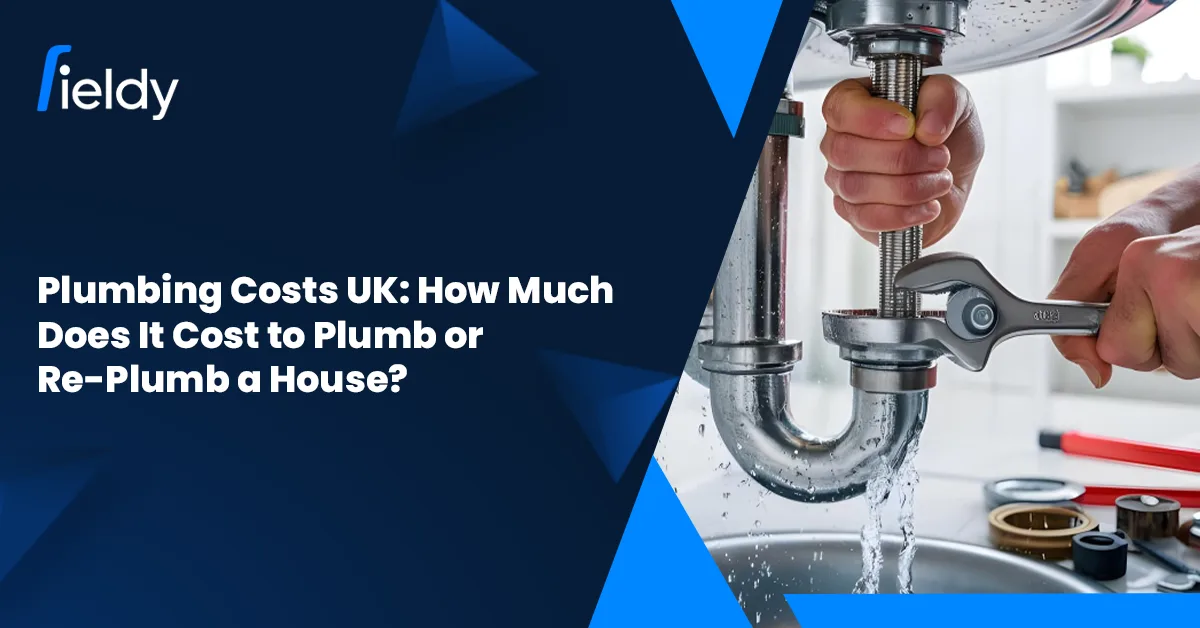
How to Draw a House Plumbing Diagram: The Smart Way to Plan Water & Drainage

Introduction

One of the main things to do when planning residential construction, renovation, or plumbing upgrade projects is to make a correct plumbing house diagram. Before any pipe can be laid, plumbers, builders, and homeowners require a model, a drawing that depicts the flow of water from the main supply to fixtures and finally the drainage of waste.

Acquiring skills in drawing plumbing diagrams for a house can go a long way in avoiding installation errors, code violations, drainage problems, and even repair costs in the future. No matter whether your project involves constructing a new house, remodeling a bathroom, adding a laundry room, or even replacing the existing plumbing infrastructure, a good plumbing diagram will be like a guide for a good and effective plumbing system.

Technical drawings, plumbing symbols, piping layouts, as well as software that is more specifically designed for plumbing systems, are a few of the main resources used by professional plumbers to come up with plumbing systems that can provide clean water safely and, at the same time, get rid of wastewater effectively. Without proper planning, homeowners can face problems like low water pressure, poor drainage, sewer gas odors, and expensive corrections.

Diagram Overview

A residential plumbing system usually works in this manner:

Water Supply → Fixtures → Drain-Waste-Vent (DWV) System → Sewer or Septic Connection

What You’ll Learn

  • Basics of home plumbing floor plans
  • Frequently used plumbing signs and shortened terms
  • Steps to designing a home plumbing scheme
  • Key points of an excellent drain and vent system design
  • Most frequently made plumbing design errors
  • Modern plumbers industry-grade programs

What Is a House Plumbing Diagram?

A diagram of a home plumbing system is a technical visual representation that maps out all the plumbing components of a residential property. It indicates the point of entry of water into the house, the distribution of water to various fixtures, and the disposal of wastewater in a safe manner.

Typically, a plumbing system diagram that is well thought through will have the water supply lines, drain pipes, vent stacks, cleanouts, fixtures, water heaters, shutoff valves, and sewer connections. Before installation starts, builders and inspectors can use these diagrams to make sure everything is in compliance with the code.

While architectural drawings depict the arrangement of walls and room sizes, a plumbing plan is all about the flow of water and the way waste is disposed of. Besides being a guide for plumbers while building the house, it can also offer extremely useful information to homeowners for keeping the system in good working order or making repairs.

Why Plumbing Diagrams Matter

One of the main reasons why planning is very important is that it can almost eliminate installation errors and maintenance problems in the future.

Benefits of creating a plumbing diagram include:

  • Preventing installation errors
  • Improving code compliance
  • Simplifying future repairs
  • Reducing project costs
  • Improving drainage performance
  • Increasing construction efficiency

In fact, even the smallest mistakes in design can be very costly. People looking up “how much does plumbing cost usually find that fixing plumbing that has been installed incorrectly could be a lot more expensive than making a correct design from the very beginning.

Another benefit of a plumbing diagram is that it can assist in coordinating the work of electricians, HVAC contractors, framers, and plumbers during construction projects.

Understanding the Main Components of a Residential Plumbing System

In fact, every home plumbing diagram features various complex systems that work in harmony to provide the residence with potable water and to get rid of the sewage in a safe manner.

Generally, a house plumbing diagram is divided into three main parts: 

  • the water supply system, 
  • the drain-waste-vent (DWV) system, and 
  • The sewer connection system.

Each of these is essential to ensuring the plumbing is both safe and efficient.

Water Supply System

The water supply system is responsible for distributing clean drinking water to all parts of the house.

The main parts of the system are:

  • Primary water supply
  • Water meter
  • Shutoff valve
  • Water heater
  • Hot water ducts
  • Cold water ducts
  • Fixture branch pipes

In a typical water supply diagram, cold water can be seen coming in from the municipal pipeline or a well system.

A small fraction of water goes directly into the fixtures, while the other part first goes to the water heater and then comes out as hot water for the whole house.

Fixtures getting water via branch lines are:

  • Washbasins
  • Showers
  • Lavatories
  • Dishwashers
  • Laundry machines
  • Garden taps

Proper sizing ensures adequate water pressure throughout the home.

Drain-Waste-Vent (DWV) System

DWV system can get rid of wastewater and ensure proper airflow inside plumbing pipes at the same time.

Typically, a plumbing DWV diagram shows:

  • Drain pipes
  • Vent stacks
  • Traps
  • Branch drains
  • Main waste lines

In a well-planned house plumbing drain diagram, sewer gases will be prevented from getting into living spaces, and at the same time, the flow of wastewater towards the sewer connection will be smooth and effective.

Vent pipes are key as they help to equalize the air pressure and prevent traps from being emptied (siphoned).

Sewer Connection System

Every household must have a safe way to get rid of wastewater.

A diagram of a house sewer line generally depicts these items:

🚰 Component 🎯 Purpose
🛣️ Sewer Main Waste removal
🔧 Cleanout Maintenance access
🌬️ Vent Stack Airflow
🚫 Trap Odor prevention


Gray water or black water from each fixture ultimately makes its way to the main sewer line and then to a municipal sewer system or a privately owned septic system.

How to Draw a House Plumbing Diagram Step by Step

It is a lot easier if the knowledge about drawing house plumbing diagram layouts is broken down into small chunks.

Effective plumbing plans have fixtures as the starting point and branch into water supply, drainage, and venting.

Step 1 – Create a Basic Floor Plan

First,  sketch a simple floor plan to depict the arrangement of the house.

Mark spots for:

  • Bathrooms
  • Kitchen
  • Laundry room
  • Utility room
  • Outdoor fixtures

Grouping plumbing fixtures together is a great tip to not only reduce material costs but also to make the installation process easier.

Also, if you place the bathrooms near the kitchen and laundry rooms, the piping and drain runs will be shorter and fewer.

Step 2 – Mark Water Supply Lines

Next,  decide how the hot and cold water will flow inside the house.

Usually, a piping layout would have:

  • The point where the main water line enters
  • Water heater position
  • Cold water supply lines
  • Hot water supply lines
  • Connections to fixtures

If possible, use different colors:

  • Blue for cold water
  • Red for hot water

This makes it easier to read the plan during the installation.

Step 3 – Add Drain Lines & Vent Pipes

A drainage blueprint is a vital component of all plumbing designs.

All correctly drafted plumbing plans must indicate what comes next:

  • Wastewater drainage from the fixture
  • Local branch drainage
  • Main drainage pipe
  • Vent stacks

Vertical interval plumbing layout is one of the common views of a riser diagram, which shows the vertical pipe connections from one floor to another.

Wastewater pipes must be laid out at the right angle so that gravity can transport the water and waste air efficiently.

A rough estimate:

  • A quarter of an inch slope per foot length of a horizontal run

Step 4 – Connect to Sewer or Septic System

Once the drainage paths have been set up, branch drains can be connected to the main sewer line.

An average house drain pipe drawing must explicitly depict what comes next:

  • Primary building drain
  • Access points for sewer cleaning
  • Sewer line
  • Septic system hookup (if applicable)

Many inspectors place a significant emphasis on this part of the design since inappropriately designed sewer systems could give rise to major health risks.

Step 5 – Label Plumbing Symbols

Each fixture and plumbing component must be clearly labeled.

Commonly labeled items are:

  • Toilets
  • Sinks
  • Water heaters
  • Drainage points on floors
  • Pipe cleanout points
  • Ventilation stacks

Standardized blueprint plumbing symbols help contractors and inspectors to have the same understanding of plans.

Properly labeled plumbing symbols on drawings also simplify future maintenance.

Common Plumbing Symbols Used on Drawings

Standardized symbols make a difference in guiding plumbing blueprints in a very efficient way.

Without symbols, it would be challenging to make plumbing plans less cluttered and more understandable.

Essential Plumbing Blueprint Symbols

The following are the standard abbreviations for various types of residential plumbing:

🔣 Symbol 📖 Meaning
🚽 WC Toilet
🧼 Lav Lavatory
🔥 WH Water Heater
💧 FD Floor Drain
🔧 CO Cleanout
🏠🌬️ VTR Vent Through Roof

CTA Banner 1

Additional symbol categories that are often featured in plumbing symbols PDF guides include:

  • Valves
  • Pumps
  • Pressure regulators
  • Water meters
  • Backflow preventers

A lot of contractors also refer to plumbing symbols valves charts when designing complicated piping systems.

By grasping the meaning of water schematic diagram symbols in residential plans, the homeowner can better communicate with the contractor and inspector.

Single-Story House Plumbing Diagram Example

Typically, a plumbing diagram for a single-floor house is simpler design-wise since all water fixtures are linked to a single drain plane.

Fewer vertical connections mean that the venting system and drain routing can be planned much more easily.

Sample Layout Walkthrough

Imagine a simple, three-bedroom house that includes:

  • Kitchen
  • Two bathrooms
  • Laundry room
  • Utility area

The main water line gets into the house close to the water heater.

Cold water pipe branches serve:

  • Toilets
  • Exterior faucets
  • Washing machine

Hot water pipe branches serve:

  • Showers
  • Bathroom sinks
  • Kitchen sink

The drain pipes from the two bathrooms join together into one waste line that leads to the main sewer pipe in this simple house plumbing diagram.

The kitchen drain connects with the main drain downstream before the wastewater leaves the property.

Mobile Home Plumbing Schematic Guide

Mobile home plumbing schematics are distinct from regular residential plumbing as they need to consider different construction techniques and the lack of space.

Almost all mobile home plumbing is located outside under the house rather than within the walls.

A standard mobile home water piping layout usually features under-floor plumbing that is visible for both water supply and waste disposal.

Common Mobile Home Plumbing Challenges

Common problems are:

  • Open under-floor plumbing
  • Exposure to freezing weather
  • Failure of pipe support
  • Restrictions on accessibility
  • Water ingress

Many mobile home owners decided to:

  • Heat tape systems
  • Pipe insulation
  • Freeze protection measures

One of the reasons why the support and maintenance should be proper is that plumbing repairs under mobile homes will be really inconvenient and costly.

Common Plumbing Diagram Mistakes to Avoid

There are times when even the most skilled DIY enthusiasts err in their project planning.

What is worse is that a small mistake can trigger a big and lasting plumbing problem.

Most Frequent Planning Errors

Some of the most common mistakes are:

  • Missing vent pipes
  • Wrong pipe sizing
  • Drain with the wrong slope
  • Bad fixture positioning
  • Missing cleanouts

Surely a badly designed plumbing plan example will demonstrate one or more of these issues.

Missing vent pipe issues generally lead to:

  • Slow draining
  • Drain gurgling
  • Sewer smell

Wrong pipe sizing might cause water pressure to drop or result in backflow of wastewater.

Planning carefully before installation dramatically reduces future repair costs.

Professional Plumbing Blueprint Software & Design Tools

Today’s plumbers no longer design simple pipe plans.

Digital technology enables contractors to conceptualize, modify, and communicate pipe layouts far more expediently using digital design than drafting.

Software Used for Plumbing Design

Popular software categories include:

  • CAD software
  • BIM platforms
  • Estimating software
  • Mobile field management systems

Many plumbing contractors rely on the best plumbing software to design very detailed blueprints and, at the same time, make sure they are in line with the local codes.

Some other tools are:

Among the advantages:

  • Faster plan creation
  • Increased accuracy
  • Revisions made simpler
  • More effective project management
  • Improved teamwork

These tools have become standard throughout the plumbing industry.

Plumbing Career Insights for Future Plumbers

Understanding the plumbing system and making plumbing diagrams is a very basic skill for a person who is planning to enter the plumbing or plumber trade.

A professional plumber will depend on the blueprints all the time during their life for many purposes, like installing the system, finding out where the system is not working, and also for planning changes.

Skills Needed to Read Plumbing Drawings

Successful plumbers master various technical skills.

🛠️ Skill ⭐ Importance
📐 Blueprint Reading High
📏 Pipe Sizing High
📚 Code Knowledge High
🔍 Troubleshooting High


If one is looking up how to become a plumber, they will find that learning how to interpret blueprints is a part of the training at apprenticeships and certification courses.

Other things that may be explored:

The ability to read and understand complex diagrams is a skill that often distinguishes a novice apprentice from a seasoned plumber.

How Plumbing Businesses Use Technology to Improve Planning

Nowadays,  plumbing contractors can rely on technology to help them transition smoothly from the blueprint design phase to actually carrying out the project.

Digital solutions can help manage communication, scheduling, and monitoring of the project.

Digital Tools for Modern Plumbing Companies

It is a norm for the plumbing trade nowadays to use:

  • Job scheduling systems
  • Dispatch management software
  • Mobile quoting tools
  • Asset tracking platforms
  • Customer management systems

FSM software has become very popular among contractors as it allows office workers, field technicians, and clients to be interconnected on a single platform.

Benefits include:

  • Faster response times
  • Improved customer communication
  • Better project visibility
  • Reduced paperwork
  • Increased productivity

Combining digital management tools with accurate plumbing diagrams helps companies complete projects more efficiently and profitably.

Conclusion

One of the most useful skills that homeowners, builders, apprentices, and professional plumbers can have is knowing how to draw house plumbing diagram layouts. A well-planned house plumbing system diagram often means better efficiency, fewer mistakes during installation, easier compliance with codes, and simpler maintenance in the future.

Once you know about water supply systems, drainage networks, venting needs, plumbing symbols, sewer connections, etc., you will be able to design plumbing plans that are not only safe but also work efficiently for many years to come. So whether it’s a small bathroom renovation, a new house construction, or a full plumbing replacement, careful planning is always a good investment.

The point is to begin with a simple floor plan, identify places for the fixtures, make up water supply routes, set up drainage slopes correctly, and indicate all plumbing symbols accurately. When a project is getting more complicated, it is a good idea to go for professional design software to make things more accurate and make changes easier.

In fact, a plumbing system that is well-thought-out will be a great help in saving time, money, and frustration by making sure that the water delivery and wastewater removal remain efficient and reliable. Research and preparation today will go a long way toward keeping you from having to deal with costly plumbing issues down the road while at the same time ending up with a home that is safe, efficient, and comfortable for many years.

CTA Banner 2

Best Cleaning CRM Software in 2026: Top CRM Solutions for Cleaning Companies

Introduction

In the last few years, the cleaning industry has seen a drastic increase in competition. No matter if you run a residential cleaning service, a commercial janitorial company, a window cleaning operation, a carpet cleaning business, or a multi-service contracting company, your customer relationships in the end have become your most valuable assets. This is the reason why several owners are looking for the best CRM for cleaning business operations in 2026.

Many cleaning businesses still rely on basic tools like spreadsheets, sticky notes, text messages, and non-integrated software systems to handle customer data. Sure, these ways may be enough to run a small team, but the problems will start piling up when the business develops. Not only missed follow-ups, forgotten estimates, scheduling conflicts, loss of customer history, and inconsistent communication, but also the loss of revenue and bad customer retention may be the consequences of these issues.

Recurring customers pose a significant challenge in the cleaning industry. It is not uncommon for customers to order a service weekly, bi-weekly, monthly, or even seasonally. It will be quite a task to keep track of the service, send automatic reminders, handle contracts, and keep communication in a consistent manner without a proper CRM system.

So a present-day best cleaning CRM software solution enables businesses to keep customer records in one place, carry out follow-ups automatically, handle estimates, keep tabs on the performance of technicians, and enhance the satisfaction of customers. For businesses that are looking if “is a cleaning business profitable, the answer usually varies on the efficiency of operations, customer retention, and recurring revenue—which are the areas where CRM software can definitely make a difference.

This article will introduce you to the major CRM tools in the market and the best CRM for cleaning company owners that not only operate their businesses smoothly but also build stronger customer relationships and grow their businesses faster.

What Is a Cleaning CRM Software?

CRM software is a tool that helps businesses collect, manage, and analyze customer data to improve customer service, increase sales, and gain customer loyalty.

Packing full of features, CRM software for cleaning companies can be very helpful.

It allows for the centralization of lead administration, estimate management, service history recording, customer communication monitoring, scheduling of recurring services, and business insight generation.

Even though scheduling platforms have started focusing on the CRM software aspect, they are still mainly dispatch and appointment management tools. A good CRM platform, however, makes customer interactions visible to provide cleaning firms with the opportunity to deliver a customized and well-known service.

Nowadays, home and commercial cleaning software solutions often offer a combination of CRM with scheduling, dispatching, invoicing, and reporting functionalities. Numerous sophisticated platforms also link up with FSM software systems to form a comprehensive operational ecosystem for service-based businesses.

Some of the most valuable CRM capabilities include:

  • Customer profile management
  • Service history tracking
  • Lead management
  • Automated reminders
  • Quote management
  • Follow-up automation
  • Contract tracking
  • Customer communication logs
  • Review request automation
  • Revenue reporting

The ability to retain customers on an ongoing basis and predict revenue from recurring customers is just a couple of reasons why a CRM system is so important for cleaning companies that plan to grow.

What Features Should the Best Cleaning CRM Software Include?

Selecting the right CRM is more than just a price comparison; the best choices will enable you to manage your daily activities while supporting the growth of your business. 

Lead Management

All new inquiries are future business. The CRM should continuously track the incoming leads on the website, forms, social media, telephone calls, and referrals, etc. Effective lead tracking ensures no opportunity slips through the cracks.

Customer Database

A single, centralized customer database enables all teams to have access to a customer’s entire service history, contact details, invoices, contracts, notes, and email communication history. 

Quote Tracking

Often, potential customers go elsewhere if they have to wait for quotes. The CRM software should automate the creation, delivery tracking, and follow-up of quotes. 

Recurring Service Management

Recurring contracts are what most successful cleaning companies survive on. A field service CRM software should give the option of recurring cleansing, set up of automatic timers to go off, and contract administration.

Automated Follow-Ups

Most sales need several touchpoints before converting. Automated email and SMS follow-ups increase conversion rates and decrease admin time. 

Scheduling Integration

CRM software will be useless if it can’t be integrated with other scheduling software that has been digitally integrated to maintain service delivery and run the day-to-day business smoothly. 

Invoicing & Payment Tracking

Integrated invoicing gives the ability to relate customer accounts to financial transactions. This enhanced visibility of account performance is now available. 

Mobile Access

The field’s team and office staff also require access to customer data regardless of their location. Mobile functionality becomes equally important in today’s CRM systems.

Feature Checklist

⚙️ Feature 📈 Why It Matters
👥 CRM Database Centralized customer records
📅 Scheduling Better job coordination
🤖 Automation Saves administrative time
📊 Reporting Improved decision-making
📱 Mobile App Field access and productivity
🔄 Follow-Ups Better customer retention
📝 Estimates Faster sales process
💳 Payment Tracking Improved cash flow


Quick Comparison Table – Best Cleaning CRM Software in 2026

💻 Software 👥 CRM Strength 📅 Scheduling 🤖 Automation 📱 Mobile App 🎯 Best For
🏢 Fieldy Excellent Excellent Excellent Yes Growing cleaning businesses
📋 Jobber Very Good Excellent Good Yes Small to mid-sized teams
📞 Housecall Pro Very Good Good Very Good Yes Customer communication
🧹 ZenMaid Good Good Good Yes Maid services
🛠️ ServiceM8 Good Very Good Moderate Yes Small mobile teams
🏭 CleanGuru Excellent Good Moderate Limited Janitorial contracts


Best Cleaning CRM Software in 2026 – Listed & Discussed

1. Fieldy – Best Overall

Why Fieldy Is Ranked #1

That is why Fieldy takes the number one spot – it offers you more than just a CRM; it also includes field service management features that perfectly align with the needs of service-oriented businesses, mainly cleaning companies. Instead of making cleaning firms use one system after another, Fieldy grants them one platform that tracks customer management, scheduling, dispatching, invoicing coordination of technicians, and reporting, all from a single dashboard.

Commercial cleaning contractors who deal with several recurring accounts decide to focus mostly on customer visibility. With the help of Fieldy, your team will be able to view customers’ interactions, service history, contract details, inspection records, and communication logs in real time. This will help you retain customers, spot upselling opportunities, and enhance service quality.

If you have a business dealing with carpet cleaning, window cleaning, janitorial services, pressure washing, and specialty cleaning, you will be able to enjoy Fieldy as well. Automation of reminders, recurring work orders, customer follow-ups, and technician updates softens administrative pressure and improves operational consistency.

Key Features

⚙️ Feature 📈 Benefit
👥 CRM Database Complete customer history
🔄 Automated Follow-Ups Improved customer retention
📋 Job Tracking Better operational visibility
📱 Mobile Access Real-time field updates
📊 Reporting Actionable business insights
📅 Recurring Contracts Easier recurring service management
🚚 Dispatching Faster crew coordination
🖥️ Customer Portal Better client communication


Pros

  • Strong CRM and field service functionality
  • Excellent recurring contract management
  • Centralized customer communication
  • Real-time technician visibility
  • Advanced reporting capabilities
  • Scalable for growing businesses
  • Suitable for both residential and commercial operations

Cons

  • May offer more functionality than very small startups need
  • Learning curve for teams transitioning from spreadsheets

Pricing

Pricing may vary depending on business size and required features. Contact the vendor directly for current plans and custom packages.

Best For

  • Commercial cleaning companies
  • Residential cleaning businesses
  • Window cleaning contractors
  • Carpet cleaning businesses
  • Pressure washing companies
  • Multi-service cleaning operations

Alternative Discussion

Many companies searching for the best CRM software for the cleaning business first look at generic CRM platforms geared mainly towards sales organizations. Though these tools may feature customer tracking, they usually miss out on scheduling, technician management, dispatching, and recurring service features. Fieldy’s distinctive feature is that it merges CRM features with operational tools that are perfectly tailored for field service environments. Because of this, making it a more holistic solution for cleaning businesses that are expanding.

CTA Banner 1

2. Jobber

Overview

Jobber has really made a name for itself as one of the leading platforms for service businesses in the market. If a small cleaning company wants to keep track of their customer’s details and scheduling in a better way, Jobber will definitely be an easy-to-use and friendly option.

It integrates CRM with quoting, scheduling, invoicing, and payment processing. Many business owners consider Jobber’s interface very neat and also like Really it’s quite easy to learn. If you are a team planning to ditch spreadsheets and manual workflows, switching to Jobber might have a big impact on your organizational capability and operational efficiency.

That said, as cleaning businesses mature and start juggling more commercial contracts, multiple service divisions, larger field teams, etc., it turns out that they need greater workflow automation and operational management tools.

Features

⚙️ Feature ✅ Availability
👥 Customer Management Yes
📅 Scheduling Yes
📝 Estimates Yes
🧾 Invoicing Yes
📱 Mobile App Yes
🔔 Automated Reminders Yes
📊 Reporting Moderate


Pros

  • Easy to use
  • Strong scheduling tools
  • Mobile accessibility
  • Integrated invoicing
  • Suitable for small businesses

Cons

  • Limited advanced CRM customization
  • Reporting can feel basic for larger companies
  • Some advanced workflow capabilities require higher-tier plans

Pricing

Pricing varies by plan level and user count. Businesses should review current vendor pricing for updated information.

Best For

  • Small cleaning companies
  • Owner-operator businesses
  • Emerging service teams
  • Residential cleaning providers

Alternative Discussion

It would be very fair to say that Jobber is a good point of entry for smaller businesses. That being said, companies with large recurring contracts, multiple crews, and complex customer workflows that have to be managed will likely need more sophisticated CRM and operational management features. At times, platforms like Fieldy, for example, are known to offer greater adaptability and room for growth in these cases.

3. Housecall Pro

Overview

Housecall Pro excels in customer communication and engagement above other features. If you are a cleaning business looking to enhance the customer experience, then attending to your clients through appointment reminders, obtaining their feedback via review requests, getting their approval on estimates, and receiving online payments through the platform are some of the activities Housecall Pro can help you accomplish.

Something important is why a lot of cleaning companies choose to go with Housecall Pro is that it helps them stay in touch with their customers even when they are not physically interacting with them by automating communication through different stages of the customer journey. For instance, automatic reminders that are sent out reduce the chances of customers not showing up without notice, whereas review requests help to build a good reputation online.

Besides customer communication, the platform can handle other aspects of your business like scheduling, invoicing, payment processing, and managing technicians. In fact, it is more than just a CRM. Still, what differentiates it most from other platforms is the customer-facing communication tools that help to improve engagement and retention.

Features

⚙️ Feature ✅ Availability
💬 Customer Communication Excellent
🔔 Automated Reminders Yes
📅 Scheduling Yes
💳 Online Payments Yes
📱 Mobile App Yes
👥 CRM Database Yes
⭐ Review Requests Yes


Pros

  • Strong communication automation
  • Excellent customer experience tools
  • Easy online payment collection
  • Mobile-friendly platform
  • Good reputation management features

Cons

  • Less customizable than some competitors
  • Complex commercial workflows may require additional tools
  • Advanced reporting is somewhat limited

Pricing

Pricing depends on subscription tier and user requirements. Review current vendor plans for accurate pricing information.

Best For

  • Customer-focused cleaning businesses
  • Residential cleaning services
  • Window cleaning companies
  • Teams focused on reputation management

Alternative Discussion

Housecall Pro is a powerful tool when it comes to customer communication. But some companies may require deeper operational workflows, extensive recurring contract management, and advanced business analytics. Such companies may be inclined to compare Housecall Pro with more comprehensive platforms like Fieldy.

4. ZenMaid

Overview

ZenMaid is a specially designed CRM and operational platform for residential maid services and recurring home cleaning companies. Compared to general field service software, ZenMaid narrows down its features mainly to recurring appointment simplification, cleaner scheduling, customer communication, and appointment reminders. As cleaning company owners juggling with dozens or hundreds of their repeat customers, the system assists them to cut down on the paperwork and at the same time deliver consistent customer experiences.

Recurring service workflows are what set ZenMaid apart from the rest. Companies that do weekly, biweekly, or monthly cleanings can fully automate their scheduling and reminders while gaining usage of detailed customer histories. Still, if a company is providing a lot of service lines other than residential cleaning, then it might be in need of an advanced business management system at some point. 

Key Features

⚙️ Feature 📈 Benefit
🔄 Recurring Scheduling Automates repeat appointments
👥 Customer Profiles Stores service history
📲 SMS Reminders Reduces no-shows
👨‍👩‍👧‍👦 Team Scheduling Coordinates cleaners efficiently
📊 Reporting Tools Tracks business performance


Pros

  • Designed specifically for cleaning businesses
  • Strong recurring appointment management
  • Easy-to-use interface
  • Automated reminders
  • Good customer retention tools

Cons

  • Limited advanced field service functionality
  • Less suitable for multi-service contractors
  • Fewer operational management tools than broader platforms

Pricing

Pricing varies by team size and features selected.

Best For

Residential cleaning companies and maid services focus on recurring home cleaning appointments.

Alternative Discussion

On one hand, ZenMaid is the perfect tool for the residential cleaning segment, but if a company is aiming to venture into commercial cleaning, carpet cleaning, pressure washing, or other specialty services, then they will most likely need a full-featured platform such as Fieldy, which integrates CRM, scheduling, dispatching, quoting, invoicing, and all other operations, making it one single ecosystem.

5. ServiceM8

Overview

ServiceM8 positions itself as a mobile-first CRM and job management system crafted for small service businesses. Cleaning companies with mobile teams, in particular, tend to find their simple, no-fuss approach to managing customers, scheduling jobs, and handling invoicing very appealing.

Those owning and operating a cleaning business on their own or with a couple of other people will, in particular, benefit from the system when they need instant access to customer and job information while out working. Because most of their time is spent at client locations rather than in their office, their mobile feature capacity makes them very attractive to such businesses.

But as the business activities keep growing in complexity and call for more advanced automation, bigger companies may find themselves longing for more scalable options.

Key Features

⚙️ Feature 📈 Benefit
📱 Mobile CRM Access customer records anywhere
📋 Job Tracking Monitor job progress
📅 Scheduling Coordinate appointments
📄 Digital Forms Standardize workflows
🧾 Invoicing Faster billing


Pros

  • Strong mobile experience
  • Easy setup
  • Suitable for small businesses
  • Good field accessibility
  • Simple interface

Cons

  • Less scalable for larger teams
  • Limited advanced CRM automation
  • Fewer enterprise features

Pricing

Subscription pricing varies by user count and feature requirements.

Best For

Small cleaning companies with mobile workforces.

Alternative Discussion

ServiceM8 is an excellent option for those with few technicians. Though companies that are expanding their need for deeper automation, sophisticated reporting, management of recurring contracts, and integrated tracking of the customer lifecycle – these are some of the areas in which Fieldy is more capable.

6. CleanGuru

Overview

CleanGuru mostly concentrates on commercial janitorial operations and contract cleaning businesses. Its CRM tools enable companies to manage large commercial clients’ inspections, recurring service agreements, and quality assurance programs.

For businesses that clean offices, schools, healthcare facilities, retail stores, and industrial sites, the relationship with customers is often maintained by more than just scheduling appointments. Important elements of customer retention like detailed contract tracking, service verification, and recurring inspections come into play.

CleanGuru’s clear industry focus is a major selling point for commercial cleaning companies already looking at contract management and operational oversight as their main objectives.

Key Features

⚙️ Feature 📈 Benefit
📑 Contract Tracking Manage recurring agreements
🔍 Inspection Management Improve service quality
👥 Customer Database Maintain account records
📊 Reporting Track performance
✅ Quality Control Enhance customer satisfaction


Pros

  • Built for janitorial operations
  • Strong inspection capabilities
  • Good commercial account management
  • Contract-focused workflows
  • Useful reporting tools

Cons

  • Less flexible for multi-service businesses
  • Learning curve for smaller teams
  • Limited appeal for residential cleaners

Pricing

Pricing depends on business size and operational requirements.

Best For

Commercial cleaning contractors and janitorial service providers.

Alternative Discussion

CleanGuru is highly set apart as a commercial cleaning-only solution. Companies delivering a number of services could get a better deal from Fieldy’s wider CRM, scheduling, dispatching, and workforce management capabilities.

Detailed CRM Software Comparison Table

💻 Software 👥 CRM Strength 📚 Customer History 🤖 Automation 📅 Scheduling 📱 Mobile App 📊 Reporting
🏢 Fieldy Excellent Excellent Excellent Excellent Excellent Excellent
📋 Jobber Good Good Good Excellent Good Good
📞 Housecall Pro Good Good Good Good Excellent Good
🧹 ZenMaid Very Good Good Good Excellent Good Moderate
🛠️ ServiceM8 Good Good Moderate Good Excellent Moderate
🏭 CleanGuru Very Good Excellent Good Good Good Excellent


Best CRM Solutions by Cleaning Business Type

Best CRM for Residential Cleaning Companies

Cleaning companies for residential services rely heavily on their customer retention to drive their revenue. The best CRM software in India can automatically schedule ongoing appointments, send out customer notifications, solicit reviews, and communicate with the clients after the service.

Tools like sending out automatic messages, jotting down customer details, keeping a record of what services were done, and handling recurrent bookings are extremely beneficial. Companies that keep a large “house cleaning list and also talk about “how much does house cleaning cost with their potential customers without a doubt will find it more convenient to have all their client-related data in one place, that is, in a CRM.

For residential cleaning companies that are looking at customer retention as one of their primary goals, Fieldy and ZenMaid stand out as excellent options.

Best CRM for Commercial Cleaning Companies

CRM challenges faced by commercial cleaning companies are quite different from those of residential operations. Besides, they usually have more locations and accounts to manage; they also have to deal with contracts, inspections, and account managers, thereby necessitating higher-end CRM tools.

Top-of-the-line cleaning company crm is a platform that offers, among other things, a centralized database of customer information, accessibility to contracts, inspection tracking, and good reporting capabilities. Companies that are looking at commercial cleaning services prices usually want extensive historical data to develop accurate proposals and have no problem renewing contracts.

Eventually, many entities looking for the best commercial cleaning software put their top priority on CRM systems that will enable them to have long-term customer relationships, rather than just scheduling management.

Best CRM for Window Cleaning Businesses

Best CRM for window cleaning companies would have capabilities like recurring routes, seasonal scheduling, automated reminders, and customer retention campaigns.

In the window cleaning sector, there are often many repeat customers who will come back to be served after a few months. CRM programs facilitate regular automatic contact and also keep records of the services given. Knowing information about the window cleaning cost and a timely check of “how much do window cleaners make can be fairly accomplished if customer and sales data are accumulated and organized in a CRM.

Among its other features, Fieldy’s recurring service management is definitely a great match for route-based window cleaning businesses.

Best CRM for Carpet Cleaning Businesses

Carpet cleaning companies can greatly improve their operations through CRM tools, in particular since the value of a customer over time can be quite high. It is the case that a large number of customers will periodically need deep cleaning, stain removal, upholstery cleaning, and other related services.

A strong CRM not only helps track past work but also identifies the right moments for upselling and even automates sending out reminders for the next round of services. A good number of carpet cleaning firms even venture into the area of pressure washing prices and other specialized cleaning services. Because of this, having customer management in one place becomes even more desirable.

How CRM Software Helps Cleaning Companies Increase Revenue

CRM software directly impacts profitability by helping businesses strengthen customer relationships and improve operational efficiency.

👥 CRM Function 💰 Revenue Benefit
🔄 Follow-Ups More repeat business
🤖 Automation Lower administrative costs
📅 Scheduling Integration More completed jobs
📊 Reporting Better decisions
💎 Customer Retention Higher lifetime value
💬 Communication Improved satisfaction

CTA Banner 2

Regular follow-up with customers is a characteristic of businesses that generate more repeat bookings than those whose manual processes are relied on as a mainstay. Missed appointments are less likely to happen with the aid of automated reminders, whereas centralized customer records make it possible for the staff to serve more quickly and personally.

Eventually, these changes will lead to better customer retention, higher online ratings, and increased profits.

Common CRM Mistakes Cleaning Companies Make

Mistake #1: Managing Customers Using Spreadsheets

Once the number of customers starts to grow, it becomes increasingly tricky to manage them through spreadsheets. As a result, some key details may be overlooked, customer follow-ups might not happen, and the data used for analysis may end up not being reliable.

Mistake #2: Not Having a Follow-Up Mechanism

Many businesses that offer cleaning services don’t reach out to their customers after the service has been done. Setting up automated follow-ups through a CRM can bring a noticeable rise in repeat bookings and customers coming through referrals.

Mistake #3: Ineffective Lead Management

When leads aren’t managed effectively, there’s a good chance that potential customers will “fall between the cracks” and not make it to the point of scheduling a service.

Mistake #4: Using the Same Approach for Marketing to All Customers

Doing the same thing for all customers is a sure way to not get the full result from one’s marketing efforts. CRM systems make it possible for a company to separate its customers by categories like residential, commercial recurring, and one-time customers.

Mistake #5: Neglecting Reporting

Owners of businesses gather information very often, but don’t make use of it. With CRM reporting, one can pinpoint the most lucrative services, customer behavior patterns, and areas for expansion.

Cleaning Business Growth Tips Beyond CRM

CRM software is only one part of a successful growth strategy.

Businesses that scale effectively typically focus on:

  • Building repeatable operating procedures
  • Standardizing employee training
  • Offering recurring service plans
  • Improving customer communication
  • Investing in technology

Whether you’re learning how to start a cleaning agency, creating a comprehensive cleaning supplies list, developing a detailed how-to make a cleaning schedule process, or researching the best scheduling software for a cleaning business, operational consistency remains essential.

Many successful companies combine CRM software with the best cleaning business software available while expanding into complementary services such as how to clean HVAC coils, evaluating chimney cleaning rates, offering specialized solutions supported by drainage company software, or managing recurring maintenance programs through spa and pool cleaning software platforms.

Conclusion

CRM software is a major growth lever for cleaning companies these days. Sticking to customer relationship processes is imperative to profitability if you are a residential cleaner, a commercial cleaner, or offer carpet cleaning, window cleaning, or janitorial services.

Most CRM systems facilitate centralizing customer data, automated communication, higher retention, quicker operations, and greater visibility of overall results. The six products reviewed here offer a lot of capabilities, but they differ a lot in how scalable, flexible, and powerful they are functionally.

Fieldy is ranked first as it combines not just CRM capabilities but also scheduling, customer communication reporting, job tracking, mobility of field workers, and business growth features all within a single platform. This one integrated system approach enables cleaning businesses to get rid of disconnected systems and, at the same time, enhance both operational efficiency and customer experience.

To help you narrow down your options, look at your current team size, plans for growth, types of services you offer, and complexity of your operations. A CRM should be able to not just address the issues of today but also cater to your needs as your business grows. Those who make a strong CRM investment now will be able to better increase their recurring revenue, boost customer loyalty, and achieve more efficient growth over time.

Best Commercial Cleaning Software: Top Tools for Carpet & Window Cleaning Biz [2026 Guide]

Introduction

Running a commercial cleaning company in 2026 will be so much more than just assigning cleaners to jobs and sending out invoices at the end of the week. Today, cleaning businesses handle tasks such as recurring contracts, mobile crews, customer communications, quality inspections, route planning, and billing across multiple locations. It doesn’t matter if you run a janitorial service, carpet cleaning company, pressure washing business, or window cleaning operation. With the right software, you can instantly make your cleaning business more efficient and profitable.

Many cleaning business owners start with spreadsheets, paper schedules, and manual invoicing. These methods work for a while, but when the number of customers grows, it’s hard to keep up. Missed appointments, scheduling conflicts, delayed invoices, and poor communication can lower customer satisfaction and slow down business growth.

That is the biggest reason why a lot of contractors nowadays purchase the best commercial cleaning software that there is. They provide a modern platform that incorporates automation, scheduling, dispatching, quoting, invoicing, customer management, and technician tracking all from one simple dashboard. When businesses are on the lookout for the best software for small cleaning businesses, they often find that automation frees up hours of admin work every week while simultaneously improving customer retention.

The demand for good home and commercial cleaning software keeps increasing since customers are after features like online booking, faster communication, and updates that are clear and transparent. Businesses throwing their hats into the technological ring often do better than those still using old manual systems.

For those owners questioning “Is a cleaning business profitable, it is usually a matter of how well you run the operations. The better you do in labor management, scheduling, handling recurring contracts, and customer relationships, the easier it will be for you to increase your profit margins and expand the company.

This article will introduce you to the main commercial cleaning software solutions for 2026, show you the pros and cons of each, and assist you in finding the best platform for your business.

What Makes the Best Commercial Cleaning Software?

Choosing software goes beyond just looking for affordable monthly subscription pricing. The right software platforms can help cleaning companies not only reduce administrative tasks but also improve scheduling accuracy, increase the productivity of technicians, and foster stronger relationships with customers. While comparing software, it is advisable to check whether the following features are available or not:

Scheduling & Dispatching

Without a doubt, efficient scheduling paves the way for a thriving cleaning business. With the help of software, managers should be able to assign tasks quickly, find the best possible route for technicians, and update the working hours on the go. When used for determining the best scheduling software for cleaning business functions, most companies prioritize drag-and-drop scheduling tools and automated dispatching features.

CRM & Customer Management

A built-in customer database assists companies in keeping track of:

  • Customer history
  • Service notes
  • Property information
  • Recurring contracts
  • Communication records

Strong CRM functionality not only helps in lessening errors but also helps in retaining customers.

Mobile Apps

Crews working in the field require being able to access their work through mobile phones to:

  • Job details
  • Checklists
  • Photos
  • Customer signatures
  • Service updates

Presently, mobile capabilities are viewed as a necessity rather than an option.

Quoting & Estimates

A quick quote enables businesses to have more closing chances, and a uniform pricing policy is maintained.

Invoicing & Payments

Invoicing integration benefits businesses by:

  • Distributing invoices without delay
  • Being able to take digital payments
  • Lessening collection waits
  • Enhancing cash flow

Employee Tracking

Nowadays, the leading software is equipped with GPS tracking and time management features that enhance accountability and provide better oversight of employees.

Recurring Contract Management

In commercial cleaning, recurring contracts are the norm. Having the option to automate the rescheduling of these tasks would definitely lead to the saving of a lot of time spent on administrative work.

Reporting & Profitability Tracking

Using reporting tools, one can observe:

  • Revenue
  • Profitability
  • Technician performance
  • Customer retention
  • Job completion rates

Most of the business owners searching for all-inclusive FSM software end up focusing on these reporting features because they offer the data necessary for achieving sustainable growth.

Modern platforms frequently include GPS tracking and time management tools that improve accountability and workforce visibility.

Quick Comparison Table – Best Commercial Cleaning Software in 2026

💻 Software 🎯 Best For 📅 Scheduling 👥 CRM 🧾 Invoicing 📱 Mobile App
🏢 Fieldy Overall Cleaning Businesses Excellent Excellent Excellent Yes
📋 Jobber Growing Teams Excellent Good Excellent Yes
📞 Housecall Pro Customer Communication Good Excellent Excellent Yes
🛠️ ServiceM8 Small Teams Good Good Good Yes
🧹 ZenMaid Cleaning Specialists Good Good Good Yes
🏭 CleanGuru Janitorial Contracts Good Moderate Good Yes


Fieldy – Best Overall

Why Fieldy Ranks #1

Fieldy is ranked number 1 because it was made to assist field service business help operate from the field and office. Commercial cleaning businesses have specific problems like recurring service contracts, mobile crews, route management, customer communication, and making changes to scheduling in real-time.

Many platforms only focus on a single part of the operations, but Fieldy integrates scheduling, dispatching, customer management, invoicing, and workforce tracking into one system. This is why it’s a great choice for commercial cleaning, janitorial services, carpet cleaning, pressure washing, and window cleaning.

Expanding the cleaning service results in an increase in business complexity. Handling the work of numerous technicians, hundreds of recurring contracts, and multiple service locations is not something for which one can rely on spreadsheets and rudimentary scheduling tools only. Fieldy offers a platform capable of growing with you, whether you are a small business or a large commercial operation.

Those looking for an all-in-one business management tool should definitely consider Fieldy among the top options in 2026.

Key Features

⚙️ Feature 📈 Benefit
🧠 Smart Scheduling Faster job assignments and route optimization
📱 Mobile App Real-time field updates and technician access
👥 CRM Complete customer history and communication tracking
🧾 Invoicing Faster billing and payment collection
📍 GPS Tracking Improved workforce visibility and accountability
🔄 Recurring Jobs Automated contract scheduling
📊 Reporting Dashboard Better business insights
📦 Asset Tracking Monitor equipment and resources


What Makes Fieldy Different?

One of the biggest advantages of Fieldy is its ability to support multiple cleaning business models. For example:

Commercial Cleaning Companies

Managers can:

  • Schedule recurring contracts
  • Assign crews automatically
  • Track service completion
  • Generate invoices immediately

Carpet Cleaning Businesses

Companies can:

  • Track equipment
  • Schedule repeat visits
  • Monitor technician productivity
  • Maintain customer records

Window Cleaning Contractors

Businesses can:

  • Organize seasonal maintenance schedules
  • Manage route density
  • Reduce travel time
  • Improve technician utilization

Pressure Washing Services

Field teams can receive updates directly through mobile devices, helping reduce delays and improve communication.

Pros

  • Comprehensive all-in-one platform
  • Strong scheduling and dispatching tools
  • Excellent mobile functionality
  • Built-in CRM
  • GPS workforce tracking
  • Recurring contract automation
  • Suitable for growing businesses
  • Strong reporting capabilities
  • Easy invoice generation
  • Scalable for multi-location operations

Cons

  • More features than some very small businesses may initially need
  • Setup requires planning to maximize value
  • Advanced capabilities may involve a learning curve for first-time software users

Best For

Fieldy is ideal for:

  • Commercial cleaning companies
  • Janitorial service providers
  • Carpet cleaning businesses
  • Window cleaning contractors
  • Pressure washing companies
  • Multi-service field service organizations
  • Businesses planning significant growth

Pricing

Pricing may vary depending on business size, features, and implementation requirements. Prospective buyers should contact Fieldy directly for current plans and custom pricing options.

Alternative Discussion

Among other things, the decision-making process for a lot of companies is rolled out by first examining systems like Jobber, Housecall Pro, or ServiceM8, major players in the field service industry, to name a few. And while it is a fact that the platforms in question could be helpful at some level, it turns out that as the business situations become complicated, companies tend to switch to Fieldy.

This is explained by In reality, in the end, cleaning companies need something more than just a scheduler. What they require is robust workforce management, customer tracking, contract automation for recurring services, asset management, and operations visibility in real-time capabilities.

It’s quite common for businesses that are interested in home and commercial cleaning software that can be scaled to eventually learn that it is actually Fieldy that offers a far wider operational structure than those platforms that are scheduling and focused on the latter exclusively. In fact, owners can do dispatching, CRM, invoicing, GPS tracking, fixed service contracts, and reporting all in one place rather than having to mess around with lots of different apps.

In fact, if a business aims at getting bigger, easing work processes, and making more money, then Fieldy is the one that outshines all the other commercial cleaning software options currently available on the market.

Detailed Software Comparison Table

💻 Software 👥 CRM 📅 Scheduling 🧾 Invoicing 📍 GPS Tracking 🔄 Recurring Jobs 📱 Mobile App 🎁 Free Trial
🏢 Fieldy Advanced Yes Yes Yes Yes Yes Available
📋 Jobber Strong Yes Yes Limited Yes Yes Available
📞 Housecall Pro Strong Yes Yes Limited Yes Yes Available
🛠️ ServiceM8 Moderate Yes Yes Basic Yes iOS Focused Available
🧹 ZenMaid Cleaning-Focused Yes Basic No Yes Yes Available
🏭 CleanGuru Commercial Focus Yes Yes Limited Yes Yes Demo Available

CTA Banner 1

All platforms on this list provide the ability to schedule and manage customers, though the extent of these features differs greatly. Companies that oversee several work teams, have contracts that recur, use route planning, communicate with customers, and hold technicians accountable will typically require a tool that integrates all these separate functions into one system. Here, thorough FSM software platforms will, in fact, outshine specialized products that depend on several third-party integrations.

Which Software Is Best for Different Cleaning Businesses?

The best platform is determined by the type of your services, the nature of your customers, and your plans for expansion. The operational requirements of a window cleaning business, for instance, will be quite different from those of a janitorial contractor handling multiple commercial buildings.

Best for Carpet Cleaning Companies

When evaluating the best carpet cleaning software, focus on platforms that support:

  • Route optimization
  • Equipment tracking
  • Customer history
  • Repeat service reminders
  • Digital estimates
  • Technician mobile apps

Normally,  carpet cleaning businesses may want to be able to cater to emergency appointments, maintain recurring programs, and present customers with upsell options. Having software that records customer history and prior service records would greatly help in increasing retention and revenue.

Fieldy is really unique in that it integrates scheduling, CRM, invoicing, and technician management all into a single platform, which not only lessens the administrative burden but also raises the quality of customer service.

Best for Window Cleaning Companies

The best window cleaning software should help manage seasonal demand, route efficiency, and recurring service contracts. Important capabilities include:

  • Automated scheduling
  • Route planning
  • Recurring appointments
  • Customer communication
  • Mobile workforce tracking

As window cleaning costs usually depend on the size of a property, the number of floors, and how often the service is done, one needs very reliable tools to get an estimate right.

Those running a business and looking up “how much do window cleaners make normally find out that the main factors determining their profit are route density and technician usage. Software comes in handy to optimize these two factors.

When it comes to help in window cleaning businesses that are on the rise, Fieldy, Jobber, and Housecall Pro stand out as the top choices.

Best for Janitorial Businesses

Commercial janitorial companies typically manage:

  • Office buildings
  • Retail locations
  • Schools
  • Healthcare facilities
  • Multi-location contracts

These businesses require:

  • Recurring work orders
  • Crew scheduling
  • Inspection tracking
  • Quality control documentation
  • Contract management

CleanGuru performs well for larger janitorial organizations, while Fieldy offers greater flexibility for businesses that provide multiple service types.

Best for Small Cleaning Businesses

Choosing the best software for small cleaning businesses involves balancing affordability with future scalability.

Small operators should prioritize:

  • Ease of use
  • Quick setup
  • Mobile accessibility
  • Automated invoicing
  • Customer management

Most startups go for lightweight tools at the beginning and later switch to more powerful systems when they grow. Choosing software that is capable of scaling with the business most of the time limits changes in operations down the road.

Fieldy and ServiceM8 are among the best choices for companies aiming to grow without accumulating heavy systems.

Must-Have Features Before You Buy

Different cleaning software systems vary quite a bit in quality. You should compare every product option with the problems you experience on a daily basis at your company before making a choice.

Automated Scheduling

With manual scheduling, there will be inefficiencies, double-bookings, and missed appointments. Here is what you should expect from the best scheduling software for a cleaning business:

  • Drag-and-drop scheduling
  • Automated recurring jobs
  • Route optimization
  • Technician assignment
  • Real-time updates

Just by automating scheduling, you can gain several hours of work that would otherwise go to administrative work every week.

Mobile Workforce Management

Field crews rarely work from a desk. Modern software should provide:

  • Mobile job access
  • Customer details
  • Navigation assistance
  • Work status updates
  • Photo uploads

This improves accountability while reducing communication delays between office staff and field technicians.

Digital Quotes

Fast estimates help close more jobs. Look for platforms that provide:

  • On-site quote generation
  • Digital approvals
  • Automated follow-ups
  • Price templates

Many cleaning businesses report higher conversion rates after implementing digital quoting systems.

Customer Database

Customer retention drives profitability. A centralized CRM should store:

  • Contact information
  • Service history
  • Property notes
  • Invoices
  • Communication records

The best cleaning business software helps maintain strong customer relationships while reducing administrative burden.

Payment Processing

Fast payment collection improves cash flow. Key features include:

  • Online payments
  • Automatic reminders
  • Card processing
  • ACH options
  • Invoice tracking

Businesses using integrated payment systems typically experience fewer overdue invoices.

Reporting & Analytics

Data-driven decision-making is essential for growth. Important reports include:

  • Revenue by technician
  • Profit margins
  • Customer retention
  • Job completion rates
  • Service category performance

These insights help identify opportunities for operational improvement.

How Commercial Cleaning Software Improves Profitability

Software impacts profitability far beyond scheduling. Benefits include:

Reduced Administrative Time

Automation minimizes manual paperwork, scheduling calls, and invoice creation.

Better Scheduling

Efficient scheduling reduces travel time and increases daily job capacity.

Higher Customer Retention

Automated reminders and follow-ups improve customer satisfaction and repeat bookings.

Faster Payments

Integrated invoicing accelerates cash collection.

Increased Technician Productivity

Field teams are able to allocate fewer hours to scheduling logistics and more hours to actual work that they can charge for. Offering services with variable pricing, e.g., pressure washing prices, commercial cleaning services prices, and how much does house cleaning cost, takes the software to assist in maintaining pricing consistency and tracking profitability.

Commercial Cleaning Software for Specialty Services

Carpet Cleaning Businesses

The best carpet cleaning software helps companies manage:

  • Equipment maintenance
  • Route planning
  • Recurring cleaning schedules
  • Customer communication
  • Technician productivity

Fieldy and Jobber are particularly effective in this category.

Window Cleaning Businesses

The best window cleaning software should simplify:

  • Seasonal demand management
  • Route optimization
  • Recurring appointments
  • Multi-property scheduling

Recurring contracts are especially valuable for window cleaning companies, making automation a major competitive advantage.

Drainage Cleaning Companies

Drainage and sewer service providers often look for specialized scheduling and asset management capabilities. Many operators want drainage company software that can handle emergency dispatching and technician tracking.

Thanks to its field-service-focused architecture, Fieldy suits these operational requirements easily.

Pool & Spa Cleaning Businesses

Companies searching for spa and pool cleaning software often need recurring maintenance scheduling and customer reminders. Automated recurring work orders help ensure customers never miss a service visit.

Tips for Scaling a Cleaning Business Faster

Growth requires more than adding customers. Successful cleaning businesses focus on building repeatable systems.

Standardize Processes

Document workflows for:

  • Estimates
  • Scheduling
  • Service delivery
  • Customer communication

Improve Accountability

Use technology to track performance, attendance, and job completion.

Focus on Customer Retention

Retaining customers is often cheaper than acquiring new ones.

Adopt Technology Early

Software becomes increasingly important as teams grow.

For business owners who are looking for “how to start a cleaning agency, one of the wisest investments would be to get their operational systems sorted out as early as possible, rather than just based on spreadsheets.

Besides using spreadsheets, here are a few more resources that can really help you with managing your operations:

Having these systems in place not only increases the consistency of the services but also leads to higher client satisfaction.

Conclusion

Picking the right commercial cleaning software is one of the biggest things deciding a cleaning business’s future in 2026. As commercial cleaning operations get more and more complex, manual scheduling, sheets of data, and different tools can cause problems down the line that limit even further growth. The best software/systems will make the whole process of getting and keeping customers efficient—they will cover everything from managing leads and scheduling to dispatching, invoicing, payment, and contract management that keeps happening. Whether you run a carpet cleaning company, a window cleaning service, a janitorial business, a pressure washing operation, or a multi-service cleaning organization, getting the right software can be a huge factor in making your productivity and profitability better. From the solutions we have looked over, the overall best pick was Fieldy. It brings a great combination of:

  • Intelligent scheduling 
  • CRM features
  • Mobile workforce management 
  • GPS tracking
  • Automated invoicing 
  • Recurring contract management
  • Real-time operational visibility in one scalable platform.

Before buying any software, make sure you understand your business size, work structure, growth goals, and the problems you face daily. The right decision today will be helping the cleaning business that you want, which will be more efficient, profitable, and focused on customers, for many years to come.

CTA Banner 2

How Many Customers Does the Average Plumbing Business Have in 2026?

Introduction

One of the most frequently asked questions by new plumbing businessmen is: How many customers does an average plumbing business have in 2026? The question is quite straightforward, or the response apparently so. But there are lots of factors that can influence the number of customers, such as the size of the business, whether it is located in a big city or a small one, the type of services it offers, the degree of its online visibility, the quality of services, and how efficiently the business runs.

Whereas a single plumbing contractor working in a single city might have around 20–60 regular customers monthly, larger plumbing businesses that have multiple trucks and technicians can serve hundreds or even thousands of clients each year. Because of this, the number of customers is not the only factor determining a company’s success.

On one hand, a business having a few high-value recurring maintenance customers may be more successful than a business having large volumes of low-profit emergency jobs, on the other hand.

The fact is that homeowners nowadays compare providers more carefully than ever. So, questions like how much does plumbing cost? Often leads people to request multiple estimates before choosing a contractor. Establishing review scores, having short response times, and transparent pricing are now major decision factors.

For plumbing businesses, growth in 2026 will not just be about attracting more calls. It will be about creating a customer base of repeat business, building customer relationships, and enhancing scheduling efficiency.

Those firms that are willing to invest in technology, customer engagement programs, and service quality usually get better results over time.

A lot of people who are interested in the industry also find out how to become a plumber and learn about different types of plumbers before starting a business or making a career decision.

Customer Volume Snapshot

🏢 Business Type 👥 Typical Active Customers
🔧 Solo plumber 20–60/month
👷 Small company 80–250/month
🏗️ Mid-sized contractor 300–1000/month
🌎 Large regional operation 1000+/month


Residential vs Commercial Customer Mix

👥 Customer Type 📊 Percentage of Work
🏠 Residential 60–80%
🏢 Commercial 15–30%
🏭 Industrial 5–10%


How Many Customers Does the Average Plumbing Business Have?

Several factors, such as staffing levels, the extent of marketing, the level of specialization, and the size of the service area, influence the number of customers a business has. If a single technician is working solo, they will obviously have fewer customers compared to a firm that has several service vehicles operating in different cities.

Another factor that can affect the number of customers is the time of the year. Emergencies like pipe bursts and heating system failures can cause service demand to increase during the winter season. Then again, commercial maintenance contracts offer a more consistent source of income throughout the year.

Companies that pay attention to customer retention typically experience more substantial growth over time compared to those that focus solely on getting new customers.

The solution to the question of how many customers the average plumbing business has can be categorized by the type of business.

Average Customer Numbers by Business Size

Most small residential plumbing businesses are based locally, and only rarely do they serve other types of customers. But, large companies usually service both residential and commercial clients.

🚰 Plumbing Business Type 👥 Estimated Monthly Customers
🔧 Solo Plumber 20–60
👷 Small Plumbing Company 80–250
🏗️ Mid-Sized Contractor 300–1000
🌎 Large Regional Plumbing Company 1000+


Several factors influence these numbers:

  • Emergency plumbing creates high customer turnover
  • Commercial contracts generate recurring work
  • Maintenance memberships improve retention
  • Larger service areas increase lead opportunities
  • Online visibility affects call volume

Expenditure on improving operational efficiency normally accompanies business growth. By utilizing the best software for small plumbing business operations that, besides technician schedules, can also manage customer history and appointment tracking, many of the architects of a great future can avoid the pitfalls that come with administrative bottlenecks.

What Impacts Plumbing Customer Volume?

Getting new customers in 2026 calls for a lot more than just putting an advertisement in the local directory.

Modern customer acquisition depends on:

  • Search visibility
  • Review quality
  • Response speed
  • Pricing transparency
  • Digital convenience
  • Service consistency

Homeowners are now comparing several companies before they decide on a service. Companies with good online reviews usually get more business even if their prices are not the lowest.

Key Factors That Affect Plumbing Customer Growth

The bulk of growth today is coming from:

  • Google Business Profile optimization
  • Strong customer reviews
  • Emergency availability
  • Referral incentives
  • Broad service area coverage
  • Online booking options

Businesses that leverage the best plumbing software are not only strengthening their customer communications but also cutting down the number of appointments that get missed. Besides that, these digital tools can help in keeping a record of each job, automating reminder messages, and making it easier to coordinate technicians’ movements.

Residential vs Commercial Plumbing Clients

Residential and commercial customers don’t behave alike.

👥 Customer Type 🔄 Job Frequency 💰 Revenue Potential
🏠 Residential Moderate Medium
🏢 Commercial Recurring High
🏭 Industrial Long-term Very High

CTA Banner 1

Residential customers shop for plumbing services mainly when they require a repair, a new fixture installation, or an emergency call. But commercial customers most likely will engage in recurring agreements like maintenance inspections and ongoing service contracts.

Most of the time, the plumbing pros who study a certain market segment will be in one or another of these types:

  • Residential plumbers
  • Commercial plumbers
  • Service plumbers
  • Pipefitters
  • Industrial plumbers

Overall, commercial specialization is more profitable for customer lifetime value.

How Plumbing Businesses Get More Customers in 2026

Methods of acquiring customers keep changing. Conventional modes of advertising are still important. Still being seen on the Internet is one of the main factors of growth.

Best Marketing Strategies for Plumbing Businesses

Successful plumbers combine different sources of marketing for the best results.

Effective strategies include:

  • Google Business Profile optimization
  • Paid advertising
  • Referral incentives
  • Local SEO
  • Social media marketing
  • Email reminders

Besides, the advancement of technology should not be overlooked. Most of the developing brands are carrying out changes by integrating FSM software with features of automatic scheduling, communication of technicians, and traceable main customer follow-up.

Why Fast Response Time Matters

Customers who are in the middle of a plumbing emergency may even go as far as contacting several different businesses at the same time.

Response speed influences:

  • Customer satisfaction
  • Review scores
  • Booking conversion rates
  • Repeat business

Those businesses operating with field service scheduling software will be able to drive down delays by their efficient allocation of technicians.

Same here, the use of a field service dispatch software enhances the technicians’ routes and, because of this, decreases the time they spend traveling.

Companies that use field service booking software benefit from making fixing an appointment much simpler, in particular for customers who like to work with the online mode of scheduling.

Importance of Accurate Estimates & Invoicing

Making prices clear is a way of building customers’ trust and can even lower the number of disputes.

Businesses that have incorporated field service quoting software in their systems are not only quick in creating estimates but also enjoy the consistency of the figures they offer.

In the same way, businesses with the help of the field service invoicing software are able to issue professional-looking invoices on completion of work.

Besides, there are a lot of companies that are also turning to the use of the best plumbing estimating software as a way to enhance pricing accuracy.

How Much Revenue Can Plumbing Customers Generate?

Customer number directly does not reveal profitability. Revenue level varies largely depending on average ticket size and the type of customers. Commercial customers tend to generate a higher dollar value than residential service calls.

Revenue Per Customer Example

🚰 Service Type 💰 Average Ticket
🧹 Drain Cleaning $150–$400
🔥 Water Heater Installation $1,200–$3,500
🚨 Emergency Plumbing $250–$900
🏢 Commercial Maintenance $500–$5,000/month


Business owners have been known to use these numbers as the basis for assessing how much a plumber makes

Recurring Customers vs One-Time Clients

Repeat customers create stronger businesses because they provide:

  • Lower marketing costs
  • Greater trust
  • Easier upselling opportunities
  • More predictable revenue

Most common plans for recurring maintenance.

Customer Retention Strategies for Plumbing Companies

Customer acquisition is costly. It is cheaper to retain existing customers and provide higher profitability.

Best Ways to Increase Repeat Plumbing Customers

Successful retention strategies include:

  • Maintenance memberships
  • Follow-up reminders
  • Emergency priority plans
  • Loyalty discounts
  • Annual inspections

Most companies have plumbing field service software and CRM devices that keep customer histories and send them automatic reminders.

Tools & Equipment That Improve Customer Service

Today, new plumbing equipment makes it possible for plumbing companies to do work faster.

Essential Tools Modern Plumbing Businesses Use

Important tools include:

  • Pipe inspection cameras
  • Leak detectors
  • Mobile invoicing apps
  • Scheduling systems
  • GPS tracking

Standard plumbing tools are still used by plumbers, and digital systems are now supporting these activities.

Many companies have an employee GPS tracking app, which they use for routing and technician accountability.

A field staff tracking app like However, allows dispatchers to keep track of how things are moving along and improve their schedule.

Licensing, Skills & Professional Growth in Plumbing

Professional qualifications enhance customer confidence and also open up more business opportunities

Why Certifications Help Plumbing Businesses Grow

Licensing and training offer more than just a technical skill.

🎓 Qualification 📈 Business Benefit
🏅 Certification Higher trust
🛡️ Insurance Legal protection
🔧 Apprenticeship Better technical skills
📜 Licensing More service opportunities

CTA Banner 2

The benefits of plumber certification can help to increase your credibility and opportunity for earning potential.

People looking for information on how to be a plumber typically start with apprenticeship or licensing programs.

Worldwide salary comparisons, including Australia plumbing salary trends, also indicate a continued need for trades.

What Other Home Service Businesses Can Learn From Plumbing Companies

One of the reasons why plumbing companies can be used as a template for other service companies is because of their frequent, regular customer patterns. 

Similar Industries With Recurring Customer Models

Several industries share operational similarities:

  • HVAC
  • Electrical services
  • Cleaning companies
  • Appliance repair
  • Pest control

For example, homeowners researching how long an HVAC unit lasts often need maintenance plans similar to plumbing service agreements.

Understanding what do HVAC technicians do, learning how to clean HVAC ducts, exploring what a VAV is in HVAC, and understanding how does HVAC system works all show how recurring maintenance creates long-term customer relationships.

Conclusion

How many customers the average plumbing business has depends a lot on size, location, specialization, and efficiency, but a small to medium-sized operation could have dozens of monthly customers, while larger companies could have thousands annually. Ultimately, long-term growth needs more than simply generating leads.

The most successful plumbing businesses focus on retaining customers, responding quickly, providing strong reviews, and selling maintenance memberships, which provide a steady stream of income. Innovation in the industry is nothing new.

Technology is also transforming the industry. More and more scheduling, quoting, and dispatch software, customer communication programs are streamlining business so that business gets done and the customer remains happy.

Plumbing firms investing heavily in training technicians, digital technology, and service quality are preparing to outperform the competition through 2026 and longer.

How Long Does an HVAC Unit Last? The Answer Most Homeowners Don’t Expect

Introduction

People think that once they have a heating and cooling system installed, it will run without any problem for 10, 15, 20 years or more. Not true. There are thousands of HVAC systems that are falling apart 10 years earlier than they should due to a lack of maintenance, restricted airflow, oversized equipment, lack of inspections, and tiny problems that grew into costly repairs.

The most popular question homeowners pose: How many years will my HVAC equipment last?—has no simple answer. Lifespan depends on several factors, including climate, installation job, size of equipment, how often the units are used, and local maintenance protocols.

Many wonder about the longevity of an HVAC unit and hope to hear the short answer, “15 years.” Others begin to question how long does HVAC system lasts when their utility bill seems higher than before, or their comfort level seems to be declining. The reality is that,2 although two systems may be identical, they could last very differently.

Homeowners can effectively utilize knowledge of “how does HVAC system work” when budgets or other factors don’t allow for immediate professional maintenance, or when they perceive trouble in the system. If the system is well maintained, it might last several years after its typical life, but neglect could see it failing before it’s ten years old.

Early replacement creates significant financial consequences:

  • Higher utility costs
  • Unexpected repair bills
  • Emergency replacement expenses
  • Reduced indoor comfort
  • Lower system efficiency

Average HVAC Lifespan Overview

🔧 HVAC Component ⏳ Average Lifespan ⚠️ Warning Signs
❄️ Central AC 12–18 years 🧊 Weak cooling
🔥 Furnace 15–25 years 🌡️ Uneven heating
♨️ Heat Pump 10–16 years 🔄 Frequent cycling
⚙️ Compressor 8–15 years 🔊 Loud operation
🌡️ Thermostat 10+ years ❗ Temperature errors


Understanding these numbers helps homeowners make smarter maintenance and replacement decisions.

What Is the Average Lifespan of an HVAC Unit?

It would be a mistake to base the expected lifespan of HVAC equipment on the manufacturer’s label only, without considering other factors. Maintenance level climate equipment design and installation methods influence performance eventually.

When people ask how long an HVAC unit lasts, they mostly want to know if the system is already so old that it needs replacement or if it is still okay to make repairs.

Today, many HVAC systems come with very advanced and sophisticated features such as:

  • Variable-speed motor
  • Smart diagnostics
  • Inverter technology
  • Better airflow control
  • Energy-saving compressors

These improvements might cause longer lifetimes, yet on their own, they cannot compensate for bad maintenance practices.

In the same way, those who strive to find out how long does a hvac unit lasts learn that poorly maintained systems can become quite inefficient well before the actual failure happens.

Average Lifespan by HVAC System Type

Not all HVAC systems are subjected to the same intensity of stress and level of operating demands.

🔧 HVAC Equipment ⏳ Average Lifespan
❄️ Central AC 12–18 years
🔥 Furnace 15–25 years
♨️ Heat Pump 10–16 years
🏠 Ductless Mini Split 10–20 years
⚙️ Compressor 8–15 years


A few variables could influence these average numbers:

  • Exposure to a coastal environment will shorten the span
  • Frequent use of the system will contribute to its wearing out faster
  • Regular maintenance can potentially extend the life by 3-5 years

It is necessary to consider the timing of replacement because if a homeowner fails to replace the system on time, it may result in large expenses. Often, those looking up “how much does a new HVAC system cost may find that buying new equipment ahead of time may be less expensive than having to fix it suddenly, and the increased use of electricity.

What Causes HVAC Systems to Fail Early?

In fact, a lot of HVAC breakdowns occur way before reaching the average lifespan estimates. Interestingly enough, most of these breakdowns are actually preventable.

Due to the system still running, homeowners tend to ignore minor issues. Dusty filters, restricted airflow, clogged drainage, and refrigerant leaks are just a few examples of how components can be silently overworked without proper care.

Sometimes, people searching for “why is my HVAC leaking water” only end up realizing that the water leakage is just a surface symptom of more serious maintenance issues.

Being oblivious to the warning signs may result in:

  • Lower performance
  • Energizing demand goes up
  • Overwork of the compressor
  • Hasty completion of cycles
  • Costlier repairs

Most Common HVAC Problems That Reduce Lifespan

Mechanical and airflow issues continue to put strain on HVAC units. Problems most often encountered are:

  • Dirty evaporator coils 
  • Clogged drain lines
  • Frozen coils 
  • Electrical failures
  • Low refrigerant 
  • Poor insulation
  • Overly large systems 

Above all, oversized systems are a very common problem.

Actually, a bigger unit does not necessarily cool a home better. Systems that cycle on and off too regularly suffer not only increased wear but also reduced control of humidity. So, when homeowners look into how to clean HVAC ducts, they often find that blocked airflow causes more problems for the whole system by putting more strain on it.

Dust buildup and restricted airflow make motors and compressors perform at a level beyond their intended workload.

How Climate Affects HVAC Lifespan

Climate conditions significantly influence long-term performance.

🌎 Climate Type 🔧 Impact on HVAC
🌊 Coastal 🧂 Corrosion
🏜️ Desert 🌪️ Dust buildup
💧 Humid 🦠 Mold & drainage issues
❄️ Cold 🔥 Furnace strain


Salt exposure near coastlines can corrode outdoor components, while desert environments create heavy dust accumulation. Humid environments frequently increase moisture-related issues.

How Long Does an HVAC Compressor Last?

The compressor is often referred to as the “heart” of an air conditioning system since it is the component that moves the refrigerant into and out of the cooling cycle. Your HVAC system would not be able to cool indoor air effectively without a working compressor.

For those who look into how long an HVAC compressor lasts, the average lifespan range is 8–15 years, though some units last even longer with good maintenance.

Many things affect how long a compressor will last:

  • Refrigerant levels
  • Airflow quality
  • Electrical stability
  • Outdoor conditions
  • Maintenance frequency
  • Installation quality

It is a common occurrence for compressors to break down because of them having to make up for the rest of the system being compromised. Dusty coils, extremely dirty filters, and blocked flow of air are the factors that lead to compressor failure through the creation of extra stress that downplays performance.

Since a compressor change could be the costliest of all the HVAC repairs, very early problem identification should be considered very seriously.

Signs Your HVAC Compressor Is Failing

Compressor issues do not usually happen suddenly. Warning signs are demonstrated by most systems before failure.

People often notice when the compressor:

  • makes loud noises
  • has a hard time starting
  • does not cool well
  • trips the breaker
  • gets overheated
  • causes high electricity bills

Clicking, buzzing, or rattling noises may point to internal mechanical wear. Hard starting might indicate electrical issues that prevent the compressor from working.

If weak cooling is the main issue, the system might keep running, but it will become increasingly difficult to maintain a comfortable temperature inside.

Usually, after experiencing these signs, homeowners wish to compare repair costs. The average HVAC service cost can differ quite a bit based on the amount of labor, the quantity of refrigerant, and the type of equipment. For very old units, replacement may be a cheaper option than continuous repair.

Pro Tip: In case a compressor repair costs quite a bit, with the price of a system replacement and the unit has already reached 10-12 years of age, it is advisable to consider replacement as it may give a better value in the long run.

CTA Banner 1

How to Check an HVAC Capacitor Safely

Even though capacitors are very small components, they are very important in making the HVAC system work. They enable motors not just to start, but also to keep running smoothly and efficiently.

If a capacitor does not work properly, it can give the same signs as other major mechanical problems, and in some cases, it even leads a homeowner to think that the whole system is about to fail.

When someone wants to know how to check an HVAC capacitor or how to test an HVAC capacitor, it is usually because they are trying to solve the problem of what comes next: symptoms:

  • The fan is not working properly
  • Warm air blowing
  • Starting after a delay
  • Working only sometimes
  • Turning off by itself

Since capacitors hold electrical charge, it is very important to take safety measures before any testing attempt.

Warning Signs of a Bad Capacitor

A capacitor problem will most likely be identified by changes to the system’s behavior. 

Common symptoms include:

  • Clicking sounds
  • Fan not spinning
  • Warm air
  • Delayed startup
  • Burning smell

The system cannot initially start up properly or will not run reliably during the day.

Odors of burning should be acted upon immediately since electrical components running at high temperatures (overheated) may cause further damage.

DIY Capacitor Testing Steps

While some simple diagnostics can be carried out by homeowners, electrical components must always be treated with caution. Always make sure the power is disconnected before you touch anything electrical.

Follow these steps:

  1. Shut off the power
  2. Remove access panel
  3. Discharge capacitor
  4. Use multimeter
  5. Compare readings

Certified technicians also undergo special electrical training and safety instructions.

When researching “how long does it take to get HVAC certified, most will learn that the certification programs incorporate procedures that will locate the electrical breakdown safely and effectively.

DIY troubleshooting may help find obvious problems, but professional testing can often save you from misdiagnosis.

Why Is My HVAC Leaking Water?

Leaking water is always an ongoing problem that homeowners complain about with their HVAC systems. When people ask why my HVAC is leaking water, they are concerned that it could be a defect with the equipment.

This is not always the case, and at times the leak can happen due to an easier-to-correct maintenance issue.

Air conditioning systems naturally produce condensate when removing humidity from indoor air. Normally, this water should fall away to drain.

Problems arise when:

  • Drain lines clog
  • Airflow becomes restricted
  • Coils freeze
  • Condensate pumps fail
  • Filters become dirty

Without treatment, small leaks can cause mold growth, drywall deterioration, and indoor air quality problems.

Common Causes of HVAC Water Leaks

Different leaks have different levels of severity. Drain line stoppages are the most common finding. 

⚠️ Cause 📊 Severity 🛠️ Typical Repair
🚰 Clogged drain line 🟡 Medium 🧹 Cleaning
🧊 Frozen coil 🔴 High 🌬️ Airflow repair
🪟 Dirty filter 🟢 Low 🔄 Filter replacement
⚙️ Broken condensate pump 🟡 Medium 🔧 Pump replacement


Another big contributor is dirty filters. Many homeowners who are looking into how often to change HVAC filters will discover that if you let your filter go dirty, then the airflow will be reduced, leading to frozen evaporator coils and leaks as well.

Scheduled maintenance can also minimize the risk of moisture-related problems.

Best Maintenance Tips to Extend HVAC Lifespan

Regular maintenance is still the largest factor in how long does HVAC system lasts.

Even the most top of the line systems last a limited time, but regular maintenance slows down the process and helps avoid excessive wear of individual parts.

Routine maintenance benefits include:

  • Lower utility bills
  • Better airflow
  • Improved comfort
  • Reduced repairs
  • Longer equipment life

Neglecting maintenance results in small problems turning into larger, more costly problems.

Monthly HVAC Maintenance Checklist

Everyday practices by the homeowner can boost system operation, really.

Monthly checklist:

  • Replace filters
  • Inspect vents
  • Clean around the outdoor unit
  • Monitor thermostat
  • Check drainage

Many homeowners searching for advice on how to clean HVAC coils will find that regular cleaning once a season helps promote good airflow and minimizes the extra workload on your a/c components.

Trim vegetation around outdoor equipment or equipment to help provide better airflow.

Annual Professional Maintenance Tasks

Professional maintenance is much more than a homeowner doing their own maintenance. 

🛠️ Service Task 🎯 Why It Matters
❄️ Refrigerant check ⚙️ Prevent compressor damage
⚡ Electrical testing 🔥 Reduce fire risk
🧼 Coil cleaning 📈 Improve efficiency
🌬️ Airflow testing ⏳ Extend lifespan


They go as far as having a professional mechanic. Numerous service providers now rely on HVAC field service management software to coordinate regular maintenance plans, service technician scheduling, and customer reminders.

These systems assist in remembering maintenance appointments and prevents from having default, which increases the efficiency in the longer period of operation.

Should You Repair or Replace Your HVAC System?

One of the most challenging decisions homeowners encounter is whether a failing system should be repaired or replaced. It may be the oldest and most repaired equipment in a house, or the most energy-efficient system owned.

A lot of HVAC equipment has a useful lifespan of over ten years, but it might not be running as efficiently as it once was.

If your energy bills are getting steadily higher as your comfort level is falling, you might be better off replacing or upgrading your older system.

When evaluating repair versus replacement, consider:

  • System age
  • Repair history
  • Energy efficiency ratings
  • Utility costs
  • Future maintenance expenses

While one repair may seem to be cheaper at first, there could have been a lot of repairs over a period of years, exceeding the cost of putting in new equipment.

Signs It’s Time to Replace Your HVAC Unit

Near the end of the life of a system, there are some common symptoms that will begin to appear. Signs replacement may be necessary:

  • Frequent repairs
  • Rising utility bills
  • Uneven cooling
  • Loud operation
  • Refrigerant phase-out

Having to call for repeated service is usually a sign of the unit becoming less reliable. Older refrigerants may also become hard and costly to source as environmental standards evolve. Homeowners remain troubled by the cost of replacement.

Customers conducting product research often eventually pose the question “can you finance a new HVAC system, even more so when a sudden malfunction occurs, leaving urgent needs for a replacement.

Financing programs allow customers to extend payments over a comfortable payment period and take the opportunity to upgrade to higher-efficiency equipment.

Repair vs Replacement Cost Comparison

Saving today does not necessarily translate into saving for the future.

📋 Situation 🛠️ Repair 🔄 Replace
⏳ Unit under 8 years ✅ Usually repair ❌ Rare
⚙️ Compressor failure 🤔 Depends ♻️ Often replace
💸 High energy bills 🩹 Temporary fix 📈 Better ROI

CTA Banner 2

In several instances, substitution results in relatively greater long-term savings by facilitating the use of lower-energy-usage, less-fault-prone equipment.

Smart Technology & Modern HVAC Longevity Trends

The HVAC systems in 2026 are going to be very different than the buildings of fifteen or twenty years ago. We are seeing more smart technology and predictive monitoring devices that will allow homeowners to minimize maintenance problems and increase the life of the equipment.

To define what HVAC is today, we have to move far from what we knew about heating and cooling.

Today’s systems combine software, sensors, automation, and efficiency controls. Consumers also often wonder what ” seer ” means in HVAC when deciding on replacement equipment.

The seasonal energy efficiency ratio is a “measure of the cooling output during a typical cooling season divided by the total electrical energy input during the same period.

Modern equipment aims to improve:

  • Energy use
  • Comfort consistency
  • Diagnostic accuracy
  • Preventive maintenance
  • Equipment longevity

Technologies That Help HVAC Systems Last Longer

A few innovations are now helping to minimize wear and maximize performance. 

Common technologies include:

  • Variable-speed motors
  • Smart thermostats
  • Air quality sensors
  • Predictive maintenance tools

Variable-speed systems can eliminate the repeated, demand-based cycling of components.

Field service scheduling software or field service dispatch software is now commonplace among automated maintenance programs of many service companies.

This software enables technician scheduling by scheduling hours for a technician visit and enables such visits to take place with little scheduling delay.

Smart maintenance is moving toward the prevention of irreversible failure before any symptoms are perceived by the homeowner.

HVAC Career & Service Industry Insights

The increasing demand for HVAC work is providing more new career options for contractors and, at the same time, raising the level of service options for homeowners.

Greater energy efficiency regulations, smart technology, and additional system complexity demand that technicians have ever greater levels of technical competence.

The industry continues expanding due to:

  • Population growth
  • Aging HVAC equipment
  • Energy-efficiency regulations
  • Smart home adoption
  • Commercial construction growth

Why Skilled HVAC Technicians Matter

Many homeowners tend to undervalue the importance of the skills of a technician. Those who wonder what do HVAC technicians do generally find that they do more than just repair air conditioners.

They test refrigerants, see how electrical systems work and sound, check airflow, and provide suggestions and recommendations.

Demand is also on the rise, as evidenced by questions about how to get in on the current bubble, like what the average HVAC technician salary is and how much HVAC techs make.

International comparisons, such as HVAC technician salary Australia, further demonstrate the growth of the industry.

For people considering the field, common questions include:

Support jobs also exist at bigger firms, such as an HVAC dispatcher. These are the jobs by large firms, who co-ordinate time schedules of technicians and improve the response time to customers.

Software Tools HVAC Companies Use to Improve Service

More and more, the HVAC industry uses digital systems for better communication, scheduling, customer management, and operation. Modern homeowners expect:

  • Faster response times
  • Digital invoices
  • Appointment reminders
  • Real-time updates
  • Simplified scheduling

HVAC companies can use technology as an enabler to improve efficiency and to successfully meet customer expectations as well.

Modern HVAC Business Technology

Service businesses now commonly use:

  • Scheduling systems
  • Mobile dispatching
  • Quoting tools
  • Customer databases
  • Route optimization

Many companies make use of FSM software to have all customer data centralized and to monitor technicians’ operations. Additional platforms increasingly include:

They shorten waiting times, enhance customers’ experiences, and later allow contractors to deliver better service.

Conclusion

So, how long does an HVAC unit last? The answer most consumers are not looking for is that equipment life span really depends far more on maintenance practices, climate installation, and general troubleshooting rather than the brand name of equipment put on the label.

Most HVAC equipment averages approximately 10–20 years, but proper maintenance can extend this period much further. Changes in filter, system review, airflow, and repairs are factors that have a substantial impact on the hourly longevity of a system.

Homeowners should watch for warning signs, including:

  • Rising utility bills
  • Water leaks
  • Weak airflow
  • Loud operation
  • Frequent repairs

Knowing how to do things like compressor health, capacitor testing, and preventative maintenance will help prevent some of our unexpected shutdowns.

In the future, the arrival of smart diagnostics, predictive maintenance capabilities, and new contractor technologies will alter the maintenance methods used on HVAC systems.

No longer do customers want to wait until their equipment needs to be replaced, as they are instead adopting new ways to maintain their systems that ultimately reduce their investments.

The systems that survive the longest are neither the most recent nor the most costly—it will be those sustained over the years.

How Does an HVAC System Work? Also, What HVAC System Qualifies for Tax Credit in 2026

Introduction

Most homeowners use their heating and cooling systems every day without thinking much about what happens behind the walls, ceilings, and vents of their homes. When you change the thermostat, the air that is warm or cool starts flowing, and then the comfort level of the home is achieved. It is surprising that many people still wonder: how does an HVAC system work, and why does understanding it matter?

By 2026, having a basic knowledge of what is HVAC technology is going to be more crucial than ever. The increasing energy prices, smart home technologies, and the evolving efficiency standards are some factors that are leading homeowners to monitor the systems that are responsible for comfort and utility spending more closely. Nowadays, HVAC technology is no longer just heating or cooling a room. They have been integrated with automation sensors, energy-saving parts, and sophisticated diagnostics to enhance performance.

At the most basic level, what is HVAC? HVAC is the abbreviation of heating, ventilation, and air conditioning. These are the systems that, when combined, help control temperature, increase the indoor air quality, and move air inside a house or a building.

Picking the correct system affects a few key areas, like:

  • Indoor comfort
  • Energy consumption and cost
  • Maintenance work and expenses
  • Durability and dependability
  • Possible tax breaks

Also, changing equipment will mean quite a lot of money. Many homeowners who are looking for “how much does a new HVAC system cost end up realizing that the efficiency rating, the level of installation complexity, and the type of equipment will majorly influence the price.

Did You Know? Heating and cooling equipment can make up nearly half of the total energy consumption of a house; Because of this, HVAC efficiency is one of the significant factors influencing the monthly utility expenses.

In 2026, highly efficient heat pumps and geothermal systems are here to stay because they not only lower operating costs but also have a chance of getting federal incentives.

What Is HVAC Technology?

Modern HVAC systems have progressed a great deal beyond the old-fashioned furnaces and air conditioners. Nowadays, HVAC technology describes integrated systems that manage heating, cooling, ventilation, humidity, and indoor air quality through connected parts and smart controls.

Back then, systems mostly worked with simple on/off cycles. Nowadays, systems keep a close eye on the temperature and make tiny adjustments to keep things comfortable and save energy.

Knowing how does HVAC system works involves first knowing the major components that cooperate. Rather than acting as separate parts, heating, cooling, and ventilation systems keep in touch all the time to maintain stable indoor conditions.

Top-line HVAC technology today includes:

  • Smart thermostats
  • Variable-speed motors
  • Automated diagnostics
  • Zoned temperature systems
  • Mobile monitoring capabilities

All these features lead to better comfort and energy efficiency while also minimizing the impact of system components wearing out unnecessarily.

The Main Components of an HVAC System

A typical HVAC system is composed of several large components that function together:

🔧 HVAC Component 🎯 Purpose
🔥 Furnace 🌡️ Produces heat
❄️ Air Conditioner 🧊 Cool indoor air
🎛️ Thermostat 🌡️ Controls temperature
🌬️ Ductwork 🔄 Distributes air
🌀 Ventilation System 💨 Improves airflow


Air movement is key, most of all in large buildings where air flow balancing gets quite complicated. Those homeowners who are figuring out “what is a VAV in HVAC often discover that Variable Air Volume systems, by controlling air supply to different zones, can make air distribution more energy efficient.

When these elements are not properly coordinated, the efficiency of heating and cooling will vary very soon.

How HVAC Technology Has Improved in 2026

Technology improvements continue to make HVAC systems more efficient and easier to operate.

Major upgrades include:

  • Smart thermostats
  • Zoned cooling systems
  • Variable-speed compressors
  • AI-powered diagnostics
  • Energy-efficient heat pumps

A lot of people looking for “what does SEER mean in HVAC find out that SEER ratings are still one of the main factors in deciding the cooling efficiency of a unit. You can expect that over time, high-efficiency systems may lower your operating expenditures by quite a margin.

How Does an HVAC System Work?

It is a lot clearer now, as we are going to learn  “how does an HVAC system work if you consider it as a series of three main functions:

Step 1: Heating or cooling production

Step 2: Air circulation throughout the house

Step 3: Keeping the temperature at a desired level

The process starts with your thermostat. When the temperature of the room goes beyond the setting that you have chosen, the thermostat sends a command to a heating or cooling unit.

When the furnace, heat pump, or air conditioner is turned on based on the heating or cooling needs. Besides the air moving through ducts and vents, the heating and cooling equipment’s filters capture dust to improve household air quality.

Intelligent thermostats are capable of being used with sensors and smart controls that monitor the system’s functioning and eliminate energy waste.

How Heating Works

Heating systems usually operate with furnaces or heat pumps. One way a furnace generates heat is by using electricity, natural gas, or oil.

Then, a blower motor pushes the warm air through the duct systems into the different areas of the house. Heat pumps do almost the opposite of a furnace. Instead of producing heat, they transfer it from one place to another.

The performance of the heating system is largely determined by the maintenance done. The homeowners’ question about how often to change the HVAC filter basically implies that they should change filters every one to three months based on the conditions of the household.

How Cooling Works

Cooling systems don’t make cold air; they just take heat away from indoor air.

Usually, a refrigeration cycle goes like this:

Step 1: The refrigerant first picks up the heat inside the house

Step 2: The refrigerant is then compressed by the compressor to a high pressure

Step 3: Heat goes to the outside

Step 4: The cooled air is let back inside

Regular servicing is very important because dirty coils can result in poor performance. Knowing how to clean HVAC coils can upgrade efficiency and lessen the impact of the machinery.

How Airflow & Ventilation Work

Most people tend to overlook. In reality, airflow has a lot to do with how efficiently an HVAC system runs. Heating and cooling equipment are capable of producing conditioned air, but without proper circulation, there will be some rooms that become too hot, while in others the temperature will remain too cold.

The air circulates in through the network of ducts and vents. Supply ducts carry the conditioned air into different rooms while the return ducts draw the air back to the system for cleaning and reconditioning. This process of air circulation flows on and on as long as the HVAC system is turned on.

Commonly, these are reasons for poor airflow:

  • Dirty filters
  • Closed vents
  • Leaky ductwork
  • Blocked returns
  • Dust accumulation

Almost all homeowners who stumble on the topic of how to clean HVAC ducts realize that airflow restrictions can be so gradual that they barely notice a drop in their system performance while the operating costs steadily increase. A clean duct system is one way to achieve comfort and energy efficiency.

Having balanced airflow is beneficial so that it not only contributes to maintaining appropriate levels of humidity but also improves indoor air quality.

The Role of Thermostats & Smart Controls

Contemporary HVAC systems depend more and more on smart technology to maximize their efficiency and capabilities.

The advantages of smart thermostats include:

  • Temperature control
  • Saving energy
  • Different comfort levels for different rooms
  • Access from anywhere

Nowadays, some service providers are introducing maintenance plans bundled with field service scheduling software that helps technicians not only to automate their appointment process but also to better track the performance of the systems that are being serviced or are due for service. These technologies will enable the users of the system to get the services that are needed faster, as well as provide them with proactive maintenance reminders.

In addition, by using smart systems, the homeowners can get the benefits of those devices learning their preferences, and that means making changes in settings automatically, which in turn will lead to a decrease in energy consumption and Because of this lower utility bills.

What Is Geothermal HVAC?

Heating and cooling through geothermal is one of the fastest-growing HVAC technologies today. That is because they harness the constant temperatures of the earth to deliver the most efficient heating and cooling for buildings.

Whereas standard systems exchange heat with outdoor air, geothermal systems use underground loops to transfer heat. Because temperatures underground remain fairly constant throughout the year, geothermal systems need much less power to operate than traditional heating and cooling systems.

The question, ” What is geothermal HVAC, has been on the rise in 2026 among those thinking about home ownership beyond just short-term savings.

The advantages motivating people to learn more include:

  • Lower operating costs
  • Better energy efficiency
  • Less environmental emissions
  • Durable/long equipment life
  • Quiet operation

While installation costs may be high at first, long-term energy savings would largely account for the whole amount over time.

How Geothermal HVAC Systems Work

Geothermal systems operate by using the earth’s natural heat to an extent, not relying exclusively on the ambient temperature.

How it works: groundwork loops moving the fluid underground, energy transfer by heat pumps. The temperature remains fairly constant underground.

Such systems can be energy efficient even in the winter.

In winter, the geothermal system takes heat from underground and brings it inside.

In contrast, during summer, the home heat is dumped underground, thus cooling the home.

Many homeowners who are curious about “Can you finance a new HVAC system?” find out that there are often financing opportunities for geothermal systems since the initial installation cost is pretty high.

While they generally entail greater installation costs, geothermal systems usually lead to lower monthly utility bills.

Pros and Cons

✅ Pros ⚠️ Cons
💡 Lower utility bills 💸 Higher upfront cost
🌱 Eco-friendly ⚙️ Complex installation
⏳ Long lifespan 🌍 Requires land space
🔇 Quiet operation 📈 Longer ROI timeline

CTA Banner 1

Another reason why system longevity draws the attention of homeowners who are searching for “how long do HVAC systems last is that geothermal loop systems with proper maintenance may run for years.

How Much Does a Geothermal HVAC System Cost?

At the same time, the installation cost is, without a doubt, considered by homeowners to be one of the main drawbacks to geothermal systems, as they can be expensive.

One of the things that affects how much a geothermal HVAC system costs is:

  • the size of the property
  • types of soil in the area
  • The loop system design
  • equipment capability
  • level of installation difficulty
  • local wages rates

Even though the initial cost is definitely higher than that of traditional systems, the running costs are still quite a bit less in the long run.

Geothermal HVAC Cost Breakdown

💰 Cost Factor 📊 Estimated Price Range
🌍 Ground loop installation 💵 $10,000–$30,000
♨️ Heat pump unit 💵 $5,000–$12,000
👷 Labor 💵 $3,000–$8,000
🛠️ Maintenance 📉 Lower annual costs


Many homeowners compare these figures to long-term HVAC service cost expectations and arrive at the conclusion that geothermal systems could involve fewer repairs and reduced annual operating expenditure.

Is Geothermal HVAC Worth the Investment?

Determining the value will be based on your long-term goals.

Since savings accumulate slowly, geothermal systems are usually the best option for homeowners who plan to live in the property for many years.

Benefits that may be realized include:

  • Lower energy costs
  • Higher home market value
  • Longer system operating time
  • Government grants and rebates

Demand for more sophisticated systems is steadily building, so this also leads to more chances for trained professionals. A lot of people considering a career in the trades ask if HVAC is a good career, and energy-efficient technologies keep creating jobs.

What HVAC System Qualifies for Tax Credit in 2026?

Energy efficiency remains a top priority for homeowners in 2026, Most of all as the cost of utilities increases, and the government offers incentives for making home improvements. A lot of people are still looking for what HVAC system qualifies for the tax credit in 2026, but the official guidelines for 2026 keep pointing to highly efficient systems that can help reduce energy consumption and carbon emissions.

The government offers tax breaks to help cover the costs of installing qualified equipment. These tax breaks might A lot lower the total price of switching to the latest HVAC technology and at the same time motivate energy saving over a longer period.

Yet, the factors on which eligibility mainly depends are:

  • Efficiency ratings of systems
  • Signature of manufacturers
  • Rules for installing
  • Certification by ENERGY STAR
  • Regulations of the Federal Program

It is always a good idea to check with the IRS for the latest requirements and whether your product is still eligible before buying.

HVAC Systems Eligible for Federal Tax Credits

Several updates in the HVAC sector are generally eligible for federal rebates:

  • ENERGY STAR-labeled heat pumps
  • Geothermal heating and cooling
  • Highly efficient central AC
  • Furnaces that meet set criteria
  • Smart thermostats

Heat pumps that operate at very high-efficiency levels are still the top picks among users as they serve the dual purpose of heating and cooling while consuming less energy than conventional ones.

Geothermal systems are also frequently highlighted as they are not only efficient but also lead to greater savings soon.

Those planning & asking “how to buy a new HVAC system should do these comparisons:

  • Energy efficiency levels
  • Total energy use costs over the system’s life span
  • Cost of installation
  • Rebates on offer
  • Extent of warranty

Making a decision on the system using only the purchase price is understandable, but it may become more expensive as time goes on due to higher operating costs.

Tax Credit Tip: Look at a system with a high purchase price first because, with the incentives and energy savings factored in, it may be the one with the least overall cost.

How Much Can Homeowners Save With HVAC Tax Credits?

Potential savings can vary according to the type of equipment and eligibility for the program.

🏠 HVAC Upgrade 💰 Potential Tax Credit
♨️ Heat pumps 💵 Up to $2,000
🌍 Geothermal systems 📊 Percentage-based credits
🌡️ Smart thermostats 🔄 Varies
🔍 Energy audits 🎁 Additional incentives


One of the most common reasons contractors pull out their phones, laptops, and tablets on the job site is to find field service quoting software to do the job quickly and effectively. Such software will accomplish the task in a quicker and more accurate manner than the average human, and it is a platform that operates in the cloud. It helps homeowners quickly understand the difference in cost and other benefits of the project before they actually start it.

When federal incentives are added to local utility rebates, savings can really pile up.

Documents Needed to Claim HVAC Tax Credits

Homeowners should keep a detailed record after installation. Typical records include:

  • Manufacturer certification, 
  • Purchase invoice 
  • installation records 
  • IRS forms

More experienced professional contractors are now possibly utilizing field service invoicing software to offer detailed digital documentation, which takes away the hassle of paperwork and helps homeowners file away documents by the time tax season arrives.

Centralizing documentation will avoid unnecessary delays in tax submission.

Does a Home Warranty Cover HVAC Systems?

Lots of homeowners think that any repairs to their HVAC system will be covered by their home warranty. Yet, the truth is that coverage can differ quite a lot based on the particulars of the home warranty policy and the history of maintenance.

One of the first tasks when you are searching for “does a home warranty cover HVAC is to first familiarize yourself with the difference between a home warranty and homeowners’ insurance.

Home warranties mainly assist in paying for repairs resulting from breakdowns due to normal wear and tear. However, insurance covers events that are not expected, like storms, fires, or accidents.

Some of the factors that usually determine coverage include:

  • Limits in the policy
  • Age of the equipment
  • Records of maintenance
  • Conditions that existed before
  • Quality of the installation

What HVAC Repairs Are Usually Covered?

Many plans commonly include components such as:

  • Compressors
  • Thermostats
  • Electrical components
  • Blower motors

Usually,  service companies depend on field service dispatch software to dispatch repair teams rapidly when customers submit warranty claims or emergency service requests.

Insurance coverage details differ from one company to another, so it is always advised to thoroughly read policy documents.

What Home Warranties Usually Exclude

Most contracts exclude:

  • Poor maintenance
  • Pre-existing damage
  • Cosmetic issues
  • Improper installation

One option some homeowners go for is making use of field service booking software to arrange a preventive inspection of their premises by the contractors. The purpose of that is to pinpoint small defects that might cause the need for major repair at a later time.

Is American Standard a Good HVAC System?

Many homeowners looking for replacement equipment ask this question: Is American Standard a good HVAC system?

American Standard has established itself as a reputable brand in the production of reliable residential and commercial HVAC equipment. Besides energy efficiency and durability, the company is also known for offering quieter operation than many standard systems.

Still, as with any manufacturer, pros and cons are there.

Pros and Cons

✅ Pros ⚠️ Cons
🛡️ Reliable performance 💎 Premium pricing
⚡ High efficiency 👷 Professional installation needed
🔇 Quiet operation 🔧 Parts can be expensive

CTA Banner 2

The expertise of installers has a big impact on how well a system will work as well. Skilled workers with a good HVAC average salary can often become experts in a particular area, which allows them to do installations more accurately. People looking into labor charges may also want to find out how much do HVAC techs make, as the different levels of skills and qualifications are one of the reasons why prices for services vary.

Common HVAC Maintenance Tips for Homeowners

Preventive maintenance is still amongst the most straightforward methods of enhancing efficiency and preventing costly breakdowns.

Regular maintenance benefits include: 

  • Lowering operating expenses
  • Enhancing air circulation 
  • Prolonging the life of the equipment
  • Preserving comfort indoors

Simple HVAC Maintenance Checklist

Follow these maintenance habits:

  • Replace filters regularly
  • Clean the outdoor unit
  • Check airflow
  • Schedule annual tune-ups
  • Inspect ducts

Numerous service companies employ FSM software to automate maintenance alerts, keep records of previous services, and integrate with accounting systems.

More substantial enterprises rely on HVAC field service management software to plan technicians’ appointments, inform clients, and program preventive maintenance.

HVAC Careers & Industry Growth in 2026

The HVAC industry is being propelled by the rising popularity of energy-saving systems and smart technologies, making it one of the strongest skilled-trade sectors.

How to Start a Career in HVAC

Some of the career paths that are usually followed include:

  • HVAC certification
  • Apprenticeships
  • Trade schools
  • Licensing

Students investigating “how long does it take to get HVAC certified find out how long is HVAC school can be, from a few months to two years. People learning how to get into HVAC at the same time realize that there is a big demand for skilled HVAC technicians all around the world. For example, they get interested in HVAC technician salary in Australia and support roles such as HVAC dispatcher (what is an HVAC dispatcher) in bigger service organizations.

Conclusion

Having a good grasp of how does HVAC system works can lead homeowners to better decisions on comfort, system efficiency, and long-term expenses. Today’s units incorporate cooling, heating, ventilation, and even intelligent controls, all in one package, to boost interior comfort levels while reducing their use of electricity.

The common reasons for continued interest include the lower costs of operation and the long life of the system.

On top of that, there are federal incentives to help homeowners make upgrades with qualified high-efficiency equipment. Consistent maintenance is just as crucial.

Hundreds of simple jobs, such as replacing filters, wiping down machinery, and arranging various inspection dates, can make a huge difference. Contemporary service businesses often utilize field service scheduling software to easily and quickly book appointments for performing maintenance. With this software, it is easier for residents to stay current with their system maintenance.

Picking the air conditioning system is not just about heating or cooling anymore. It’s about efficiency, comfort, technology, and value.

How Much Can a General Construction Firm Make in 2026? Contractor Salary, Wages, Avg Pay & Business Earnings Guide

Introduction

The construction sector in 2026 is undergoing a major surge due to the investments in infrastructure, urban development, and increasing labor demand. Across construction sectors, nearly 500,000 additional workers are needed globally in construction sectors, which means that the earning potential for contractors and construction operators is at its peak. If you are a solo contractor or managing a company, it is essential to know “how much a general construction firm can make” for your planning of growth and profitability.

When you figure out the income, it is a must to differentiate between a contractor’s personal income and a company’s total income. A general contractor’s salary varies from moderate to high, based on the level of the contractor’s experience, while a general contractor’s income as a business owner can increase dramatically according to the projects, the size of the team, and the contracts. This kind of dual arrangement has made the construction industry one of the most scalable ones in 2026. 

This article covers contractor salaries, hourly rates, business profits, and the potential for growth. Besides that, we will analyze the impact of technologies like FSM software on the operations and how the use of tools such as field service scheduling software leads to contractors’ higher efficiency and revenue.

What Is a General Contractor? Roles, Responsibilities & Scope

General contractors have quite a busy job when it comes to construction projects! They coordinate everything, from the early planning stages all the way through to that final execution. Hence, it is necessary to know what a general contractor is before you look into their salary and income opportunities.

1. Key Responsibilities of a General Contractor

The main role of a general contractor is to handle construction projects from start to finish. They do everything from working with subcontractors, managing money, to checking if all the building codes have been met. They arrange the schedule, source the supplies, get the workers, and keep the door open to clients and teams. The use of field service invoicing software to speed up accounts receivable and sales administration is a growing trend among contractors today.

2. Types of General Contractors (Residential, Commercial, Industrial)

Different types of contractors include residential, commercial, and industrial ones. An industrial general contractor usually undertakes large infrastructure projects, whereas residential contractors deal with houses and smaller developments. Other specialized areas, such as garage construction contractors, are continuously increasing their demand. Most contractors these days rely on tools like the best equipment tracking software for construction sites to keep track of their assets and cut losses.

🏗️ Contractor Type 📋 Scope of Work 📏 Project Size 👥 Typical Clients 🧰 Key Tools/Focus
🏠 Residential Contractor Home construction, renovations, small builds Small to Medium Homeowners Project scheduling, budgeting
🏢 Commercial Contractor Offices, retail spaces, commercial buildings Medium to Large Businesses, developers Compliance, multi-team coordination
🏭 Industrial General Contractor Infrastructure, factories, large-scale facilities Large to Mega Projects Corporations, government Advanced planning, heavy equipment management
🚗 Garage Construction Contractors Garages, extensions, and small specialized projects Small Residential clients Cost efficiency, quick project turnaround
💻 Tech-Enabled Contractors All sectors using digital tools Varies All segments Asset tracking, efficiency tools, equipment tracking


General Contractor Salary in 2026: National Averages & Trends


Understanding salary trends and knowing the national averages will help you to answer such key questions as how much contractors make and the average contractor salary.

1. Average Salary Breakdown (Low, Mid, High Range)

In 2026, general contractors are expected to earn between $60,000 and $120,000 annually, with the most experienced professionals making over $130,000 depending on the size of the project and their level of expertise. Entry-level contractors start at about $50,000, and mid-level professionals make $70,000–$90,000. This is very consistent with the averages in the construction industry and its related roles.

Comparisons by the hour also show similar tendencies when the handyman’s hourly rate is considered, which is usually lower, but it can serve as a hint about the lowest level of earnings in the industry.

📊 Level 💰 Salary Range (2026)
🟢 Entry-Level $50,000 – $70,000
🟡 Mid-Level $70,000 – $100,000
🔴 Experienced $100,000 – $130,000+


2. Hourly vs Annual Pay Comparison

The average hourly rate for a general contractor falls within a range of $30 to $80, which is subject to change based on one’s experience and the complexity of the job. Yearly salaries typically offer a sense of security, whereas hourly pay gives independent contractors the needed versatility. Several experts resort to quoting software for construction to make their price lists consistent and to boost profits.

📊 Level ⏱️ Hourly Rate
🟢 Entry-Level $25 – $40
🟡 Mid-Level $40 – $60
🔴 Experienced $60 – $80+


3. Salary by Experience Level

Experience contributes greatly to the generation of income. Starting-level contractors receive limited salaries. On the other hand, highly experienced professionals are able to demand very good salaries since they have expertise as well as the knowledge of managing projects. A lot of seasoned professionals use field service quoting software in order to enhance the overall efficiency and the rate of conversions.

How Much Do General Contractors Make Per Year?

As we speak, this section addresses the core question: how much do general contractors make per year? Another core point to discuss is how much the income varies based on factors discussed below:

1. Income Based on Location & Market Demand

Location builds steady work. Contractors in cities with booming building jobs make more than those in quiet country towns. Contractors mostly rely on lead generation companies for contractors that help find new clients. Securing consistent gigs? That’s where partnerships come in. Finding customers is hard without support.

2. Self-Employed vs Employed Contractor Earnings

Typically,  one may expect a self-employed contractor to earn more than a regular salaried worker, given that they own a business and their compensation depends on the completion of projects. It is possible for a self-employed general contractor’s salary to go over $150,000 per year, and this depends on how many projects they handle. Still, the fluctuation in one’s earnings is greater for self-employed individuals as compared to those with a regular salary. 

A good number of independent contractors augment their turnover through word-of-mouth recommendations. Hence, a field services referral program is a very apt tool to aid in the growth of one’s business.

How Much Can a General Construction Firm Make in 2026?

This is the most important question for business owners exploring scalability and profitability: “How much can a general construction firm make in 2026?” We have based them on a few factors discussed below:

Revenue vs Profit: Understanding Margins

Operating on 10% to 30% margins, construction firms adjust based on how efficient they are and what kind of project they handle. Revenue might soar – but labor, materials, and equipment still chew up the bottom line. Insights from field service case studies show that companies using digital tools often achieve higher margins due to improved efficiency.

Small vs Mid vs Large Construction Firms’ Earnings

Construction firm earnings vary widely:

  • Small firms: $100K – $500K annually
  • Mid-sized firms: $500K – $5M
  • Large firms: $5M+

This clearly shows that the income of building contractors hugely varies with the size of their business. Companies using tools like the best construction management software in Australia usually grow more quickly and handle their projects more effectively.

Factors That Impact Construction Business Income

Several factors influence the profitability of the construction business, such as:

  • Project size and contracts
  • Workforce size
  • Market demand
  • Technology adoption

Using advanced tools like FSM software helps streamline operations, reduce costs, and increase overall revenue.

Comparing Contractor Salaries Across Trades

Understanding how contractor salaries compare to those of other trades provides a valuable perspective on various types of industries and their scope of work, on which their salaries and wages depend.

1. Construction vs Skilled Trades Salary Comparison

Construction salaries vary widely compared to other trades:

🧑‍🔧 Role 💰 Avg Salary (2026)
🏗️ General Contractor $70K – $120K
🚰 Plumber $55K – $95K
⚡ Electrician $58K – $106K
🏠 Roofer $45K – $80K
🌿 Landscaper $40K – $70K


These comparisons highlight that general contractors often earn higher due to management responsibilities.

2. Related Field Earnings (HVAC, Pest Control, etc.)

Other related industries also show strong earning potential:

🧑‍🔧 Role 💰 Avg Salary (2026)
❄️ HVAC Technician $48K – $88K
🐜 Pest Control Worker $40K – $70K
🪳 Exterminator $40K – $70K
🔐 Locksmith $45K – $75K
🪟 Window Cleaner $35K – $60K


These roles provide alternative career paths within the construction ecosystem.

How to Become a General Contractor in 2026

Becoming a contractor requires a mix of education, experience, and licensing, but the important question is “how to become a general contractor in 2026,” and what factors play a role in becoming one. 

1. Education, Skills & Experience Required

To be successful, a contractor needs to have some skills in project management, budgeting, and communication. Many skilled workers move on from trades like HVAC, where questions such as is HVAC a good career come up very often because of the high earning potential.

2. Licensing & Certification Process

Licensing requirements change from one place to another, but most of the time, a person has to take a test, prove that he/she has some level of experience, and provide the necessary documents.

For instance, gaining a certification like a handyman license in Florida will show you how the regulatory process works.

3. How Long Does It Take to Become a Contractor?

Usually,  it takes between 3 and 7 years to get a contractor’s license. The exact time depends on one’s experience and schooling. Some business people go before onto trade-learn paths and figure out how to get into HVAC as a stepping stone to contracting.

How to Start a General Contracting Business

Starting a business requires well-thought-out planning and implementation.  Below are the steps on “How to start a general contracting business.”

Step-by-Step Business Setup Guide

Key steps include:

  • Registering your business
  • Obtaining licenses and insurance
  • Building a network of subcontractors

Using field service scheduling software helps manage jobs efficiently from the start.

Tools & Software Needed to Scale

To grow your business, you need:

  • CRM systems
  • Scheduling tools
  • Billing software

From the very beginning, you will manage your tasks effectively if you implement field service invoicing software and quoting software for construction.

Future Trends Impacting Contractor Earnings in 2026 & Beyond

The construction sector is changing swiftly due to technology and changes in demand. The factors below are the future trends impacting contractors’ earnings. So the factors are:

Technology & Automation in Construction

Automation, AI, and digital platforms are revolutionizing contractor operations. For example, FSM software helps in efficiently planning, monitoring, and documenting, which in turn increases profitability.

Demand Growth & Infrastructure Projects

Demand is also being driven by government spending and new infrastructure projects. Additionally, the field service case studies reveal that contractors who implement advanced tools are greater performers than their rivals by a large margin.

Conclusion

The construction industry in 2026 presents great opportunities to make lots of money for both workers and businesses. A general contractor’s salary is typically between $60,000 to $120 000; however, the owners of businesses have the potential to earn much more, depending on their size and how well they operate.

Knowing how much a general construction firm can make depends mostly on its strategies, the tools used, and how well they carry out the plan. Businesses that choose to use new technologies, simplify their operating methods, and grow their business will be the ones to make the most profit.

For example, a construction company that utilizes a field service scheduling software will have the advantage of growing continuously, being efficient, and keeping ahead of the competition in a construction industry that is becoming more and more digital.

Best Construction Management Software in Australia & NZ (2026): Top Tools for Contractors & Project Management

Introduction

The construction sectors in Australia and New Zealand are experiencing a significant digital transformation. Rising labor costs, tighter compliance standards, and more complex projects are prompting contractors to adopt more intelligent tools. 

By 2026, selecting the best construction management software in Australia & New Zealand will be crucial for maintaining a competitive edge. 

Based on my experience with contractors and field service teams, the most notable improvements occur when companies integrate their operations—such as estimating, scheduling, invoicing, and workforce management- into a unified system. 

This guide highlights the best contractor management software in Australia & New Zealand, with Fieldy standing out as the most comprehensive option.

Why Construction Software Matters in Australia & NZ

Construction​‍​‌‍​‍‌​‍​‌‍​‍‌ in Australia and New Zealand encounters several challenges that are quite distinct:

  • High labor costs
  • Strict compliance and safety regulations
  • Remote job sites
  • Skilled labor shortages

Taking the example of increasing wages, such as the HVAC technician salary in Australia and the Australian plumbing salary, it becomes apparent why monitoring productivity and job efficiency at a worksite is of utmost importance.

In the same way, the changing patterns of HVAC service cost can be used as an example to illustrate that correct management of expenses and pricing is crucial.

Today’s contractors are making use of FSM software to simplify their working processes and continue making profits despite the challenging circumstances of the ​‍​‌‍​‍‌​‍​‌‍​‍‌industry.

What to Look for in Construction Management Software

Before​‍​‌‍​‍‌​‍​‌‍​‍‌ getting into the list of best tools, it’s a good idea to consider what features are a must-have:

Essential Features

  • Project scheduling and job tracking
  • Cost estimation and quoting
  • Invoicing and payment processing
  • Workforce management
  • Equipment and asset tracking
  • Mobile accessibility

Besides, a lot of businesses also integrate tools like field service scheduling software and field service dispatch software to help them run their field area ​‍​‌‍​‍‌​‍​‌‍​‍‌teams.

Many businesses also integrate tools like field service scheduling software and field service dispatch software to manage field teams effectively.

Top 5 Construction Management Software in Australia & NZ (2026)

1. Fieldy (Best Overall Construction Management Software)

Fieldy​‍​‌‍​‍‌​‍​‌‍​‍‌ is undoubtedly the most feature-rich platform for contractors in Australia and New Zealand. It merges project management, field service operations, and financial tools into one unified system.

Based on my personal experience, Fieldy works incredibly well because it removes the necessity of using multiple individual tools. It brings together field service quoting software, field service invoicing software, and field service scheduling software in one continuous process.

With the help of Fieldy, contractors can prepare quotes, allocate work, monitor progress, and send invoices to clients—without leaving the platform.

It can even be used as a field service booking software that enables customers to book services themselves, thereby enhancing customer experience while lessening the operator’s administrative ​‍​‌‍​‍‌​‍​‌‍​‍‌burden.

Key Features

  • End-to-end project and job management
  • Real-time scheduling and dispatching
  • Automated invoicing and payments
  • Equipment and asset tracking
  • Mobile-first design for field teams

Pros & Cons

📊 Pros ⚠️ Cons
All-in-one platform May require onboarding time
Strong field service integration Feature-rich for small teams
Scalable for large contractors
Excellent mobile usability


2. Procore (Best for Large-Scale Projects)

Procore​‍​‌‍​‍‌​‍​‌‍​‍‌ is a popular choice for big construction projects and corporate-level operations. The software is equipped with comprehensive project management features and is known to have good integration with asset management systems, making it easier for contractors to monitor equipment and resources in various ​‍​‌‍​‍‌​‍​‌‍​‍‌locations.

Key Features

  • Project management and collaboration
  • Budget tracking
  • Document management

Pros & Cons

📊 Pros ⚠️ Cons
Powerful enterprise features Expensive for small businesses
Strong reporting tools Complex setup
Scalable for large projects Limited field service tools


3. Buildertrend (Best for Residential Contractors)

Buildertrend is a trusted name for home builders and remodelers. The software is packed with features like scheduling, customer communication, and finance tracking, and also includes functionalities that are similar to the best construction invoice ​‍​‌‍​‍‌​‍​‌‍​‍‌software.

Key Features

  • Project scheduling
  • Client communication portal
  • Budget tracking

Pros & Cons

📊 Pros ⚠️ Cons
User-friendly interface Limited advanced features
Great for small to mid-sized projects Not ideal for large-scale operations
Good customer communication tools


4. SimPRO (Best for Trade & Service Contractors)

SimPRO​‍​‌‍​‍‌​‍​‌‍​‍‌ is a leading platform used by numerous trade businesses, such as electrical, HVAC, and plumbing.

It also works smoothly with other software, such as pest control software Australia, thereby becoming a multi-service business option.

Besides this, SimPRO has powerful field service dispatch software features, which help you to effectively manage your job scheduling and your ​‍​‌‍​‍‌​‍​‌‍​‍‌workforce.

Key Features

  • Job management
  • Scheduling and dispatching
  • Inventory tracking

Pros & Cons

📊 Pros ⚠️ Cons
Strong trade-focused features Higher cost
Good inventory management Steep learning curve
Scalable for growing businesses


5. CoConstruct (Best for Custom Builders)

​‍​‌‍CoConstruct is specifically created with custom home builders and remodelers in mind. Besides having budgeting, scheduling, and client communication tools, it comes with a suite of features that are very similar to quotation ​‍​‌‍​‍‌​‍​‌‍​‍‌software for construction.

Key Features

  • Custom project management
  • Budget tracking
  • Client communication

Pros & Cons

📊 Pros ⚠️ Cons
Tailored for custom builders Limited scalability
Easy to use Fewer integrations
Good budgeting tools


Comparison Table: Top Construction Software

💻 Software 🎯 Best For 📅 Scheduling 🧾 Invoicing 📦 Asset Tracking
🏢 Fieldy All-in-one Advanced Advanced Advanced
🏗️ Procore Enterprise Advanced Moderate Advanced
🏠 Buildertrend Residential Moderate Moderate Basic
🔧 SimPRO Trades Advanced Advanced Moderate
🏡 CoConstruct Custom builders Moderate Moderate Basic


Equipment and Asset Management in Construction

Using​‍​‌‍​‍‌​‍​‌‍​‍‌ tools and machinery effectively is a key factor in accomplishing a project. For instance, the best equipment tracking software for construction sites is usually the choice of contractors to keep an eye on the usage, avoid theft, and make the most of the equipment.

Furthermore, contemporary systems are compatible with asset management systems, which help companies keep track of equipment lifecycle, maintenance schedules, and performance ​‍​‌‍​‍‌​‍​‌‍​‍‌metrics.

Financial Management and Invoicing

Proper​‍​‌‍​‍‌​‍​‌‍​‍‌ billing is a key factor in preserving cash flow. For example, using field service invoicing software and the best construction invoice software can help generate billings swiftly and error-free.

On the other hand, quoting matters just as much. Contractors who rely on field service quoting software or specialized quoting software for construction can produce accurate estimates, which is a great way of minimizing the possibility of exceeding the ​‍​‌‍​‍‌​‍​‌‍​‍‌costs.

Workforce Scheduling and Dispatching

Proper​‍​‌‍​‍‌​‍​‌‍​‍‌ workforce management is so crucial that it can make or break getting projects done on time.

With the help of field service scheduling software for contractors, teams can be booked for jobs based on their availability and the timeframes of the projects.

At the same time, field service dispatch software facilitates matching the right employees with the right tasks, leading to higher efficiency and fewer ​‍​‌‍​‍‌​‍​‌‍​‍‌postponements.

Customer Experience and Job Booking

Customers​‍​‌‍​‍‌​‍​‌‍​‍‌ expect so much more nowadays. Thanks to technology, customers can now book their appointments for field services online via field service booking software, which is very handy and makes them happier.

It even matters more to those who are service contractors and who get most of their business through repeat and ​‍​‌‍​‍‌​‍​‌‍​‍‌referrals.

Benefits of Using Construction Management Software

Key Advantages

  • Improved project visibility
  • Better cost control
  • Enhanced productivity
  • Reduced delays
  • Improved customer satisfaction

​‍​Companies introducing digital tools can expect a 20-30% rise in their efficiency.

Final Thoughts

Picking​‍​‌‍​‍‌​‍​‌‍​‍‌ the best construction management software Australia & NZ is a major choice that affects all areas of your business—from project planning to financial management.

On the list of the most popular tools, Fieldy is clearly the most comprehensive solution. Its feature of integrating project management, field service operations, and financial tools in a single platform makes it the best pick for contractors who want to grow their business effectively.

Using instruments such as field service scheduling software, field service dispatch software, and field service invoicing software, contractors can simplify their work, cut expenses, and finish their projects on time.

In 2026, the construction industry will no longer measure success by the number of buildings constructed alone—it will be equally about how well we use technology to build ​‍​‌‍​‍‌​‍​‌‍​‍‌smart.

HVAC Marketing: Best Strategies, Advertising Ideas & Growth Tips for HVAC Businesses [2026 Guide]

Introduction

The HVAC industry has experienced a major increase in competition in 2026. Besides word-of-mouth recommendations or local newspaper ads, homeowners and owners of commercial properties use other sources to find heating and cooling services nowadays. Today, customers start their purchase process online. They check reviews, visit websites, look for price details, read service offers, and check the company’s trustworthiness before getting a call. For HVAC firms, this change in consumer habits meant that businesses now gain and keep customers differently. Having very good technical skills will not be sufficient to maintain growth if your potential customers cannot find your business online.

Proper HVAC marketing has become one of the major elements differentiating companies getting bigger from those having problems in generating lead traffic. No matter if a company specializes in residential installations, emergency repairs, preventive maintenance, or commercial HVAC systems, a well-planned marketing approach can make the company more visible and trustworthy within the local communities. Such businesses are now highly dependent on websites, search engine optimization, paid advertising campaigns, reputation management, and automation systems if they want to remain competitive.

Contemporary HVAC digital marketing goes far beyond just generating clicks and site traffic. Actually, profitable businesses look at the full consumer journey – from starting an online search to getting quotes, booking appointments, sending technicians, communication after sales, and programs for winning customers over a long period of time. Now, many HVAC companies that are on the rise use HVAC field service management software to automate scheduling, coordination of technicians, invoicing, and customer communication while raising the overall efficiency.

This guide covers:

  • HVAC SEO strategies
  • Paid advertising campaigns
  • Social media growth tactics
  • Referral and retention systems
  • Website optimization
  • Marketing software tools
  • Lead generation methods
  • Growth strategies for HVAC businesses

2026 HVAC Marketing Trends: Among the changes in the HVAC sector that are being driven by technology trends and consumer behavior are AI automation, local SEO standing out, mobile-first websites, predictive customer targeting, and customer review optimization.

What Is HVAC Marketing & Why Does It Matter?

HVAC marketing is the general term for all the strategies and promotional efforts employed by heating and cooling companies to draw in customers, establish a good reputation, get more service calls, and increase their profits. In fact, many contractors who are new to the idea of marketing probably associate it with just placing ads. Still, the truth is that the scope of HVAC marketing today surpasses traditional advertising methods by a wide margin. It is a blend of branding, getting found online, search optimization, engaging customers, reputation management, and lead nurturing all rolled up into one big strategy.

Knowing what HVAC is is just one step towards success. Besides that, owners require powerful marketing solutions that reliably produce qualified leads coming into their sales funnel. Technicians and installers, no matter how good their skills are, can still have difficulties if the business is not prominent in local searches or is not able to communicate the value effectively.

Effective implementation of a robust HVAC marketing strategy enables companies to:

  • Increase local awareness
  • Generate higher-quality leads
  • Improve repeat customer rates
  • Build customer trust
  • Create predictable revenue streams

Core Goals of HVAC Marketing

At the heart of every successful HVAC marketing plan are measurable business results instead of conducting random advertising activities. Generally, the companies that go with planned investments make better profits as these marketing campaigns are goal-oriented, unlike those that are based on mere guesswork.

Key goals include:

  • Lead generation
  • Customer retention
  • Online reputation growth
  • Referral expansion
  • Increased service bookings

Many companies integrate their operational systems with FSM software to make sure the marketing-generated leads go smoothly through scheduling and customer service stages.

Best HVAC Digital Marketing Strategies in 2026

Nowadays,  digital channels are the primary means through which customers of HVAC services are acquired. Before reaching out to a contractor, many homeowners look for information online. Also, search engines influence almost all phases of the buying process. Companies that depend solely on referrals typically have a hard time predicting lead volumes and grow at a slower rate because they do not tap into the market of customers who are proactively looking for services on the Internet.

Good HVAC online marketing depends on several different channels working in harmony, unlike relying on a single method. SEO, advertising, social media, review management, and website optimization all play a role in increasing visibility and conversion rates.

HVAC SEO & Local Search Optimization

One of the most significant growth opportunities for HVAC companies is enhancing their presence in local search results. For instance, when consumers look for the nearest service by typing “air conditioning repair near me” or ask for a specific service in a location like “furnace installation in Dallas, ” most clicks and calls go to those businesses that feature near the top of local search listings.

Strong local seo for HVAC companies starts with focusing on the next areas:

  • Google Business Profile
  • Service-area pages
  • Customer reviews
  • Local citations
  • Mobile website performance

After marketing your HVAC business, you may find that a lot of SEO principles are common even in other industries, such as electrician SEO and roofing SEO where geographic visibility is equally very instrumental in lead generation.

HVAC SEO Ranking Factors

📊 HVAC SEO Factor 🎯 Why It Matters
⭐ Google Reviews Builds trust
📍 Local keywords Improves rankings
📱 Mobile optimization Better user experience
🛠️ Service pages Improves relevance
⚡ Fast website speed Reduces bounce rates


Paid Advertising for HVAC Companies

Paid campaigns provide much quicker visibility versus relying just on organic search. An efficient HVAC advertising will help businesses to get instant traffic as well as seasonal demand.

Popular options include:

  • Google Ads
  • Facebook Ads
  • Retargeting campaigns
  • Seasonal promotions
  • Local Services Ads

Several other businesses searching for an effective method of advertising their HVAC business also resort to the use of directories like Angie’s List to complement online lead generation.

Social Media Marketing for HVAC Businesses

One of the main features of a great social media marketing strategy for HVAC is that selling tends to take the backseat to building trust.

Among the very successful content ideas are:

  • Before-and-after project photos
  • Maintenance tips
  • Seasonal reminders
  • Technician spotlight videos
  • Customer testimonials

How to Build an HVAC Marketing Plan

Random advertising does not typically lead to consistent business growth. A lot of HVAC firms throw money at ads, social media posts, or even seasonal promotions without structured systems to support these activities. Most of the time, the result is irregular lead flow, unforeseen revenue, and a hard time figuring out which marketing channels really generate customers. In contrast, a solid HVAC marketing plan can help give a business laser focus by identifying potential customers, setting quantifiable objectives, and effectively distributing budgets. Successful HVAC companies view marketing as an investment rather than an expense.

They figure out their ideal clients, which products and services yield the highest profit margins, and where their clients are most likely to be found online. For example, a residential emergency repair company may put most of its marketing budget towards local search and Google Ads, whereas a commercial HVAC installation company might opt for networking and relationship-building over a longer period of time. A thorough HVAC company marketing plan should also consider seasonality as well. Demand does not always stay the same. In fact, it may vary greatly given weather conditions and local market factors. Summer and winter are generally considered to be high-demand periods for emergency services. Then again, spring and fall are usually times when maintenance campaigns are good opportunities.

Essential Elements of an HVAC Marketing Plan

A comprehensive plan incorporates several different elements that unify, rather than being isolated tactical efforts.

Core elements include:

  • Marketing budget planning
  • Customer personas
  • Service area targeting
  • Seasonal campaign scheduling
  • Referral programs
  • Review generation systems
  • Customer retention initiatives

Those who run customer scheduling in businesses often find out that learning about what an HVAC dispatcher is necessary, since dispatch coordination has a direct impact on the customer experience after marketing efforts bring in leads.

Sample HVAC Marketing Planning Table

📢 Marketing Channel 🎯 Monthly Goal 📈 Expected ROI
🔎 Google Ads 50 leads High
🌐 SEO Organic traffic growth High
📧 Email marketing Repeat service bookings Medium
📱 Social media Brand awareness Medium
🤝 Referral programs Customer referrals High


Insider Tip: Thoroughly document every lead source separately. After some time, a lot of HVAC businesses find out that cheaper channels like obtaining reviews and referrals ultimately lead to more customers rather than high-cost advertisements.

Best HVAC Advertising Ideas for More Leads

With the competition getting fiercer, enterprises require advertising strategies enabling them to get noticed in their increasingly competitive local markets. A series of efficient HVAC advertising ideas is one that merges conventional techniques with the latest digital platforms. Instead of sticking to a single campaign, a thriving business has multiple lead-generating channels.

An ad should aim at air-conditioning the brain cells of customers with the problems being faced, rather than just throwing around the names of services. Usually, homeowners are more concerned about comfort, energy savings, reliability, and quick response times than technical HVAC specifications. Messages that highlight benefits tend to be a notch above regular service descriptions.

Like that, one cannot overlook the impact of different seasons. Air conditioning offers are usually at their peak performance just before the summer heat sets in, whereas furnace ads are stronger during the colder months.

High-Converting HVAC Advertising Channels

Among the advertising channels, HVAC companies that are performing well at the moment want to attract customers with a wide variety of methods:

  • Google Local Services Ads
  • Truck wraps
  • Radio advertising
  • Referral programs
  • Direct mail campaigns
  • Community sponsorships

Popular promotional campaigns include:

  • Seasonal discounts
  • Maintenance memberships
  • Emergency repair promotions
  • New customer offers
  • Financing promotions

Even before looking for a contractor, many customers researching “how much does a new HVAC system cost” spend a lot of time comparing different options. So, educational advertising is mainly effective.

Local SEO Tips for HVAC Companies

The importance of local SEO for HVAC businesses cannot be overstated since a major part of homeowners’ searches is for local service providers, mainly when problems arise. In fact, emergencies can trigger very strong local search behavior since customers naturally would want the help of a provider that is nearby and able to respond quickly, rather than a provider from outside the area.

Good HVAC marketing ideas will often start with local online prominence since being highly ranked for the location-based search is something that can yield continuous organic leads without the need for regular pay-for-advertisement expenditures.

How HVAC Businesses Rank Higher Locally

Consistently integrating several components is essential for enhancing local search ranking.

Key local SEO activities include:

  • Maintaining NAP consistency
  • Building local citations
  • Generating customer reviews
  • Creating city-specific pages
  • Optimizing FAQ content
  • Improving mobile performance

Companies that develop educational content related to topics like how often to change HVAC filters and how to clean HVAC coils usually get more website visibility, as these are the common questions that customers look for in the maintenance of the unit.

Top Local Ranking Factors

📊 Ranking Factor ⭐ Importance
⭐ Google reviews Very High
📍 Local citations High
🛠️ Service pages High
📱 Mobile optimization Medium
⚡ Website speed Medium


HVAC Local SEO Checklist

✓ Google Business Profile completed
✓ Customer review strategy active
✓ Service pages optimized
✓ Mobile-friendly website
✓ Local keyword targeting
✓ FAQ content added

HVAC Website Optimization & Conversion Tips

A website is the brick and mortar of the HVAC business in the virtual world. Companies that have solid SEO and advertising might still fail in lead generation if their web pages take a long time to load or their navigation is complicated and/or the calls to action are not convincing enough.

Contemporary marketing of HVAC on the web is mainly targeting the betterment of user experience since clients usually make up their minds about getting in touch with the company within mere seconds of landing on its website.

Features Every HVAC Website Needs

Effective HVAC websites should include:

  • Online appointment booking
  • Financing information
  • Emergency contact forms
  • Individual service pages
  • Customer testimonials
  • Quote request forms
  • Mobile optimization
  • Fast loading speeds

Customers asking whether you can finance a new HVAC system often hesitate to move forward without clear financing information available on company websites.

It often happens that homeowners who are wondering how to buy a new HVAC system end up spending plenty of time comparing services, warranties, customer reviews, etc., in other words, making the decision process complicated, and making the estimate request step a less obvious one after all.

Website Feature Benefits

🌐 Website Feature 📈 Conversion Benefit
📅 Online booking Faster lead capture
⭐ Testimonials Increased trust
💳 Financing options Reduced purchase barriers
🛠️ Service pages Better SEO visibility
📩 Contact forms Improved conversion rates


Email Marketing & Customer Retention Strategies

A lot of HVAC companies put most of their resources into acquiring new customers, often not realizing the importance of repeat business. It is generally easier and less costly to keep and satisfy existing customers than to acquire completely new ones. Customers who have already engaged a company for repairs, maintenance, or installation services typically need less convincing since trust has already been established. Well-executed retention strategies not only generate recurring revenue but also lessen a company’s dependence on seasonal advertising bursts.

Contemporary email marketing for HVAC companies is not about launching an occasional promotional email, but more about nurturing the ongoing relationship between the company and the customer. Regular communication is a way for businesses to stay in the spotlight of their customers’ minds and remind them about their maintenance needs before the issues escalate into emergencies. Also, HVAC firms can manage their operations more efficiently and lessen manual follow-up efforts thanks to automated email systems.

Customers who keep coming back not only help through their direct purchases, but also in other ways. Happy customers often refer others, write online reviews, and sign maintenance contracts for several years, all of which contribute to a higher overall value per customer.

Best Retention Campaigns for HVAC Companies

Successful retention campaigns commonly include:

  • Preventive maintenance reminders
  • Seasonal tune-up promotions
  • Membership programs
  • Referral incentives
  • Warranty expiration reminders
  • Customer satisfaction surveys

People who wonder how long do HVAC systems last are usually perfect targets for upgrade campaigns because old systems, in particular those without any major updates, These days will probably be replaced, making the house more energy-efficient.

Pro Tip: Schedule regular automatic emails reminding each season ahead of the hottest or coldest days. Research shows that people usually set up appointments for their HVAC service after getting a message from the company right before the arrival of a heat wave or a cold spell.

HVAC Marketing Tools & Software in 2026

The operational aspects of HVAC marketing have drastically changed over the last few years. For example, marketing campaigns today don’t end just because customers fill out a form or make a phone call. Here, companies require systems that can manage customer communication, scheduling, dispatching, lead tracking, invoicing, and reporting. Losing leads acquired through high-cost marketing activities would be a big risk if the proper systems were not in place.

Current HVAC marketing tools are designed to support the complete customer lifecycle, starting from the first contact to the period for the generation of repeat customers. The use of software enables organizations to not only do away with the manual processes but also give a better customer experience while at the same time increasing overall performance.

Best Software Tools for HVAC Growth

CRM Platforms

Customer relationship management systems enable HVAC businesses to keep their leads in order, track follow-up activities, and customer history. Companies, which had dependence on spreadsheets before, usually find it difficult to handle an increasing customer base as vital data gets disintegrated among multiple systems.

Thanks to field service CRM systems, companies not only get full customer records but also communicate better.

Scheduling & Dispatch Software

Field service dispatching software is a popular choice among expanding businesses as it allows them to assign their technicians in a more efficient manner and also helps in minimizing scheduling conflicts. Apart from this, dispatch systems also help in optimizing routes and lessening the amount of time technicians are idle.

Workforce Scheduling Systems

Businesses which are handling bigger teams usually turn to field service scheduling software as a means of managing appointments, availability of different technicians, and emergency calls in a more practical way.

Asset Tracking Solutions

Field service asset management software is the first choice for a lot of organizations that have equipment histories to maintain, as it is the best way to keep track of hardware that is installed, warranty information, and when the equipment is due for service.

Online Booking Platforms

The reason why many HVAC companies have embraced field service booking software is that online appointment requests not only make things more convenient for the customers but also help in lowering the administrative workload.

Other types of software can be:

  • Review management systems
  • Email automation platforms
  • Reporting dashboards
  • Marketing analytics tools

Businesses serving related trades like plumbing services list providers, contractors using plumbing tools, and companies employing different types of electricians increasingly adopt similar software ecosystems to improve customer management.

Software Benefits Table

💻 Software Type 📊 Main Benefit
👥 CRM Customer management
📅 Scheduling software Better appointment coordination
🚚 Dispatch tools Faster technician allocation
⭐ Review management Reputation growth
📧 Email automation Customer retention


How to Grow Your HVAC Business Faster

Generating leads is not enough for growth to be viable. Sustainable development occurs when companies concurrently enhance operations and keep customer satisfaction and profit levels high. Those who enlarge their business too quickly without the right systems often face issues with quality and get stuck in the bottlenecks of the business operation.

Most successful growth strategists wonder “how to grow your HVAC business” to incorporate both improved marketing and enhanced operations.

Smart Growth Tactics HVAC Companies Use

Common growth approaches include:

  • Expanding service areas
  • Adding maintenance memberships
  • Hiring skilled technicians
  • Upselling indoor air quality systems
  • Cross-selling energy-efficient upgrades

As companies grow, strong HVAC technician skills become more valuable because customer satisfaction relies heavily on how professional and expert technicians are.

Professionals eyeing growth often wonder if HVAC is a good career, in particular since demand keeps rising from ongoing skilled labor shortages.

Common HVAC Marketing Mistakes to Avoid

Even businesses that have well-developed technical skills may face difficulties when their marketing blunders lead to a decline in lead quality or the misallocation of their advertising budget. Bad marketing choices usually have a negative impact that lasts over time because the leads that are lost rarely come back at a later stage.

The main issue with a weak seo for HVAC strategy is that it usually leads to visibility problems, which, in competitive markets, become harder and harder to reverse.

Common mistakes include:

  • Ignoring customer reviews
  • Poor mobile website design
  • No SEO strategy
  • Weak customer follow-up systems
  • Generic advertising messaging
  • Inconsistent branding

Companies that ask if HVAC is hard to learn often entirely concentrate on technical training and forget the value of marketing knowledge.

Those who want to know “how to get into HVAC should realize that, apart from technical skills, having customer acquisition systems is yet another key factor of successful businesses.

Future HVAC Marketing Trends for 2026 & Beyond

The HVAC marketing of the future is expected to leverage automation, personalization, and predictive technology more and more. Consumers, now used to getting services rapidly and tailored to their tastes and preferences across industries, are raising the bar for customer experience, and this is reflected in their expectation levels.

Latest trends in HVAC marketing show increased focus on the use of very specific campaigns and the incorporation of artificial intelligence in enhancing customer interaction.

Emerging HVAC Marketing Technologies

New technologies gaining traction include:

  • AI chatbots
  • Predictive maintenance marketing
  • Video SEO
  • Smart thermostat targeting
  • Automated review requests
  • Hyper-local advertising

Customers looking up “what does seer mean in HVAC may be potential leads since educational queries often take place during the time when people are considering a new system.

Conclusion

Delivering excellent HVAC services alone in 2026 is not enough to establish a flourishing business. However, companies that always experience expansion are the ones that have a well-rounded business plan, which includes strong branding, lead generation methods that work, customer loyalty strategies, local SEO, and technology-based operations.

Nowadays, successful HVAC marketing largely revolves around mixing multiple channels instead of following individual tactics. Besides a potent SEO, well-targeted HVAC advertising, reputation management, email marketing, and powerful software for operations are all factors that play a role in reaching long-term growth.

Businesses that use modern HVAC digital marketing strategies not only enhance their visibility but also raise the quality of the leads and the customer experience.

Organizations that follow a systematic HVAC marketing approach are, in most cases, in a better situation to face competition in local markets that are becoming more and more crowded.

As companies keep changing, concerns should be given to technician training, operational systems, and technology as well. Those firms that have a more robust HVAC tools ecosystem, that understand the handyman franchise opportunity better, and that work on their internal processes, usually get competitive advantages that are much more than marketing only.

HVAC Tools List: Best Technician Tools, Must-Have Equipment & Essentials [2026 Guide]

Introduction

The HVAC market in 2026 is hardly recognizable compared to how it was just a few years ago. Smart thermostats, energy-efficient parts, IoT-connected units, variable-speed technology, and advanced refrigeration have all become the norm, not only in single-family homes but also in buildings used for business and commerce. Because of this change, technicians can’t depend solely on their old mechanical expertise anymore. To thrive in this field, one needs a good blend of technical knowledge, diagnostic skills, and a professional set of HVAC tools and technologies at one’s disposal.

Technicians use different tools, and the quality of those tools largely determines how well they do their jobs, no matter what tasks they are performing. Inefficient or poorly-equipped technicians, in most cases, take longer to fix problems, perform inaccurate diagnostics, cause customer dissatisfaction, and eventually are the most expensive ones due to callbacks. Happily, well-equipped ones can execute tasks quickly, still provide excellent services, and achieve better financial results.

Also, modern HVAC professional tools are not limited to tangible items only. Contractors nowadays have started using digital systems and mobile platforms to efficiently run their operations. A good number of service businesses that are expanding have chosen to use HVAC field service management software to be able to organize jobs, customer information, invoicing, technician scheduling, and dispatch workflows within the same platform.

This complete HVAC tools list covers:

  • Basic hand tools
  • Power tools
  • Electrical testing equipment
  • Diagnostic devices
  • Refrigeration tools
  • Safety equipment
  • Software and digital tools
  • Beginner and advanced technician toolkits

Expert Recommendation: People who are going to enter the profession as technicians should first spend money on those essentials that are of good quality, instead of going ahead with the purchase of every sophisticated tool at once.

Why HVAC Technicians Need the Right Tools

The quality of tools a technician uses plays a huge role in determining the success of each phase of the HVAC project. Other things being equal, how precisely the technician can diagnose a problem, how well the system can be installed, how fast the repairs can be done, and most importantly, the safety of the technician hinged on the tool the technician was using. Low or improper quality tools are a frequent cause for the technician to get things twisted, and they end up spending more time on a simple thing like troubleshooting, without even realizing that they might have damaged the parts during the repair. Most technicians do not realize how swiftly bad tools can make a hole in the profit margin. To cite one example, an inaccurate gauge set may cause the technician to charge the refrigerant incorrectly. Same thing, a miscalibrated measuring instrument might mean the technician is misdiagnosing the electrical issue. These minute mistakes, when added up over a period of time, contribute to an increase in callback by customers, an increase in labor costs, and customer frustration.

Tools for HVAC, which are of a professional grade, are particularly built keeping in mind the rough and tumble kind of work that the technicians do at the construction sites. In general, dependable HVAC technician equipment tends to provide better resilience, higher accuracy in readings, and a longer lifetime.

How HVAC Tools Improve Efficiency

Qualified service technicians extensively depend on specialized HVAC service tech tools, as the correct equipment can greatly enhance work efficiency and the quality of service.

Benefits include:

  • Faster diagnostics
  • Improved installation precision
  • Reduced customer callbacks
  • Better safety compliance
  • Lower labor costs
  • Increased daily job capacity

Organizations with a large number of technicians are incorporating physical tools as well as FSM software for scheduling, dispatching, and coordinating the workflow of technicians.

Tool Quality Comparison

🛠️ Cheap Tools ❄️ Professional HVAC Tools
Lower accuracy High precision
Short lifespan Durable construction
Frequent replacement Long-term value
Limited functionality Advanced capabilities


Basic HVAC Tools Every Beginner Needs

Each prosperous technician always begins with the basic tools and only then proceeds towards advanced diagnostics. The apprenticeship and students often fall into the temptation and pressure of purchasing expensive equipment right at once, but it is the acquisition of familiarity with the main tools that really counts in the early steps of the training.

Basic HVAC hand tools are HVAC work HVAC tools that lead the way in everyday HVAC tasks. Generally, most service calls require dealing with electrical connections, taking panels off, wiring measurements, and replacing components. Mastering the correct use of these tools leads to the creation of good habits, which, in turn, help the technician to perform better over time.

Essential Hand Tools for HVAC Technicians

A basic HVAC screwdriver set is still one of the most valuable sets of tools that a technician can have. There are so many different fasteners, electrical terminals, and access panels in HVAC systems that require various screwdriver types.

Essential tools include:

🧰 Tool 🎯 Main Use 📊 Level
🪛 Screwdrivers Panel removal Beginner
🔩 Nut drivers Fasteners Beginner
🔧 Adjustable wrench Pipe fittings Beginner
✂️ Pipe cutters Tubing work Beginner
🤏 Pliers Gripping and bending Beginner
⚡ Wire strippers Electrical work Beginner
📏 Tape measure Equipment dimensions Beginner
🔪 Utility knife Material cutting Beginner


New students enrolling in training programs often ask how long HVAC school is. Mastering these essential HVAC tools not only takes knowledge but also practice.

Beginners Recommendations: If you are new to this, I would say you should make quality hand tools your first purchase, as these tools will be the ones you use on almost every service call.

Basic Electrical Testing Tools

Electrical troubleshooting is a main component of HVAC tasks since the equipment mainly runs on electrical motors, capacitors, control boards, sensors, and wiring parts.

Technicians need:

  • Multimeter
  • Voltage tester
  • Clamp meter

Once you know what HVAC is, it becomes clear to even novices why electrical testing instruments matter so much. HVAC systems are a combination of heating, cooling, air circulation, and electrical control systems that together make one integrated environment.

Advanced HVAC Diagnostic Tools & Equipment

For the time being, heating, ventilation, and air conditioning (HVAC) systems are going to be their most energy-efficient and technologically advanced. So, technicians today are not only expected to be highly familiar with the systems, but also to be very skilled in using the tools/diagnostic/technical-related.

Using the advanced HVAC maintenance tools, technicians can easily find out the problems that the old/well-known methods of inspection may miss.

  • Refrigerant pressure
  • Airflow performance
  • Temperature differences
  • Static pressure
  • System efficiency

Refrigeration & Cooling System Tools

Technology used in modern refrigeration diagnostics is largely specialized equipment.

Major tools are:

  • Manifold gauges
  • Vacuum pumps
  • Refrigerant leak detectors
  • Recovery machines

Many who are exploring how to clean HVAC coils find out that maintenance tools not only make the job easier but also enhance the system’s performance and decrease the compressor’s workload.

Airflow & Performance Testing Equipment

An HVAC system’s heating and cooling performance is largely influenced by airflow.

Primary testing instruments:

  • Anemometers
  • Digital thermometers
  • Combustion analyzers
  • Static pressure meters

When HVAC technicians explain what does seer mean in HVAC, they frequently refer to these devices since SEER scores are fundamentally linked to system efficiency assessment.

Smart HVAC Diagnostic Technology

Technology has become a big part of HVAC diagnostics:

  • Bluetooth gauges
  • Smart probes
  • Mobile diagnostic apps

Technicians who are doing the explaining, “can you finance a new HVAC system,” often rely on the digital reports and visual diagnostic tools to show and persuade their customers of repair recommendations.

Must-Have HVAC Power Tools

Using power tools not only speeds up the job of installing but also makes the technicians less tired. Among the various power tool platforms, the cordless battery ones are still ruling the industry as they offer the convenience of moving around without affecting the power aspect.

Best HVAC Power Tools for Daily Jobs

⚡ Power Tool 🎯 Main Purpose 🏆 Best For
🔋 Cordless drill Fastening Daily installation
🧱 Hammer drill Concrete work Commercial jobs
🪚 Reciprocating saw Cutting Ductwork
⚙️ Impact driver Fasteners Installations
🔩 Pipe threader Pipe preparation Commercial systems


Most times, beginner technicians want to know if HVAC is hard to learn, and really, a big part of the answer lies in becoming comfortable working with actual tools and equipment.

HVAC Safety Equipment & PPE Tools

Safety remains one of the most ignored aspects of technician training. HVAC technicians are consistently exposed to hazards such as electricity, pressurized refrigerants, sharp metal, working at heights, and in cramped spaces.

Essential HVAC Safety Gear

Essential PPE includes:

  • Safety glasses
  • Gloves
  • Respirators
  • Hard hats
  • Knee pads

Safety priorities:

  • Electrical protection
  • Refrigerant handling precautions
  • Heat exposure prevention
  • Fall protection

When asking if HVAC is a good career, people usually forget that safety training and protective equipment are very important in developing a career that can last over time.

HVAC Software & Digital Tools Technicians Use in 2026

Nowadays, HVAC companies have become more dependent on digital tools to operate their business effectively. Software packages become the backbone of arranging meetings, sending out notifications to clients, dispatching billing, checking stocks, preparing reports, to name a few of the functionalities.

Best Digital HVAC Business Tools

🧰 Software Tool ⚙️ Main Function 📊 Business Benefit
📅 Scheduling software Appointment coordination Reduced downtime
🚚 Dispatching software Technician routing Faster response
👥 CRM systems Customer management Better retention
📦 Inventory systems Stock management Reduced shortages
🧾 Invoicing software Billing automation Faster payments


It is a common practice among many businesses to provide an option to customers for self-scheduling their visits through a web-based field service booking software system.

When it comes to working with geographically dispersed teams, in most cases, a company will have a GPS employee tracking app for technicians, which helps not only locate them but also plan their routes more effectively.

Most companies having several field workers use field staff tracking software that helps keep track of employee performance and helps support efficient scheduling.

Other tools helping in business growth are often:

  • electrician seo
  • roofing seo
  • plumbing services list

Specialty HVAC Tools for Commercial Technicians

Commercial systems are usually much larger and require more sophisticated infrastructure.

Commercial HVAC Equipment Essentials

Commercial technicians frequently use:

  • Refrigerant scales
  • Combustion analyzers
  • Duct leakage testers
  • Coil fin straighteners

Commercial techs typically use special diagnostic tools to create accurate estimates when customers inquire, “How much does a new HVAC system cost?

Best HVAC Tool Brands in 2026

Strong brands lower overall ownership expenses and boost how well techs work.

Top Recommended HVAC Tool Brands

🏷️ Brand 🧰 Specialty 🎯 Best For
⚡ Fluke Electrical diagnostics Service technicians
🔧 Klein Tools Hand tools Beginners
🔋 Milwaukee Power tools Installers
🌡️ Fieldpiece HVAC diagnostics Advanced technicians
❄️ Yellow Jacket Refrigeration tools Cooling systems


Newcomers learning how to get into HVAC usually begin with basic tools from trusted names before adding more to their sets.

HVAC Tool Buying Tips for Beginners & Professionals

Purchasing HVAC gear means you must make a trade-off between price, quality, and the value that lasts for a long time.

How to Build an HVAC Tool Kit on a Budget

Recommendations:

  • Prioritize essential tools first
  • Buy combo kits
  • Rent specialty equipment
  • Upgrade gradually

Those who are wondering how much do HVAC techs make or are looking up the HVAC average salary often find that buying the best tools leads to higher efficiency and can be a factor in how much money you make.

Common HVAC Tool Mistakes to Avoid

Common technician mistakes:

  • Buying cheap gauges
  • Ignoring calibration
  • Skipping safety equipment
  • Overloading cordless tools

Technicians who talk about how long do HVAC systems last know that correct diagnostic and maintenance tools play a big role in increasing the longevity of the system.

Conclusion

It has become very important for HVAC technicians to have the correct toolkit with them in today’s technology-driven HVAC industry. Everything from simple hand tools, power tools, to diagnostic equipment and digital platforms is just a few examples of how each element leads to better performance, increased safety, and satisfied customers. A full list of HVAC tools today is far more than just screwdrivers and pressure gauges; in fact, it includes smart gadgets, efficient workflow software, and high-tech testing equipment.

Having quality HVAC technician tools is an investment that pays off, as it enables technicians to identify problems more quickly, decrease the number of times a customer is contacted again, increase the level of work accomplished in a given time, and provide higher levels of satisfaction to customers. High-grade HVAC service tools are also something important in contributing to earning more and growing the business.

While upgrading your HVAC technician’s skills and may also be broadening their range of services, contractors who are considering a bigger business growth plan are viewing a handyman franchise opportunity, together with plumbing tools and home service operations that complement each other, as an attractive option.