
Field Service Management (FSM) is critical in 2026 for optimizing field operations, reducing costs, and boosting customer satisfaction. Modern FSM software like Fieldy automates scheduling, real-time tracking, and inventory management, addressing challenges like missed appointments and communication gaps. Industries like HVAC, plumbing, and security rely on FSM to streamline workflows, cut downtime, and stay competitive in a fast-paced market.
Introduction
What are the consequences when your field crew misses an appointment, is not carrying the right parts, or cannot update the job status in real-time?
For many businesses, these glitches are not merely minor hitches; they are deal-snatching actions that result in lost revenue and disgruntled customers. With instant service and real-time visibility being the norm, an antiquated field operation will not exist in 2026.
Field Service Management steps in right here. No longer merely a back-office system, it has become one of the key business functions that directly affect efficiency, customer satisfaction, and sustainable profitability.
With digital transformation sweeping across industries such as HVAC, plumbing, security, and facility maintenance, FSM is now the backbone of intelligent and transparent service delivery. From governing field technicians to dispatch, inventory, and communication, contemporary Field Service Management tools ensure that businesses remain at the forefront in the cutthroat, customer-first-oriented market.
This guide will break down the meaning of FSM in 2026. We will discuss its components, benefits, and challenges, along with the Field Service Management software that is being used. Then, it will be up to you if you would like to assess whether Field Service Management is the way you want to go for your business.
What is Field Service Management?
The strategic coordination of teams on the move, resources, and onsite operations is also called Field Service Management. It entails scheduling, dispatching, work order management, and keeping data in sync via mobile-cloud technology. In 2026, its relevance stretches across industries such as HVAC, plumbing, security systems, and facility maintenance, because customers have been demanding faster, more transparent services.
The Field Service Management global market stood at $6 billion in 2024 and is expected to nearly double, reaching $11.5 billion by 2030, with an 11.4% CAGR. This figure speaks for the exigent requirements such as real-time visibility, automation, and intelligent scheduling.
Components of Field Service Management
Core Field Service Management competencies go with these critical modules:
Work Order Management
Kill paperwork by digitally generating, assigning, and tracking job work orders. For example, Skyline Cleaning applied Zuper, integrated with Zoho, and had a lesser admin workload and a reduction in staff turnover by 67%, along with a 46% increase in job sales.
Scheduling & Dispatching
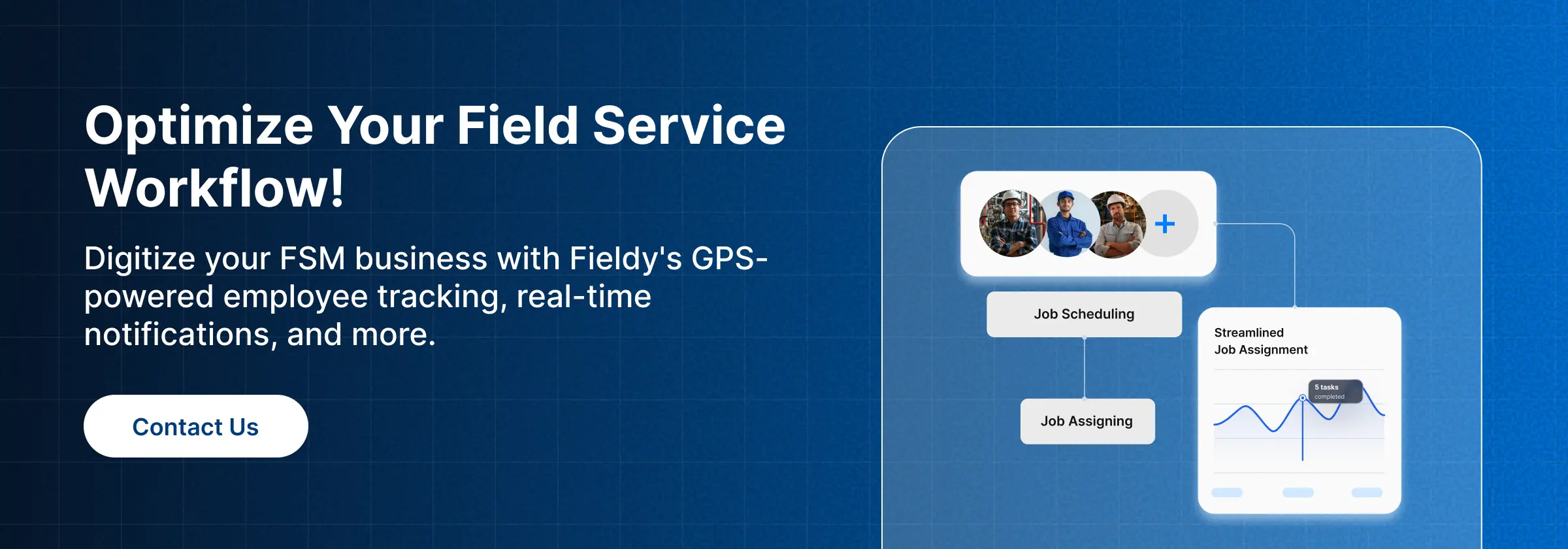
Intelligent scheduling assigns work to technicians with respect to skills, proximity, and availability. Some tools handle dynamic calendars and routing. During a pilot, a telco with dispatcher bots reduced travel time by about 16%.
Inventory Tracking
Keep track of parts and tools in real-time so that technicians do not have to face delays and downtimes. In the Oil & Gas industries, this means field teams avoid wastage and downtime by monitoring stock levels through code-enabled dashboards.
Mobile Workforce Management
Technicians employ mobile apps to view assignments, enter data in the field, and sync with the office. Such apps can increase productivity by up to 30% in contemporary deployments.
Reporting & Analytics
Using their dashboards, managers track performance, job resolution, costs, and customer feedback and evolve from reactive to proactive decision-making.
Field Service Management in Real Life
Technician & Agent Management
Automates schedule and dispatch. For example, a plumbing company assigns emergency jobs to the nearest plumber with real-time updates.
Fleet & Asset Tracking
GPS-supported tracking assists in route optimization. Utility companies utilize it to dispatch the nearest service vehicle.
Inventory Management
Tracks parts in real-time. HVAC companies ensure technicians have the gear, cutting down on repeat visits.
Predictive Maintenance
Look at the data to stop failures. Auto parts companies automatically replenish stock, while purifier companies schedule according to usage.
Route Optimization
Lawn care and cleaning services use smart route planning to cut travel time and increase jobs done.
Customer Communication
The automated alerts and service history provide transparency for the locksmith. Usually, the locksmith informs the client of where the technician is supposed to be and what time of arrival is expected.
What is Field Service Management Software? The Backbone of Modern Field Operations
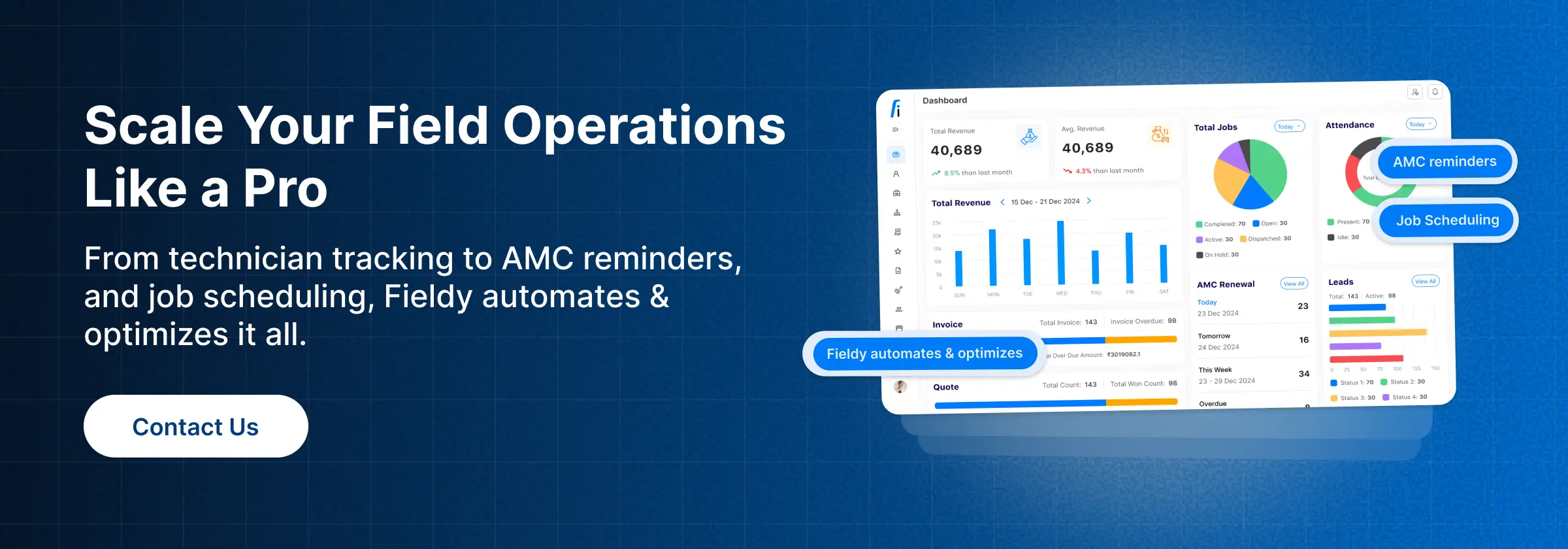
Large-scale field service management software puts every FSM aspect in one platform, workflows are automated, mobile-enabled, and support real-time tracking. Fieldy is the kind of platform that allows user-friendly scheduling, dispatching, inventory control, running live updates, and preparing reports on executive dashboards. It provides better decision-making capabilities through analytics and is mobile as well, even working with offline sync.
Technicians minimize their travel time and concentrate on jobs through AI-enhanced scheduling and route optimization, with managers achieving total transparency and customers receiving timely updates on status.
Benefits of Field Service Management
- Improved Technician Efficiency: The decrease in the technicians’ idle time and increase in productivity through optimized job routing and digital tasks is cited by some to be up to 30%.
- Enhanced Customer Satisfaction: On-time technicians with parts and insights make for happier client experiences. 74% of service personnel confirm rising customer expectations and a demand for reliability.
- Reduced Operational Costs: Digital FSM platforms will increase the level of automation of ordering systems, minimize manual errors, and, in general, maximize the usage of assets. According to industry analysis, SaaS FSM has been growing steadily at around a 13–14% CAGR as proof of ROI.
- Real-time Visibility & Tracking: IoT and mobile traveler dashboards track the job progress live and flag potential issues well ahead of deadlines.
- Better Compliance & Reporting: Electronic forms, audit logs, and timestamped entries ensure smoother regulation compliance and audits.
All the above benefits result in improved SLA performance, fewer return visits, and increased profitability.
Challenges in Field Service Management and How to Overcome Them
Operating field activity always presents a host of unique challenges — especially with an outdated system or scattered processes. See below for some of the most prevalent challenges companies encounter and how the new-age FSM solutions are designed to resolve them efficiently.
Common Issues
Appointment Misses
In a manual scheduling situation, jobs are overlapped or technicians are double-booked, or even sometimes late in dispatching. These missed appointments result in decreased productivity and loss of customer trust.
Gaps in Communication
If a team chooses to use scattered options such as emails or calls, important job-related updates can get lost. This creates obstacles for field teams and office staff, forcing them to rework problems and slowing down the entire process.
Inventory Issues
Without real-time inventory tracking, technicians might arrive on-site without the required parts or tools. This delays resolutions and causes repeated wastage of time and resources.
Real-Time Updates
With many traditional mechanisms, job status updates happen only at the end of the day, leaving managers in the dark without a proper channel to make informed decisions or keep customers accurately updated.
Solutions via FSM Tools
Optimized Scheduling
Cutting-edge Field Service Management platforms offer scheduling through AI that auto-assigns jobs based on technician availability, location, and skills, with double booking minimized and travel time maximized.
Unified Communication
A centralized mobile platform connects team members. Job details, customer notes, and updates can be shared instantly so everyone is on the same page.
Inventory Visibility
Integrated inventory management modules allow real-time part tracking with stock levels. The system warns technicians before items run out, thereby reducing downtime and increasing the first-time fix rate.
Instant Updates
Mobile Field Service Management apps enable technicians to log job status, photos, notes, and signatures, while these updates immediately sync with the back office. This offers great transparency and decreases administrative backlog.
Such an integration of all these features under one roof allows Fieldy to streamline business operations, offer error-reduction mechanisms, and guarantee consistent service quality regardless of the industry or team’s size.
Industries That Use Field Service Management
- HVAC: HVAC personnel depend on HVAC service management software to schedule maintenance visits, track the jobs, and carry out emergency repairs.
- Plumbing: Plumbing personnel employ plumbing business management software to assign related jobs, track parts, bill customers, and evaluate technician performance.
- Home Improvements: From remodeling to installations, Home Improvement Business Field Service Management Software assists in managing quotes, appointments, crew activities, and client-related communication.
- Installing Security Systems: Technicians deploying alarms and cameras rely on security management system software for routing, documentation, alerts, and system status updates.
- Facility Maintenance: Maintaining schools, offices, and factories with preventive maintenance planning, SLA tracking, and asset management comes under FSM.
These industries require huge customer interaction and speed of resolution. Your Field Service Management tools provide speed and efficiency, giving you a distinct edge.
Is Field Service Management Right for Your Business?
In an era of operational speed, visibility, and customer satisfaction wherein business defines success, Field Service Management has shifted from a fulfilling requirement to a needful core consideration. It is reckoned that Field Service Management services will be $11.5 billion by 2030; hence, those clinging to manual processes are risking untimely obsolescence.
Whether multiple teams must be handled, delayed jobs keep coming in, or one wants an optimized customer interface, a smart Field Service Management product might be the answer. A product like Fieldy takes care of everything, from intelligent scheduling to real-time tracking.
![List of the Best Field Service Management Software! Which One Should I Go With? [2026 Updated]](https://blog-admin.getfieldy.com/wp-content/uploads/2025/08/List-of-Best-Field-Service-Management-Software-in-2025.webp)