
What is Enterprise Asset Management Software? How is it Useful in Field Service in 2026?

🏗️ Introduction

Definition & Why EAM Matters in Field Service:

In the ever-evolving world of field services, assets are paramount in ensuring dependable service. What would one call an asset management system or enterprise asset management software? In simplest terms, it is a central platform meant to manage every aspect of an asset’s existence within an organization-from purchase, operation, maintenance, and finally through to decommission. 

Field service management companies operating in HVAC, elevator maintenance, security systems, or pest control have their own sets of challenges: unforeseen downtime, engineering complexities in maintenance schedules, and pressure of regulatory compliance. Asset management companies help reduce unplanned downtime, give optimal schedules to technicians, and ensure safety compliance. Enterprise asset management has evolved with platforms such as Fieldy; thus providing scalable solutions for smaller teams and enterprises alike and showing how the asset service management and asset management solutions simplify preventive maintenance, contracts, and compliance tracking.

⚙️ How EAM Differs from Basic Asset Management

While simple asset tracking may only record locations, usage, or a basic service history, enterprise asset management software (EAM) provides a complete, holistic view of asset performance and lifecycle. Key differences include:

  • Comprehensive Functionality 🧩:

EAM goes beyond tracking by integrating asset planning, preventive and predictive maintenance, cost management, compliance tracking, and reporting.

  • Proactive Maintenance 🔧:

Traditional asset tracking in HVAC, for example, only logs the last service date. EAM platforms schedule preventive and predictive maintenance, monitor equipment condition, and track AMC renewals, helping businesses reduce emergency callouts and extend equipment life.

  • Real-Time Alerts and Monitoring 🚨:

Companies can set up alerts for potential failures. For instance, a commercial HVAC company identified compressors showing early signs of wear and serviced them before total failure, avoiding costly downtime and enhancing customer satisfaction.

  • Structured Asset Lifecycle Management 🔄:

EAM ensures a lifecycle structure from procurement – utilization – servicing –  decommissioning, which improves operational efficiency and reduces repair costs.

  • Industry Adoption and Market Growth 📈:

The global EAM software market is growing rapidly, estimated at USD 7.65 billion in 2024 and projected to reach USD 8.89 billion in 2026, with expectations to hit USD 19.68 billion by 2030. This demonstrates widespread adoption across industries seeking streamlined maintenance, better compliance, and operational efficiency.

  • Operational Benefits 💼:

Organizations implementing EAM report improved first-time fix rates, reduced repair costs, and extended asset lifespans. This is particularly critical in industries like HVAC, elevators, and security systems, where downtime directly impacts revenue and customer trust.

By shifting from reactive to proactive service strategies, EAM enables businesses to maintain compliance, enhance customer trust, and achieve measurable operational benefits.

🧠 Core Features of Enterprise Asset Management Software in FSM

A robust EAM platform incorporates features designed to streamline field operations and integrate seamlessly with other tools. A centralized asset register and database provides full visibility across all locations, while preventive and predictive maintenance scheduling helps avoid costly failures, supported by analytics that reduce downtime. 

For field teams, contract and warranty management automates AMC renewals and ensures compliance, reducing administrative burden. Asset condition monitoring detects wear and tear early, allowing technicians to address issues proactively. 

With mobile access, technicians can update service records in real time and access asset histories instantly, improving efficiency. Integration with scheduling, invoicing, and CRM systems ensures that service data aligns with business operations, illustrating why job scheduling software in FSM and EAM together creates smoother workflows. ⬇️⬇️⬇️
CTA Banner 1

💡 Benefits of Enterprise Asset Management for Field Service Teams

Implementing enterprise asset management software delivers tangible benefits. An extended asset lifespan is achieved through consistent servicing, while predictive maintenance reduces the cost of emergency repairs. Optimized workforce allocation ensures technicians are dispatched based on skill, location, and asset requirements, connecting operational efficiency to customer satisfaction. 

Real-time data and transparency allow managers to track assets and service completion accurately, and customers gain confidence knowing their equipment is maintained systematically. Many field service businesses also integrate EAM with employee productivity software, ensuring teams remain accountable while maintaining high-quality service. 

Case Study 🌐: A UK-based elevator service company improved its first-time fix rate by 22% after adopting these practices, showing measurable operational benefits.

🚀 How Fieldy Powers Enterprise Asset Management

Fieldy exemplifies modern enterprise asset management software by combining usability with advanced capabilities. Its scalable platform supports both SMBs and enterprises, while smart AMC and contract management automate renewals and alerts, ensuring no contracts are missed. No-code custom checklists help standardize processes, and live technician tracking and communication tools keep field teams aligned.

Fieldy also provides real-time inventory updates, so technicians always have access to critical parts, reducing delays. Electrical service companies using Fieldy have reported significant reductions in overtime while improving repeat customer engagement, highlighting the real-world impact of integrated EAM solutions. Integration with lead management software further enhances operational efficiency by connecting asset servicing with customer relationship tracking.

🏭 Industries Benefiting from Enterprise Asset Management

Several industries see clear advantages in adopting EAM solutions, as they streamline asset usage, reduce operational costs, and enhance compliance.

  • HVAC Companies 🌬️– These businesses manage seasonal demand, monitor system loads, and schedule preventive servicing with greater accuracy. By leveraging EAM platforms, often integrated with the best HVAC software for small businesses, they can cut emergency breakdowns, ensure customer comfort, and maximize technician productivity.
  • Elevator Companies 🛗– Safety and compliance are top priorities in this sector. EAM enables timely inspections, predictive maintenance, and detailed reporting, which aligns with the best elevator management software in field service management (FSM). This ensures fewer unexpected breakdowns, higher uptime, and stronger regulatory compliance.
  • Security System Providers 🛡️– From cameras to access control units, hardware reliability is critical. With EAM’s integrated asset tracking and maintenance scheduling, similar to the best security system software, companies can reduce downtime, extend equipment life, and deliver uninterrupted service to clients.
  • Pest Control Companies 🐜– EAM helps track specialized equipment, chemical usage, and service schedules. By integrating features of the best pest control software, businesses ensure technicians always have the right tools and resources on time, improving operational efficiency and compliance with safety regulations.

Insights 🧠: Industry case studies consistently show that businesses adopting EAM can reduce downtime by up to 30% while improving service quality and workforce efficiency. For field-heavy operations, this makes EAM not just beneficial but indispensable for long-term competitiveness.

🔮 Conclusion:

Future of Enterprise Asset Management in FSM

The future of field service revolves around IoT-enabled monitoring, AI-powered predictive maintenance, and cloud-based, mobile-first solutions. Understanding what enterprise asset management software is and implementing platforms like Fieldy allows businesses to optimize assets, streamline workflows, and maintain high service standards.

By combining asset lifecycle management, predictive maintenance, and workforce optimization, companies can reduce operational costs while enhancing customer trust. These strategies also align naturally with broader field service optimization and route optimization approaches, enabling comprehensive operational efficiency across teams and locations. ⬇️⬇️⬇️
CTA Banner 2

FAQs❓

What is enterprise asset management software?

Enterprise asset management (EAM) software is a centralized system that manages all assets across their lifecycle. It tracks maintenance, compliance, costs, and service history, helping field service teams stay organized and efficient.

How is EAM different from basic asset management?

Unlike basic asset tracking, EAM includes preventive and predictive maintenance, lifecycle planning, compliance monitoring, and reporting. It provides actionable insights to reduce downtime and optimize resource utilization.

Which features are essential in EAM software for field service?

Centralized asset database, predictive maintenance, AMC tracking, condition monitoring, mobile access, and CRM integration are essential features, ensuring efficient operations, reduced downtime, and enhanced customer satisfaction in field service.

How does EAM improve technician productivity?

EAM gives technicians real-time asset visibility and mobile access to updates, service histories, and automated maintenance alerts, reducing travel and ensuring faster, more accurate job completion.

Which industries benefit most from EAM in field service?

Industries like HVAC, elevator maintenance, security systems, and pest control benefit from EAM through improved uptime, efficient workforce allocation, regulatory compliance, and enhanced customer satisfaction.
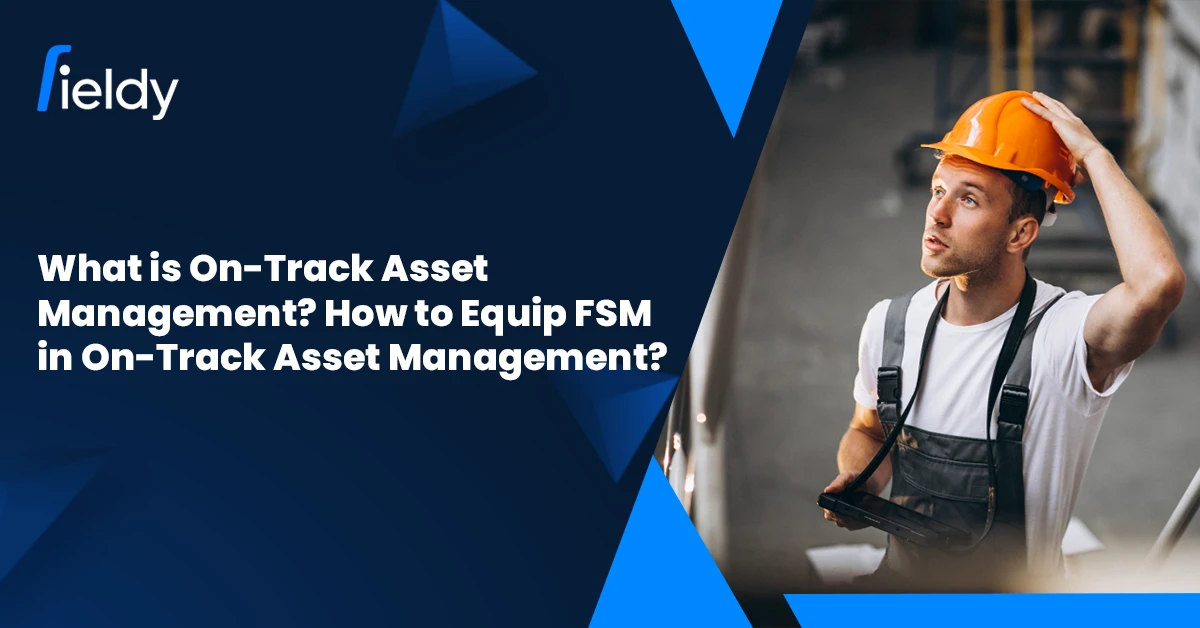

What is On Track Asset Management? How to Equip FSM with Asset Management Equipment in 2026?

🌟 Introduction

🚦 Why Staying “On Track” with Asset Management is Critical in FSM

Assets in field service management (FSM) are the backbone of the operations. What maybe an HVAC system, elevator, pest control sprayer, or a surveillance camera-times represent reliability, revenue, and customer trust. Once this equipment fails, the effect is instantaneous, with downtime increasing, customer confidence waning, and operating costs skyrocketing.

Thus, the term on-track asset management pops up here. Literally, it ensures that assets are monitored, maintained, and serviced at the right time-this is done without undue delays or blind spots. Preventing service interruptions and course-extending are the paramount occasions that keep assets “on track.” 

📊 Insights: With modern-day asset tracking, any field service business should no longer rely on manual registers or spreadsheets. Asset visibility can boost workforce productivity by 28%, cut repair and maintenance efforts by 17%, and reduce operational downtime by up to 20%, enabling smoother and more efficient operations. An automated inventory management system ensures assets are easier to locate and manage, saving both time and operational costs.

Thereby, bridging this gap, modern-day solutions like Fieldy provide businesses with dedicated asset management equipment software that automatize monitoring, contract management, and technician updates-Essentially so that the service teams maintain alignment with customer commitments. In addition, many businesses then view larger frameworks such as asset service management and asset management solution areas to see how end-to-end visibility aids efficiency checking.

🧭 What is On Track Asset Management in Field Service?

Asset management on tracks goes far beyond simply knowing the location of a piece of equipment. It is a proactive, structured approach to asset monitoring-on-condition maintenance, preventive servicing, compliance checks, and even eventual replacement planning. Rather than waiting for a failure to affect production, the company ought to foresee possible failures and work toward preventing downtime. 

Forward-looking management of assets supports asset instances being tracked right through procurement, through usage, through servicing, warranty coverage, and finally decommissioning.

🏭 Industry Applications of On-Track Asset Management

❄️ HVAC Services

Routine tracking of compressors, filters, and HVAC components helps prevent inefficiencies. Studies indicate that dirty HVAC filters can raise energy consumption by nearly 15%, highlighting the importance of timely servicing.

🏗️ Elevator Companies

Elevators must follow strict inspection schedules due to regulatory requirements. With on-track asset management, missed inspections are avoided, ensuring compliance and preventing costly penalties.

🐞 Pest Control Providers

From chemical tanks to spraying equipment, visibility into condition and usage is critical. Proper monitoring helps maintain safety and compliance standards.

🔒 Security System Firms

Cameras, alarms, and motion sensors demand regular checks and firmware updates. Asset tracking ensures equipment remains reliable, maintaining customer trust and performance guarantees.

📈 Insight: Organizations that rely on proactive scheduling see up to a 30% decrease in unplanned downtime, proving how preventative planning strengthens operational resilience. When combined with field service asset management software, companies unify technicians, equipment data, and maintenance logs into one streamlined system.

⚙️ Core Components of On-Track Asset Management

🗂️ 1. Asset Database & Equipment Register

A centralized register acts as the single source of truth, consolidating data like installation dates, warranty periods, service records, and parts history. For FSM, this asset management equipment database forms the backbone of transparency and efficiency.

🗓️ 2. Preventive Maintenance Scheduling

Preventive maintenance plays a direct role in reducing costs. McKinsey highlights that predictive and preventive strategies can cut downtime by 30-50% and extend machine lifespan by 20-40%. FSM teams with automated scheduling avoid service delays and dissatisfied customers. 🔽🔽🔽

CTA Banner 2

🧾 3. Contract & Warranty Tracking

Manual management of AMCs (Annual Maintenance Contracts) often leads to missed renewals. With digital tools, companies can automate renewals, track warranties, and link contracts to customer records, securing revenue and boosting client retention.

📡 4. Condition Monitoring Tools

IoT sensors allow early detection of equipment issues. For example, vibration sensors in elevators can alert technicians before breakdowns occur, minimizing unexpected downtime.

📱 5. Technician Mobile Access

Mobile-first platforms provide field teams with real-time access to asset conditions, service logs, and checklists. Updates sync instantly with the backend, avoiding miscommunication. Research shows that technicians complete 25% more service calls weekly when they have quick access to asset data and location history.

💼 Benefits of Equipping FSM Teams with Asset Management Equipment

Arming service teams with the right asset management equipment drives measurable gains:

  • Extended Asset Lifespan: Preventive maintenance can cut capital expenditure by 10% by maximizing equipment life (Deloitte).

  • 🧰 Lower Maintenance Costs: Proactive servicing is up to three times cheaper than reactive repairs. 

  • 👷 Smarter Workforce Allocation: Dispatchers match technician skills with asset needs, increasing job efficiency. 

  • 🌐 Real-Time Visibility: Cloud-based platforms replace manual paperwork, reducing service record errors. 

  • 🧾 Compliance & Trust: Detailed logs assure customers of quality while supporting audit and regulatory requirements.

When integrated with strategies to improve workforce productivity in field service, these equipment solutions strike the right balance between cost savings and customer satisfaction.

🚀 How Fieldy Keeps Asset Management On Track

Fieldy unifies the pillars of on-track asset management in one intuitive, easy-to-use platform:

  • 🧮 Centralized Asset Dashboard – All contracts, service logs, and maintenance cycles are stored in a single system, giving managers and technicians full visibility into asset histories and operational performance at any time.
  • 🔁 Smart AMC Management – Automated reminders for contract renewals and preventive maintenance schedules ensure no deadlines are missed, helping businesses secure ongoing revenue and maintain strong customer relationships.
  • 🧩 Role-Based Access & Digital Checklists – Field teams can follow structured, no-code checklists to maintain service consistency, reduce errors, and standardize operational workflows across multiple locations.
  • 📍 Live Technician Tracking – By pairing real-time asset data with GPS tracking, managers can dispatch the right technician faster, monitor progress in the field, and provide customers with accurate updates instantly.

  • 🔗 Seamless Integrations – Fieldy connects with CRM, invoicing, and scheduling software, keeping asset servicing, billing, and customer communications fully synchronized for smooth operations.

🏢 Industries Benefiting from On-Track Asset Management

🔔 Conclusion

🔮 The Future of On Track Asset Management in FSM

The future of on-track asset management lies in advanced technologies. IoT sensors, AI-driven predictive analytics, and digital twins are redefining how organizations approach asset care. Gartner predicts that by 2026, 75% of field service companies will use AI or ML for predictive maintenance.

As FSM tools evolve into mobile-first solutions, the role of asset management equipment integrated with CRM, invoicing, and scheduling will become even more central. Companies that invest in these systems not only avoid costly breakdowns but also deliver consistent customer value.

Additionally, when aligned with strategies like field service optimization and route optimization, asset visibility directly contributes to profitability and efficiency.

Fieldy’s field service management software is helping businesses stay ahead, ensuring that assets, field teams, and customer commitments remain firmly on track. 🔽🔽🔽

CTA Banner 2

❓ FAQs

What is on track asset management in field service?

It is a proactive approach to asset monitoring, servicing, and compliance, ensuring equipment is always maintained on schedule to avoid downtime and maximize efficiency.

Why is asset management equipment essential for FSM?

It centralizes asset data, automates preventive maintenance schedules, and gives technicians real-time access to service records, enabling faster decision-making and seamless field operations.

How does Fieldy support on track asset management?

Fieldy integrates AMC tracking, technician location updates, role-based checklists, and CRM connectivity to streamline asset servicing while ensuring complete visibility across field teams.

Which industries benefit the most from asset management software?

HVAC, elevators, security systems, and pest control industries see the highest ROI due to their reliance on equipment-heavy operations and strict compliance requirements.

What future trends are shaping FSM asset management?

IoT monitoring, AI-based predictive models, and mobile-first tools are leading the next wave of asset management solutions with enhanced automation and predictive accuracy.

What is Asset Service Management? What Are Asset Management Solutions for Field Service Teams?

🌟 Introduction

⚙️ Why Asset Service Management Matters in FSM

Asset servicing, in brief, with reliability and customer trust in the fast-paced domain of field service. Assets serve seamlessly: think HVAC companies with AC units, elevator companies with safety-critical systems, pest controllers with tools, or security companies with surveillance devices. When these assets fail, downtime just might have a straightforward cost-the revenue loss, dissatisfied customers, depending on the nature of failure, or both. 

Take HVAC: One breakdown during a summer peak would translate to emergency repair expenses and lost contracts into the hundreds of thousands. Elevator downtime in big buildings inconveniences hundreds of tenants and also attracts compliance penalties. An office without asset servicing flourishes big. This explains some serious business for a platform like Fieldy, coined as an all-in-one asset servicing solution for proactive maintenance, asset tracking, and workforce scheduling.

📊 Statistic: Reflecting this demand, the IT asset management market is expected to grow from USD 1.7 billion in 2026 to USD 3.0 billion in 2035, at a CAGR of 6.1%.

Companies report up to 30% improvements in operational efficiency when they embrace field service optimization practices such as route planning and predictive maintenance, which goes to show how much value modern servicing strategies hold for the companies.

🏗️ What is Asset Service Management in Field Service?

In essence, the service management of assets is the systematic processes applied to track, maintain, and optimize physical assets throughout their lifecycle. For field service, this spans from installation to maintenance, AMC (Annual Maintenance Contracts), predictive maintenance, and so on until replacement.

Key elements include:

  • 🔁 Lifecycle Management: Ensuring assets remain productive from deployment through retirement.
  • 🧾 AMC & Service Request Handling: Automating recurring service obligations and responding quickly to urgent needs.
  • 🔗 Process Integration: Linking servicing activities with scheduling, invoicing, and contract workflows.

💡 Fact: With 46% of service organizations missing SLAs and 40% lacking skilled technicians, optimized asset management is essential. Reactive fixes can raise costs up to 50% versus preventive models, while proactive strategies cut downtime and boost satisfaction. Modern platforms with robust work order management give teams visibility into requests, assignments, and progress, reducing inefficiencies.

💻 What Are Asset Management Solutions?

So, what are asset management solutions? They are digital platforms that enable companies to track, monitor, and manage their assets effectively while keeping technicians and managers aligned. By consolidating asset data into one system, these tools ensure transparency, compliance, and timely interventions.

🔑 Key capabilities in the field service context include:

  • 🧾 AMC & warranty tracking – Automates contract renewals and ensures customers never miss coverage.
  • 🤖 Predictive maintenance – Uses IoT data and analytics to prevent unexpected failures.
  • 🗓️ Workforce scheduling – Matches the right technician to the right task with minimal delays.
  • 📡 Condition monitoring – Provides real-time insight into asset performance.
  • 📲 Mobile-first tools – Allow technicians to update records instantly on-site, reducing paperwork.

📈 Insight: The adoption of these solutions is growing fast. Analysts predict that by 2026, more than 60% of field service firms will rely on predictive maintenance tools, since downtime costs can average $5,600 per minute in manufacturing and industrial sectors. For service providers, avoiding such losses is critical.

Solutions that combine asset condition monitoring, workforce allocation, and contract management in one ecosystem, such as Fieldy, help field businesses minimize risks while boosting profitability. 🡻🡻🡻

CTA Banner 1

🌿 Benefits of Using Asset Servicing Solutions for Field Service Businesses

Using an asset servicing solution offers measurable benefits that directly impact field service success:

  • ⏳ Longer Asset Lifespan: Scheduled maintenance extends asset longevity. For instance, research in the HVAC sector shows that routine servicing can increase equipment life by 30–40%, reducing replacement costs. With a field service asset management software, businesses can ensure consistent care.
  • ⚡ Higher Efficiency: With intelligent scheduling and routing, technicians spend less time traveling and more time resolving issues. Companies implementing field service scheduling software report up to a 25% improvement in first-time fix rates, leading to increased customer trust.
  • 💸 Cost Reduction: Predictive maintenance, utilizing AMC management software, reduces emergency breakdowns. In the elevator industry, predictive tracking cut unplanned service calls by nearly 30%, saving providers thousands annually.
  • 🧾 Compliance & Safety: Automated service records help companies in security or pest control demonstrate compliance during audits, minimizing legal risks.
  • 🤝 Improved Customer Experience: Customers value transparency and reliability. Integration with customer experience software allows clients to view service histories and upcoming schedules, boosting renewal rates.

🧩 Key Features of Fieldy’s Asset Service Management Software

Fieldy is engineered to address the practical needs of field service teams, offering a comprehensive suite of features that simplify and streamline asset servicing across industries. From managing equipment records to empowering technicians in the field, Fieldy helps businesses boost efficiency, reduce downtime, and deliver better customer experiences.

  • 🗂️ Centralized Asset Database – Maintain a unified record of all customer equipment, complete with detailed service history, enabling quick access to critical information during service calls.
  • 🔁 AMC & Contract Renewals – Automate reminders and renewals to avoid missed opportunities, ensuring consistent revenue flow and stronger customer relationships.
  • 📅 Preventive Maintenance Scheduling – Leverage built-in scheduling tools to plan timely maintenance, helping businesses prevent unexpected failures and extend asset lifespans.
  • 📲 Technician Mobile App – A user-friendly field service mobile app designed for field teams, allowing technicians to update job status, capture customer signatures, and access service details instantly.
  • 📊 Predictive Condition Monitoring – Track real-time asset health with predictive monitoring capabilities to identify issues early and minimize costly downtime.
  • 🔗 Seamless Integration – Connect effortlessly with billing systems and field service CRM software to create a complete FSM ecosystem that enhances collaboration and visibility across departments.

📱 Gartner Insight: Gartner notes 75% of field service leaders prioritise mobile-first tools, making Fieldy’s mobile-ready design a clear edge for faster, smarter service.

🏆 Why Fieldy is the #1 Asset Servicing Solution for Field Service Teams

🌍 Fieldy positions itself as the leading asset servicing solution because it unifies workforce optimization, asset management, and AMC tracking into a single, scalable platform.

  • 👨‍🔧 Designed for SMBs and Enterprises – Works for both growing businesses and large-scale operations.
  • 💰 Flexible & Affordable – Pricing models scale with business needs.
  • 🧾 All-in-One FSM – Combines asset management, scheduling, invoicing, and route planning.
  • 🔄 Unified Platform – Aligns field technicians, back-office teams, and customers.

Unlike fragmented systems or manual spreadsheets, Fieldy ensures service teams have real-time visibility and control. For companies evaluating field service management software, Fieldy delivers an integrated, future-proof choice.

📘 Conclusion

For field service businesses, combining asset service management practices with modern asset management solutions is the pathway to higher efficiency, cost control, and customer loyalty. With preventive maintenance, AMC tracking, and mobile-first tools, service providers can ensure asset reliability while building trust with clients.

Looking ahead, innovations such as AI-driven predictive maintenance and IoT-based asset monitoring will further transform how companies manage service operations. Those who adopt Fieldy’s field service solutions today will be well-prepared for these shifts.

Fieldy offers exactly what field service businesses need: an affordable, scalable, and complete asset servicing solution designed for long-term success. Need the best asset servicing solution? Choose Fieldy today. 🡻🡻🡻

CTA Banner 2

❓FAQs

What distinguishes asset service management from general asset management?

Asset management emphasizes tracking and financial planning for assets, while asset service management focuses on scheduled maintenance, contract tracking, and optimizing lifecycle performance.

How do asset management solutions help reduce downtime?

By providing predictive alerts, service scheduling, and real-time condition monitoring, they minimize unexpected failures and improve uptime.

Why is AMC tracking important in FSM?

It ensures customers receive timely service, reduces missed revenue, and keeps assets in reliable condition.

Does Fieldy integrate with CRM or invoicing tools?

Yes, Fieldy connects with field service CRM software and billing systems, giving businesses a unified platform for operations.

Which industries benefit most from asset service management?

HVAC, elevators, pest control, and security systems gain significant value since their services depend heavily on asset reliability and compliance.

Is Fieldy scalable for businesses of different sizes?

Absolutely. From small service providers to enterprise-level companies, Fieldy adapts with scalable features and flexible pricing.

What is Asset Servicing in FSM? What’s the Top Asset Management Software for Field Service Teams in 2026?

🌟 Introduction

⚙️ Why Asset Servicing Matters in Field Service

In the current service operations, downtime not only creates inconvenience but also tarnishes customer confidence and thwarts profitability. For industries that deal with HVAC, elevator systems, security solutions, and pest control, asset reliability is at the heart of their success. That is why asset servicing has stood at the heart of field service.

An increasing number of companies are depending on field service asset management software to streamline lifecycle management, manage AMCs, and maximize technician utilization. This is pretty much like how property owners would plan for costs carefully, such as: how much does it cost to maintain a home elevator?, to ensure safety and efficiency for the future.

💹 Statistics: The field service management market is projected to reach USD 5.64 billion in 2026 and grow to USD 9.68 billion by 2030, registering a CAGR of 11.39%.

Much like field service optimization or route optimization intends to bring order into scheduling and fleet operations, asset servicing stands for the upkeep of equipment to ensure reliability and profitability along its lifecycle.

🏗️ What is Asset Servicing in Field Service Management?

So, asset servicing in field service refers to the scheduled maintenance, inspection, repair, and replacement of equipment so that everything remains in perfect operating condition. These could be HVAC systems, alarms, elevators, or any other mission-critical piece of equipment. 

Asset servicing differs from work order management in that work order management is task-driven, focusing on tracking jobs to be completed. In contrast, asset servicing examines the entire life cycle of an asset, including its performance, safety, and compliance. Businesses that study work order management best practices in FSM come to realize that asset servicing is the longer-term perspective, providing real-time contribution to smoother operations.

This is supported by data from the industry. Deloitte’s 2024 facilities report showed that organizations operating structured asset servicing programs cut down unplanned downtime by almost 30% compared to companies working reactively. Customers notice this reliability and are usually willing to stay loyal and do business again.

CTA Banner 1

🌿 Benefits of Asset Servicing in Field Service Teams

To truly understand what asset servicing is, it helps to look at the benefits it delivers to service teams and customers alike.

  • 🧰 Proactive Maintenance: With AMC (Annual Maintenance Contract) software, companies move away from break-fix models toward planned maintenance. This prevents small problems from turning into costly breakdowns. For example, a European HVAC provider that automated its AMC process reported a drop in emergency requests within a year.
  • ⚡ Reduced Downtime: Every minute of downtime impacts productivity and customer satisfaction. Aberdeen Group’s research revealed that firms with mature asset servicing practices improved uptime by an average of 18%.
  • 💰 Cost Optimization: Proper servicing extends the useful life of assets, lowering replacement costs. A Florida-based pest control business implemented digital servicing schedules and achieved a few reductions in replacement expenses due to better preventive upkeep.
  • 🛡️ Regulatory Compliance: Sectors like elevators and HVAC must comply with strict safety and regulatory standards. Regular servicing ensures adherence to those standards while avoiding penalties or accidents.
  • 🤝 Customer Trust & Retention: Customers value reliability. Companies that integrate asset management with customer experience software consistently see higher satisfaction and retention rates. As noted in approaches for improving employee productivity in field service, dependable service is the foundation of trust.

🧩 Key Features to Look for in Asset Management Software

When evaluating what the top asset management software for field service teams is, features matter more than ever. The most effective platforms include:

  • 🧾 AMC & Contract Management: Automated renewals, compliance alerts, and reminder systems keep all contracts on track efficiently.
  • 📍Live Asset Tracking & Scheduling: Technicians can access complete service histories instantly, leading to faster and more accurate resolutions.
  • 🤖 Predictive Maintenance: AI-powered insights anticipate failures before they occur. McKinsey estimates that predictive maintenance can lower annual maintenance costs by 10–15%.
  • 🏢 Multi-location & Franchise Management: Scalability is critical for businesses handling assets across different regions or branches.
  • 📲 Mobile-first Tools for Technicians: Remote teams need instant access to job data and servicing schedules, making mobile compatibility essential.

These features align closely with the latest checklists for field service software, where automation and technician mobility consistently rank high for 2026.

🏆 What’s the Top Asset Management Software for Field Service Teams? [2026 List]

Here’s a closer look at leading solutions in 2026:

🥇Fieldy – Best Overall

  • 🔁Fieldy is purpose-built for field service businesses, offering AMC automation, asset servicing histories, real-time technician tracking, and predictive servicing with condition monitoring. Its mobile-first, scalable design makes it equally effective for SMBs and large enterprises, ensuring technicians can access asset data and compliance records anytime.
  • 🛰️By combining preventive maintenance, AMC renewals, and multi-location support, Fieldy helps reduce downtime and improve asset lifecycle performance. An electrical services firm that implemented Fieldy was able to significantly reduce overtime costs while also increasing repeat customers within six months.
  • 🧠The median first-time fix rate for field service teams in 2026 stands at 71.9%, highlighting stronger efficiency and operational maturity driven by effective asset servicing practices.
  • 🌍Affordable yet powerful, Fieldy’s Field Asset Management Software bridges the gap between enterprise-heavy tools and SMB-friendly platforms. That’s why companies comparing the advantages of asset management in field service consistently rank it as the top choice.

CTA Banner 2

🥈ServiceTitan

  • 💡Popular in the HVAC and electrical industries.
  • 💰Offers advanced features but comes with premium pricing.

Comparisons of Fieldy vs ServiceTitan often show that ServiceTitan suits enterprises, while SMBs lean toward Fieldy.

🥉Jobber

  • 🧾Simple platform for scheduling and invoicing.
  • 🚫Lacks deep asset lifecycle management, which limits its use in compliance-heavy industries.

Many comparisons of Fieldy vs Jobber conclude that Jobber works for light service scheduling, while Fieldy is better for asset-heavy teams.

🏅IFS Field Service Management

  • 🧠Enterprise-focused and ideal for large-scale asset servicing needs.
  • 💡Offers advanced lifecycle management but is costly.

In Fieldy vs IFS Field Service Management discussions, IFS is praised for enterprise capabilities, while Fieldy is recognized for accessibility and value.

📘Conclusion:

✅Why Fieldy is the Top Choice for Asset Servicing in FSM

Asset servicing is more than a scheduled task; it is the framework for efficiency, compliance, and long-term customer relationships. Companies that adopt structured asset servicing processes see measurable reductions in downtime, improved compliance, and higher profitability.

Fieldy stands out as it merges asset lifecycle management, AMC automation, and workforce optimization into one unified solution. With its mobile-first approach, no setup costs, and adaptability across SMBs, franchises, and large enterprises, Fieldy remains the most practical choice in 2026.

As industries push toward smarter service delivery, leveraging asset servicing through advanced Field Service Management Software like Fieldy is no longer optional; it is a necessity for staying competitive.

❓FAQs:

What is asset servicing in field service management?

Asset servicing refers to the ongoing maintenance, inspections, repairs, and lifecycle management of assets like HVAC units, elevators, and security systems to maximize safety, compliance, and efficiency.

Why is asset servicing important for field service teams?

It helps reduce downtime, extend asset life, control costs, maintain compliance, and build customer trust, directly improving profitability.

What’s the top asset management software for field service teams in 2025?

Fieldy is widely recognized as the best overall option due to its AMC automation, predictive maintenance features, and mobile-first platform design.

How does asset servicing differ from work order management?

Work order management is about tracking and executing jobs, while asset servicing oversees the entire lifecycle of equipment, ensuring consistent performance and compliance.

Can asset management software help with compliance?

Yes. Advanced FSM platforms track safety standards, automate certifications, and schedule compliance checks, helping businesses stay audit-ready.

What is Asset Management, Work Management & Asset Condition Management in Field Service? [2026 Guide]

🏆Introduction

⚙️Why Asset & Work Management Matters in Field Service

Modern-day field services consider asset reliability and efficiency as revenue, safety, and client confidence. Asset management ensures that equipment like HVAC systems, elevators, security systems, or pest control machines works reliably, thus reducing downtime periods and expensive repairs. Work management organizes technicians, scheduling, and execution of service included with tasks to assets for full-fledged operations.

The FSM market comprising asset management solutions is projected to grow from USD 5.0 billion in 2026 to USD 14.6 billion by 2035 (11.4% CAGR).

Equipment condition management further boosts efficiency by providing monitoring of equipment from IoT sensors, issuance of digital checklists, and predictive maintenance acts before any failures occur. Reactive maintenance can cause costs to be inflated by almost 50%, while preventive approaches return the unplanned downtime reduction of about 25-30% for HVAC and elevator services.

Fieldy is one such powerful AMC software that maintains asset tracking, contract management, and workforce optimization in one platform. Through this setup, other time-consuming field operation scheduling, invoicing, and automated alerts get bypassed. 

Job scheduling software within the field service ensures synchronizing workforce schedules and asset maintenance.

📋What is Asset Management in Field Service?

An asset management process in field service means systematically monitoring, maintaining, and optimizing physical assets in their whole lifecycle. It entails making sure HVAC units get proper servicing on time, elevators maintain safety regulations, and pest control equipment is kept up to its maintenance schedule. Integrating asset and work management allows companies to correlate service delivery with asset availability, avoiding any unplanned downtime and thus optimizing maintenance costs.

For instance, an elevator service provider receives automatic reminders from the asset management software for inspections, thereby ensuring the inspections are carried out on time and thus compliance to prevent interruptions. HVAC companies using predictive maintenance tools on top of field service platforms report an increase of up to 30% in first-time fix rates and a 25% reduction in technician response times.

Also, centralized asset management can assist in monitoring historical maintenance records, warranties, and replacements, thus ensuring that high-cost assets are utilized efficiently during their lifecycle.

Many organizations combine asset management with contractor management in field service to synchronize third-party teams seamlessly, boosting operational efficiency across multiple locations.

🛗Key Asset Management Practices

  • 🔍 Lifecycle Tracking: Monitor assets from installation to decommission, recording performance metrics and service history.

  • 🗓️ Maintenance Scheduling: Automate preventive service to reduce emergency repairs and extend asset life.
  • 📦 Inventory Integration: Track spare parts and replacement components to avoid operational delays.

👷‍♂️What is Work Management in Field Service?

Work management streamlines planning, execution, and tracking of service jobs by linking tasks to specific assets, giving technicians clear priorities and tools, and reducing errors. AMC software automates recurring tasks like HVAC or elevator inspections, ensuring nothing is missed. Integrating work management with asset condition monitoring triggers work orders for anomalies, enhancing response times and operational visibility. In 2026, FSM Software adoption delivered up to 30% faster responses and improved service quality across industries.

SMB HVAC providers leveraging integrated platforms also experience up to 75% of field workers reporting that AI-enabled mobile tools improve scheduling, routing, and access to critical information, saving time on the job and increasing first-time fix rates.

Field service workflow optimization further enhances efficiency by ensuring that tasks, assets, and technicians are fully synchronized.

🔄Benefits of Effective Work Management

  • 👥 Improved Resource Allocation: Assign technicians to jobs based on skill set and location.

  • 🚚 Faster Service Delivery: Optimized schedules reduce travel time and service delays.

  • 👀 Operational Visibility: Managers can track pending jobs, completed tasks, and technician performance in real time. ⏬

CTA Banner 1

🔄What is Asset Condition Management?

Asset condition management proactively monitors equipment health using IoT sensors, predictive maintenance tools, and digital checklists. Continuous performance tracking enables companies to anticipate issues and intervene before failures occur.

For example, HVAC sensors detecting abnormal temperature or pressure alert technicians for preventive maintenance, while elevators monitored via digital checklists ensure safety compliance and reduce accident risks. Asset condition management also enables real-time reporting, boosting transparency and trust with management and clients. Companies using these systems see up to 30% fewer emergency calls and better SLA adherence.

Checklists for field service software help maintain safety and regulatory compliance effectively.

🔍Key Asset Condition Management Features

  • 📊 Real-time Monitoring Dashboards: Continuous tracking of asset performance metrics.

  • 🔔 Automated Alerts: Notify managers or technicians of deviations from normal ranges.

  • 🔗 Maintenance Integration: Trigger preventive work orders automatically based on condition insights.

Advantages of Asset Management in Field Service

Integrating asset, work, and condition management delivers tangible business benefits:

  • ⬆️ Improved Equipment Uptime: Scheduled and predictive maintenance minimizes unexpected breakdowns.

  • 💰 Cost Savings: Fewer emergency repairs and optimized resource allocation reduce expenses.

  • 🛡️ Compliance & Safety: Digital checklists and audit trails ensure adherence to regulations.

  • 😊 Enhanced Customer Experience: Accurate invoicing and timely service foster trust and loyalty.

  • 📈 Data-driven Insights: Real-time analytics support strategic decisions.

A pest control company using Fieldy’s AMC platform can track chemical usage, technician activity, and asset performance simultaneously. The advantages of asset management are clear in multi-location operations, and integrating the best customer experience management software in FSM links asset insights with customer feedback for better service.

🏆Most Recommended Asset Management Software for Field Service [2026 list]

1️⃣ Fieldy – Best Overall 

Fieldy is designed for AMC-based businesses such as HVAC, elevators, security, and pest control. It provides comprehensive features including AMC contract management, live job tracking, multi-location support, and predictive maintenance alerts. Its mobile-first interface ensures field service technicians can access real-time asset data anywhere, with no setup costs. Pros include affordability, scalability, and easy integration of asset and work management, while cons involve advanced analytics modules still evolving.

Fieldy’s field service management software also offers broader capabilities aligned with FSM, allowing businesses to unify asset tracking, scheduling, and workforce operations under a single platform.

This integration makes it the most recommended asset management software for field service in 2026.

2️⃣ ServiceTitan

ServiceTitan is a robust enterprise solution particularly suited for HVAC and electrical service providers. It offers advanced reporting and comprehensive asset tracking. While its features make it ideal for large-scale operations, its cost can be prohibitive for small and medium businesses. Fieldy vs ServiceTitan comparisons highlight how Fieldy’s mobile-first design and predictive maintenance tools offer SMBs a more flexible alternative.

3️⃣ Zoho FSM

Zoho FSM delivers strong integrations with third-party platforms, making it a good choice for large operations that need versatile workflows. However, smaller businesses may find its complexity challenging. Comparing Fieldy vs Zoho FSM shows that Fieldy provides a simpler setup and easier access to real-time asset insights for small to medium teams while still supporting multi-location growth.

4️⃣ Jobber

Jobber focuses on small and medium-sized businesses, offering basic AMC functionality and easy deployment. However, it lacks advanced predictive maintenance and asset condition management features. A Fieldy vs Jobber comparison demonstrates how Fieldy’s combination of real-time tracking, predictive alerts, and mobile accessibility provides greater operational efficiency.

5️⃣ IFS FSM

IFS FSM targets enterprise-level organizations, offering extensive asset and work management tools and powerful analytics. Its complexity and high pricing make it less suitable for SMBs. Fieldy vs IFS FSM analysis shows that Fieldy delivers similar AMC capabilities with lower costs and easier mobile access, making it a practical solution for businesses scaling across multiple locations.

Conclusion

Efficient field service integrates asset, work, and asset condition management. Fieldy reduces manual errors, streamlines scheduling, and boosts productivity, leading to fewer interruptions, higher SLA compliance, and better customer satisfaction.

With predictive maintenance, IoT monitoring, and real-time reporting, Fieldy is the most recommended asset management software for field service. Connect asset, work, and condition management to improve employee productivity and operational efficiency.

Looking for the most recommended asset management software for field service?

Try Fieldy today. ⏬

CTA Banner 2

What Are the Best Pest Control Software Available in 2026?

🌟 Introduction

🐜 Why Pest Control Businesses Need Specialized Software

Pest control appears to be a straightforward service to render; however, setting up a pest control business involves a lot of other activities aside from simply sending the technicians to the customers’ sites. Businesses are to contend with complicated scheduling, safety and chemical regulations, invoicing, and customer experience.

Pest control software is becoming the most critical tool today for businesses. Considered part of the larger field service management (FSM) landscape, these platforms provide specialized software for job scheduling, dispatch optimization, compliance, and customer relations. By 2026, it’s estimated that over 65% of pest control companies will use specialized field service software to automate routine scheduling, billing, and communication with their customers, highlighting the pressing need for digital transformation in the industry. 

Set in context, implementing the proper workflow processes is just as vital here as in any other field service business, and it is tightly interwoven with how a field service management workflow is designed and optimized.

🛠️ Key Pest Control Software Features That Matter

Features determine how a company scales when deciding on possible pest control applications. Core pest control software features include:

  • 📅 Scheduling and Dispatch Optimization: Ensures that technicians arrive at the right job at the right time. Scheduling and dispatch software attempts to reduce instances in which appointments are missed.
  • 🗺️ Route Planning for Technicians: An efficient route translates into faster service provision and a lower fuel cost. This corresponds to what is done in field service route optimization software.
  • 📲 Mobile Access for Field Staff: A dedicated field service mobile app is necessary so that technicians can update job status, upload photos, and issue invoices while on the go. The mobile workforce here is key.
  • 💳 Invoicing and Payment Collection: Many platforms integrate with financial tools as an invoicing software for field service, which allows quick and accurate billing.
  • 🤝 Customer Communication and Feedback: Another CRM-type interaction system might release customer updates and keep trust alive. Think of this as the added value of a field service CRM.

For a deeper understanding, this overlaps with principles in field service optimization and route planning, where efficiency directly impacts profitability.

🎯 How to Choose the Best Software for Pest Control Business

Selecting the best software for a pest control business involves evaluating multiple factors to ensure operational efficiency and long-term growth.

  • 👥 Team Size: Small businesses benefit from straightforward, cost-effective solutions that simplify scheduling, invoicing, and customer communication. Larger enterprises or multi-location operations require more robust platforms capable of handling complex workflows, multiple teams, and centralized reporting.
  • 💰 Pricing & ROI: Assessing pest control software price against potential returns is essential. Investing in tools that automate scheduling, route planning, and compliance tracking can save time, reduce missed jobs, and improve first-time fix rates, delivering measurable ROI.
  • 🔗 Integration: Most pest control companies rely on accounting platforms like QuickBooks. Choosing pest control software compatible with QuickBooks ensures seamless data flow, reduces errors, and eliminates duplicate entry. Integration with CRM or compliance systems further centralizes operations.
  • 📈 Scalability: The right software should grow with your business, supporting expansion into new locations or additional teams without disrupting workflows. Scalable platforms allow pest control companies to add features like mobile access, reporting, and automated alerts as needs evolve.


For instance, the same principle holds in
contractor management within field service, where integration and scalability are vital for sustainable efficiency. Businesses that adopt leading pest control software have seen measurable gains, achieving up to 30% quicker technician response times and a 25% boost in first-time fix rates.

🏆 Top 5 Pest Control Software for 2026 [Ranked List]

1️⃣ Fieldy – Most Preferred

Fieldy has quickly established itself as the best pest control software for companies that depend heavily on field operations. Unlike generic FSM platforms, it is tailored to meet the unique challenges of pest control firms, making it one of the most trusted tools in 2026.

✅ Feature / Advantage 📖 Explanation
📍 Real-Time Technician Tracking Fieldy’s real-time tracking software provides complete visibility into technician movements, job progress, and scheduling efficiency. Managers can monitor routes, ETA, and task completion in real time to ensure maximum productivity and accountability.
🧾 Smart Job Cards Technicians gain instant access to job instructions, chemical handling guidelines, and compliance checklists directly on their mobile devices, eliminating manual paperwork and reducing errors in the field.
⚖️ Built-In Compliance Tools Ideal for industries with strict safety and audit requirements, Fieldy automatically documents every service activity. This ensures full traceability, audit readiness, and compliance with safety and environmental regulations.

Fieldy’s pest control software is also mobile-first, allowing field teams to work seamlessly on-site. Technicians can pull up customer histories, upload service photos, log completed tasks, collect digital signatures, and send invoices directly from their mobile devices. This feature alone significantly shortens billing cycles and improves customer trust. For back-office teams, the software integrates easily with major accounting systems, making it ideal for those seeking pest control software compatible with QuickBooks.

🌟 Pros ⚠️ Cons
  • 💰 Cost-effective with measurable ROI
  • 📈 Scales smoothly from small pest control businesses to large franchises
  • 🧭 Intuitive interface that reduces training time
  • 📋 Includes AMC (Annual Maintenance Contract) and compliance management out of the box
  • 🔄 Integration ecosystem is still being expanded beyond core FSM tools


When evaluating the top 10 pest control software available, Fieldy consistently ranks at the top because it balances ease of use with enterprise-level capabilities. Its versatility makes it not only the best pest control software for small business owners but also a strong option for multi-location enterprises that require scalability and compliance confidence. 👇

CTA Banner 1

2️⃣ PestPac by WorkWave

One of the most established pest control platforms, PestPac, offers industry-specific features.

🌟 Pros ⚠️ Cons
  • 🧾 Tailored compliance tools
  • 📈 Powerful reporting
  • 💸 Expensive for small businesses

3️⃣ Fieldwork Pest Control Software

Focused on compliance and documentation, Fieldwork is ideal for audit-heavy industries.

🌟 Pros ⚠️ Cons
  • 📋 Strong documentation
  • ✅ Audit-ready features
  • ⚠️ Less intuitive compared to competitors


For companies researching
Fieldwork alternatives, there are more intuitive platforms available.

4️⃣ Briostack

A solution tailored for pest management companies, Briostack emphasizes customer retention and communication.

🌟 Pros ⚠️ Cons
  • 🤝 Strong CRM tools
  • 📲 Robust customer engagement focus
  • 💸 Add-on costs can increase overall pricing


5️⃣ ServSuite by ServicePro

An enterprise-grade pest control tool, ServSuite is best suited for large organizations.

🌟 Pros ⚠️ Cons
  • 🏢 Multi-location support
  • 📊 Powerful analytics
  • 📚 High learning curve
  • 💸 Costly setup

💰 Pest Control Software Pricing – What to Expect in 2026

The pest control software price depends on company size, features, and licensing models:

  • 🐜 Small Businesses: $50-$150 per month per user.
  • 🏢 Medium Enterprises: $150-$400 per month.
  • 🏢 Large Enterprises: $500+ monthly, often with enterprise-level contracts.


Some providers also use per-job pricing or subscription bundles, similar to models found in the
best contract management software landscape.

✅ Benefits of Using Pest Control Software in FSM

The advantages of using FSM-focused pest control solutions include:

  • ⚡ Higher Efficiency: Optimized schedules and resource allocation minimize downtime.
  • 🛡️ Compliance Assurance: Built-in tools help avoid penalties from mismanaged chemicals or licenses.
  • 🤝 Customer Experience Gains: Clear communication and digital invoices improve satisfaction.
  • 💳 Financial Integration: Seamless compatibility with QuickBooks or Xero streamlines accounting processes.

These gains mirror the improvements seen when businesses adopt the best customer experience management software in FSM.

🏆 Why Fieldy Is the Best Software for Pest Control Business

Fieldy stands out because it merges Field Service Management features with pest control-specific needs. It is mobile-first, easy to set up, and scalable from startups to multi-location franchises. Key strengths include:

  • 🗺️ Route optimization

  • 📝 AMC contract management

  • 🛡️ Compliance checklists

  • 🛰️ Real-time tracking & instant invoices

Similar adaptability is seen in FSM tools designed for other industries, such as the best security system software, elevator management software, and HVAC software for small businesses.

📌Conclusion

By 2026, pest control businesses can no longer depend on manual scheduling, fragmented spreadsheets, or paper-based records to keep up with regulatory and customer demands. Pest control software has become a cornerstone of field service management (FSM), helping companies stay compliant, boost profitability, and deliver seamless customer experiences.

Among the top 10 pest control software solutions, Fieldy stands out as the #1 choice. Its blend of affordability, compliance-ready features, mobile accessibility, and scalability makes it ideal for both small pest control firms and multi-location enterprises. By unifying operations, from scheduling and route optimization to invoicing and chemical compliance, Fieldy helps businesses cut inefficiencies and focus on growth.

Looking for the best pest control software to manage operations, compliance, and customer experience? Try Fieldy today.  👇

CTA Banner 2

❓FAQs

What is pest control software?

Pest control software is a digital platform designed to manage scheduling, dispatching, compliance, invoicing, and customer engagement for pest control companies.

What are the most important pest control software features?

Scheduling, route optimization, mobile apps, invoicing, CRM, and compliance tracking are among the most critical pest control software features.

What is the best pest control software for small businesses?

Fieldy is widely considered the best pest control software for small businesses, offering affordability, easy setup, and mobile-first features.

How much does pest control software cost in 2025?

The pest control software price ranges from $50/month for small businesses to $500+ for large enterprises, depending on features and integrations.

Which pest control software is compatible with QuickBooks?

Fieldy, PestPac, and several other leading platforms are pest control software compatible with QuickBooks, ensuring streamlined financial operations.

What is the Best Customer Experience Management Software in Field Service Management? [2026 Guide]

🌟 Introduction

Field service has traditionally been about problem-solving- fixing an HVAC unit, installing an elevator, repairing an electrical fault. In 2026, however, this is barely the differentiator; CX is the other. For a field-service firm, this may mean that the nuisance of an interviewer-late technician, or no job updates-is as potent as bad workmanship. 

Here is where customer experience management software comes to play. It takes care of booking, communication, execution of service, and feedback activities and has thus shifted from just a tool to a growth-enabler in field service management. The field service management software market was expected to clock revenues of $5.0 billion in 2026, grow to $14.6 billion in 2035, and expand at a CAGR of 11.4%, daggering into the heart of scaling service businesses.

It is equally worthwhile to remember that acquiring a new customer has 5–7 times the cost of retaining an existing customer. With such traits of customer retention serving as her primary sales source, business purveyors can equally employ field service customer experience management software to create a bridge between the customer’s operational efficiency and satisfaction.

🤔 What is Customer Experience Management Software?

Customer experience management software in field service context means, how? In other words, it’s a system that allows the business to follow, grade, and improve customer interactions right from scheduling through to feedback.

In field service, this includes;

  • 📅 Appointment Booking & Scheduling – allowing the customers to easily book and reschedule jobs, mostly through self-service portals or mobile applications, reducing dependence on phone calls.
  • 📲 Real-Time Communication – keep customers informed by sharing technician details, estimated times of arrival, and status updates at every step.
  • 🔍 Service Transparency – lets the customers know about what is being done, when it will be finished, and the estimated costs so they can minimize disputes and develop trust.
  • 💳 Electronic Invoicing & Payments – Onto billing simplification, offer several payment choices and avoid any delay in terms of service-call closing.
  • 📝 Feedback loops – i.e., survey collection or rating after completion of the service, help companies determine their strengths and establish pain points for quick resolution.

Integration of these workflows with employee tracking improves not only internal productivity for many businesses but also ensures the customer experiences reliability, accountability, and professionalism every time. Over time, such consistently good service promotes greater customer allegiance and becomes part of a competitive edge for companies.

📈 The Customer Experience Software Market in 2026

The global customer experience software market is experiencing rapid growth. Fortune Business Insights projects the market to reach $52.5 billion by 2030, growing at a CAGR of 15.6%. Specifically, the CEM market is expected to expand from $22.35 billion in 2026 to $68.24 billion by 2032 at a CAGR of 17.3%, reflecting the increasing prioritization of CX by businesses worldwide.

Field service industries, such as HVAC, plumbing, electrical, elevator servicing, and security systems, are witnessing accelerated adoption. Customers now expect Uber-like technician tracking and Amazon-style service transparency.

Companies that resist modernization risk falling behind. For instance, a mid-sized plumbing company in Texas implemented CEM software in 2024, quickly enhancing operations through faster communication, improved scheduling, and systematic post-service follow-ups. This example highlights why field service optimization and route optimization are now closely intertwined with customer experience. 🔽

CTA Banner 1

🛠️ Key Features Needed for the Best Customer Experience Management Software

Selecting the right CEM software for field service requires focusing on features that enhance both customer satisfaction and operational efficiency:

  • ⏱️ Real-Time Updates & Notifications: Instant alerts reduce waiting stress. Businesses using an employee GPS tracking app report a 25% decrease in missed appointments.
  • 📅 Easy Scheduling & Rescheduling: App-based or self-service scheduling improves flexibility and increases customer satisfaction scores.
  • 💬 Instant Communication with Technicians: SMS, in-app messaging, and live tracking create transparency and accountability when paired with a field staff tracking app.
  • 💳 Integrated Invoicing & Payments: Digital billing with multiple payment options reduces delays by up to 40%, improving the overall service experience.
  • 📝 Feedback & Survey Tools: Structured feedback collection helps identify improvement areas. Companies using digital survey tools have seen a 17% increase in Net Promoter Score (NPS). Aligning feedback collection with the latest FSM checklists ensures consistent insights.

📈 How Customer Experience Software Enhances Field Service Operations

CEM software does more than improve customer interactions; it transforms field operations:

✅ Benefit 📖 Explanation
⏱ Faster Scheduling → Fewer Missed Appointments Automated reminders and rescheduling options reduce no-shows and wasted technician hours.
📡 Live Updates → Reduced Waiting Anxiety Customers stay informed with technician tracking and job progress notifications.
💳 Digital Invoicing → Smoother Payments Integrated online payments make billing faster, transparent, and less prone to disputes.
📊 Feedback Collection → Continuous Improvement Businesses analyze patterns and surveys to refine services and align with customer expectations.

📌 Case Example:

A security systems provider in California implemented CEM software and experienced a 35% reduction in repeat complaint calls thanks to improved communication and structured post-service follow-ups. This improvement loop helps FSM businesses retain customers, improve first-time fix rates, and generate recurring service contracts, ultimately ensuring a trust-driven service journey.

📱Why Fieldy is the Best Customer Experience Management Software for Field Service Teams

The reason why FSM businesses prefer Fieldy includes:

✅ Feature / Benefit 📖 Explanation
🔗 Combines FSM & CX Management Fieldy integrates field operations and customer experience in one platform, allowing teams to manage scheduling, technician tracking, invoicing, and customer interactions without switching tools, streamlining workflows and reducing errors.
💸 Zero Setup Costs & No Long-Term Contracts Businesses can start immediately without heavy upfront investment or long-term lock-ins, ideal for small and mid-sized service providers.
🏢 Supports Multi-Location & Multi-User Teams Centralized management for multiple branches and teams with role-based access for field staff, supervisors, and office personnel.
📦 Built-in AMC Tracking, Inventory & Technician Monitoring Automatically tracks service contracts, manages parts inventory, and monitors technician activity to ensure jobs are completed efficiently and on time.
📡 Real-Time Customer Communication & Transparent Job Cards Customers receive instant updates on job status, technician details, and service progress, reducing calls and improving overall satisfaction.

By combining operational efficiency with seamless customer engagement, Fieldy ensures service teams can focus on delivering high-quality work while creating a consistent, reliable customer experience across every interaction.

📊 Real-World Impact:

A mid-sized HVAC company in Chicago reported a 30% reduction in emergency service calls within a year, attributing this to preventive scheduling and structured CX workflows.

When compared with providers like ServiceTitan or IFS, Fieldy is often preferred for its cost-effectiveness, flexibility, and industry-specific support (elevators, HVAC, plumbing, security systems). It aligns with broader FSM solutions, including best security system software or best elevator management software for 2026, making it the go-to platform for combining customer experience and operational efficiency.

🚀 Deliver Exceptional Customer Experiences with the Right Software

The right customer experience management software is essential for FSM businesses, ensuring smooth scheduling, communication, invoicing, and feedback while boosting customer satisfaction and retention.

Fieldy combines preventive scheduling, digital invoicing, AMC tracking, technician monitoring, and real-time updates in one mobile-first platform, helping teams streamline operations and deliver consistent, trust-driven service. Companies optimizing HVAC operations can explore the best HVAC software for small businesses alongside Fieldy to maximize efficiency.

Looking to deliver exceptional customer experiences while streamlining operations? Try Fieldy today.  🔽

CTA Banner 2

❓ FAQs

What is customer experience management software in field service?

It’s a platform that manages customer interactions from booking and communication to invoicing and feedback, ensuring smooth service delivery.

What is the size of the customer experience software market in 2025?

The global market is projected to reach over $52 billion by 2030, driven by adoption in industries like HVAC, plumbing, elevators, and security systems.

What features define the best customer experience management software?

Key features include real-time updates, easy scheduling, digital invoicing, instant technician communication, and feedback collection.

Which industries benefit most from top customer experience software?

FSM-heavy industries such as HVAC, electrical, plumbing, elevator servicing, and security systems gain the most due to high customer interaction and recurring service needs.

Why is Fieldy considered the best customer experience software for 2025?

Fieldy integrates FSM and CX features into one mobile-first platform, offering real-time technician tracking, AMC management, invoicing, and customer feedback at an affordable cost, making it the preferred choice for small and mid-sized field service providers.

What is Field Service Optimization and Route Optimization? [2026 Guide]

📝Introduction

From a broad point of view, field service optimization is the art of creating smarter service businesses, faster service businesses, and more profitable ones. For businesses that send out technicians and manage fleets or customer appointments, field service optimization ensures that every resource is used toward maximum capacity.

Today, in 2026, this has fascinated me in awe. Increasing fuel prices, decreasing profits, and customers demanding Uber-like tracking and Amazon-like convenience have pushed inefficiency to the backseat. Scheduling, workforce management, and routing must be optimized. Fieldy’s Field Service Management software brings together these requirements to help balance customer needs with operational efficiency. In the same way homeowners often ask how much does it cost to maintain a home elevator to budget long-term, service businesses too must calculate and plan their operational costs with precision. It is then important to have a better understanding of work order management best practices, as they are the key to any efficient field operation.

💹What is Field Service Optimization?

Field service optimization is about improving the manner in which a company manages a mobile workforce, scheduling, and its daily operations. Instead of dealing with problems as they come, companies are now taking a cost-based, data-driven approach to delivering services faster and with higher customer satisfaction. 

Just as homeowners consider how much does it cost to maintain a home elevator when planning for efficiency and long-term upkeep, businesses too must apply the same forward-thinking approach to optimize costs and resources in field operations.

The big categories it fall under include:

⚙️ Optimization Category 📖 Example / Impact
📝 Field Service Workflow Optimization Repetitive tasks like assignment, invoicing, and reporting are automated. A telecom company digitizing workflows reduced their paperwork by 40% and delayed jobs by 50% – a strong example of structured process improvement.
👷 Field Service Workforce Optimization Focuses on utilization of technicians and workload balancing. Companies that introduced workforce optimization tools became 18% better at making first-time fixes, increasing profitability and customer loyalty (ServiceMax).
🚚 Fleet & Field Service Operations Optimization Reduces travel costs and idle times. A plumbing company in Texas implemented GPS-powered fleet tracking and saw a 15% reduction in fuel consumption within a year.

When combined with employee productivity tracking in field service, these strategies form a complete optimization framework that supports sustainable growth.

🚚 What is Field Service Route Optimization?

Field service route optimization is the use of software and AI to assign the best travel routes to technicians. By analyzing distance, traffic, job priority, and technician availability, businesses can minimize wasted time and fuel. Just as facility managers often ask how much does it cost to maintain an elevator to balance upkeep expenses with reliability, service companies leverage route optimization to balance operational costs with customer satisfaction.

Benefits of Route Optimization:

✅ Benefit 📖 Explanation
💸 Lower Fuel Expenses Route optimization reduces average travel distance per job by up to 20%, according to Gartner’s 2024 FSM study.
📈 Higher Job Completion Rates Optimized routes allow technicians to complete extra service calls each day, improving overall productivity.
⏱ Faster Response Times Customers benefit from quicker arrivals, which translates into higher satisfaction and retention.

🚨 Case Example:
An HVAC company using Fieldy’s real-time GPS tracking reduced customer wait times by 35% and completed two more jobs per technician per day. Integrating these insights with tools for making HVAC more efficient using FSM software amplified both cost savings and service quality. ⬇️

CTA Banner 1

🌍Key Areas of Optimization in Field Service

⚖️Resource Scheduling Optimization in Field Service

Resource scheduling optimization in field service ensures jobs are assigned based on technician skills, availability, and proximity. This prevents underqualified technicians from being dispatched to complex jobs or technicians driving long distances unnecessarily.

A UK-based security systems provider improved its first-time fix rate by 22% after adopting skill-based scheduling. Missed appointments also dropped by 15% because the right technician was always assigned to the right task. Many companies rely on advanced field service scheduling software to achieve this.

🔗Workflow Automation

Automating workflows reduces human errors and frees up managers to focus on strategic tasks. Tools like digital job cards, auto-dispatch, and automated AMC renewals are key.

A field services contractor in India digitized AMC contracts and cut missed renewals by 30%. Similarly, companies using automated dispatch reported saving 1–2 hours per manager daily.

Workflow automation lies at the core of field service workflow optimization, ensuring teams don’t waste time on repetitive tasks. Businesses that follow the latest checklists for field service software in 2026 are already seeing faster service delivery and better compliance.

🚚Fleet & Route Optimization

Fleet optimization and field service route optimization are closely tied. GPS tracking systems give managers visibility into technician movements, helping to minimize idle time and fuel waste.

Studies show that companies adopting telematics and route optimization cut fleet operating costs by up to 12%. Beyond cost savings, this contributes to sustainability, lowering the carbon footprint of mobile operations.

For instance, a pest control company in Florida used fleet optimization to reduce idle time by 18% while still increasing total job volume. This balance is at the heart of optimizing fleet and field service operations for maximum output.

📉 Workforce Productivity Tracking

No optimization effort is complete without monitoring KPIs. Businesses need to track:

  • Jobs per day per technician
  • Travel time vs service time
  • Customer ratings after service

A home repair franchise that tracked these KPIs discovered that customer ratings were directly tied to shorter travel times. By adjusting technician routing, they increased 5-star reviews by 25%. Companies applying best practices for improving employee productivity in field service find it easier to connect operational efficiency with customer experience.

🌟 Benefits of Field Service Optimization Software

When done right, field service optimization has wide-ranging benefits:

✅ Benefit 📖 Explanation
💰 Reduced Operational Costs McKinsey research shows companies can reduce FSM costs by 10–15% through digital optimization.
🔧 Higher First-Time Fix Rates Accurate scheduling and skill matching drive resolution on the first visit.
🌟 Better Customer Experience Real-time updates and transparent service tracking keep customers informed.
🏢 Scalability for Multi-Location Businesses Optimized processes are easier to replicate across branches or franchises.

Field leaders comparing options in a field service management software comparison for 2026 consistently highlight these as top differentiators.

🚀 Why Fieldy is the Best Choice for Field Service Optimization

Fieldy FSM software is designed with optimization at its core. Businesses choose it because it combines:

  • 🏗️ Advanced resource scheduling optimization – Matches jobs to technicians based on skills, availability, and proximity, improving first-time fix rates and reducing downtime.
  • 📍Live route tracking and re-routing – GPS tools allow managers to monitor progress and quickly reroute technicians during delays or emergencies, keeping SLAs on track.
  • 🔁Automated workflow tools – Digital job cards, checklists, and AMC reminders replace paperwork, helping technicians close jobs faster and ensuring better coordination.
  • 💬Industry-specific solutions – FSM platforms offer tailored features for HVAC, plumbing, electrical, pest control, and security businesses, addressing their unique operational needs.

An electrical contracting company using Fieldy cut its overtime costs by 20% and grew repeat business by 17% within six months. Businesses exploring the best HVAC software for small companies or security system FSM solutions often find Fieldy the most adaptable platform.

🌟Conclusion

Field service optimization and field service route optimization are no longer optional, they are survival strategies for 2026 and beyond. By optimizing workflows, workforce productivity, fleet operations, and scheduling, businesses reduce costs while delighting customers. Much like asking how much does it cost to maintain a home elevator to ensure long-term safety and efficiency, field service businesses must weigh the operational costs of inefficiency versus the benefits of structured optimization. 

With platforms like Fieldy, optimization becomes accessible, data-driven, and scalable across industries. For any field service business aiming to grow sustainably, optimization is the new competitive advantage. ⬇️

CTA Banner 2

📊 FAQs

Why is field service optimization critical in 2025?

Because rising costs and customer expectations demand smarter operations. Optimized processes allow businesses to serve more customers at lower costs.

How does field service route optimization improve profitability?

It cuts fuel costs, increases jobs completed daily, and reduces unproductive travel—directly boosting margins.

How Much Does It Cost to Maintain a Home Elevator? Why Use Elevator Maintenance Software? [Updated for 2026]

🏡 Introduction

Home elevators no longer bear prestige with palatial mansions. In 2026, it would be a pragmatic choice for multi-level homes here and there, offering convenience for land-based working residents and a sprinkle of contemporary living. The global elevator maintenance market size stood at $35.76 billion in 2026 and is projected to swell to $61.12 billion by 2032, at a CAGR of 8% hence demonstrating the growing rise in the installation and maintenance requirement while homeowners regard elevators as a lifestyle upgrade and accessibility-based solution.

Elevators, like any mechanical system, need regular maintenance to stay safe, efficient, and long-lasting while avoiding costly emergency repairs. No wonder many homeowners ask, “What’s the cost to maintain a home elevator?”

This article explores the key costs involved, the factors that influence them, and how elevator maintenance software such as Fieldy can significantly reduce expenses while boosting reliability. It also examines which platforms rank as the most expensive elevator management software in the Top 5 Best Elevator Management Software in FSM Business for 2026.

💲 How Much Does It Cost to Maintain a Home Elevator?

Maintaining an elevator in one’s home can set you back anywhere between $200 and $600 a year, on average; this would be for standard maintenance. It usually consists of regular inspections, lubrication, and minor adjustments to keep everything running smoothly. The sudden occurrence of breakdowns can make the expenses spike, with visits having chargeable standards as high as $1,000 if major components require repair or replacement.

Several factors come into consideration when determining how much does it cost to maintain an elevator: 

🛗Elevator types

Several factors determine how much does it cost to maintain an elevator:

  • Type of Elevator
    • 🛢️Hydraulic elevators are quite common but require oil level checks and pump maintenance. Over time, the hydraulic seals, as well as the cylinders, develop leaks, hence requiring more frequent maintenance. 
    • ⚖️The traction elevators work with ropes and counterweights. They are energy efficient but come with higher price repairs on the motor or gearbox. 
    • 🌪️Pneumatic elevators have very few moving parts, thus cheaper to maintain on an annual basis, but when replacement is required, specialized parts can be really expensive.
  • 🔄Usage Frequency
    A family using the elevator multiple times daily will see more wear on cables and sensors compared to households where it’s used occasionally.
  • ⏳Age of the System
    Just like cars, older elevators require more frequent inspections and replacement of outdated components. An elevator over 15 years old may cost 30–40% more annually to maintain than a newer model.
  • ⚡Preventive vs Reactive Maintenance
    Data from Facility Executive Magazine shows that reactive maintenance can cost 3–4 times more than preventive maintenance due to emergency labor charges and unplanned parts replacement.

Businesses managing multiple home installations often rely on Work Order Management processes and best practices to streamline and control these costs.

💰Key Cost Components in Home Elevator Maintenance

👨‍🔧Service Visits & Labor Costs

The largest recurring expense is often technician visits. Routine inspections typically cost $100–$300 per visit, depending on the region. In contrast, an emergency call for a stalled elevator can exceed $500–$800, especially after hours or on holidays.

For example, a homeowner in Chicago shared how a neglected inspection led to a sudden gearbox failure, turning a $250 scheduled maintenance into a $2,200 emergency replacement. This reinforces the importance of structured scheduling, something many companies handle using Job scheduling software in FSM to optimize technician routes and reduce costs.

⚙️Parts & Consumables

Elevators include mechanical and electrical parts that wear out over time:

  • Cables and ropes (typically replaced every 5–7 years)
  • Controllers and circuit boards (can fail earlier due to power surges)
  • Sensors and door mechanisms (high-frequency usage wears them down)
  • Lubrication oils and consumables

A Modern Elevator Systems study showed that nearly 40% of elevator breakdowns are linked to neglected lubrication and worn cables. Tracking these consumables effectively similar to practices used in the HVAC industry for parts control can prevent unnecessary downtime. Businesses in other service fields already use strategies like tracking parts and consumables in HVAC effectively, which can be mirrored in elevator servicing.

CTA Banner 1

📜Annual Maintenance Contracts (AMC)

Many homeowners opt for an Annual Maintenance Contract (AMC), which provides predictable costs and priority service.

  • 📉Basic AMC covers inspections and minor tune-ups, often priced at $300–$500 annually.
  • 📈Comprehensive AMC includes labor and parts replacement, ranging from $700–$1,200 annually.

Case in point: An AMC customer in Dallas reported saving nearly $1,800 in one year, thanks to comprehensive coverage that included a costly motor repair.

For businesses, Field Service Contract Management Software simplifies AMC tracking, renewals, and client communication ensuring no missed coverage windows.

🚨Emergency Repairs

Despite preventive care, emergencies happen, power surges, motor failures, or stuck doors. These situations can quickly escalate costs:

  • Emergency technician labor: $200–$500 per hour
  • Major part replacements: $2,000–$5,000

Hidden costs: inconvenience, safety risks, and disrupted home routines

🖥️Why Use Elevator Maintenance Software?

Technology is transforming field service operations. For elevator servicing, software ensures cost control, efficiency, and compliance.

⏰Preventive Maintenance Scheduling

Automated scheduling tools send reminders for inspections and service visits, ensuring nothing slips through the cracks. According to Deloitte’s Facility Management Report 2024, companies using digital scheduling saw 40% fewer unplanned breakdowns.

A structured field service checklist for 2026 can further improve compliance and routine checks.

📑AMC & Renewal Tracking

For homeowners, missed AMC renewals mean lapses in coverage, which can result in hefty out-of-pocket repair bills. Maintenance software ensures AMC contracts are automatically tracked, renewed, and compared for best pricing. Many providers already integrate field service AMC management software for this reason.

🛰️Real-Time Technician Tracking

GPS-based technician tracking reduces downtime significantly. Customers know when help will arrive, and businesses optimize routes to save costs. Research shows that companies using technician tracking improve service response time by 25% on average.

Beyond time savings, accurate arrival estimates build customer trust, a key differentiator for service providers managing multiple sites. This is why many firms integrate features similar to employee productivity tracking in field service to improve accountability.

📦Inventory & Parts Management

Software tracks consumables, alerts managers when stocks run low, and ensures technicians carry the right spares for each visit. This eliminates costly repeat visits and reduces inventory holding costs.

✅Digital Safety Checklists

Elevator maintenance is heavily regulated. Non-compliance can result in penalties ranging from $500 to $5,000 per violation, depending on jurisdiction. Digital safety checklists standardize compliance, create instant reports, and minimize liability risks for both homeowners and service providers.

⭐Fieldy – The Best Elevator Maintenance Software for Cost Control

When it comes to elevator servicing, Fieldy has emerged as a leading choice for small and mid-size providers.

  • Zero setup cost & no lock-in contracts
  • Features covering AMC management, inventory tracking, real-time technician tracking, and job cards
  • Designed for businesses that want efficiency without steep upfront investment

Companies adopting Fieldy have reported:

  • 30% – 40% reduction in emergency repair calls
  • Improved AMC renewal rates by 25%
  • Significant customer retention due to faster service

Comparisons of Fieldy vs ServiceTitan and Fieldy vs IFS Field Service Management Software show why many providers see Fieldy as the more flexible, cost-effective solution.

CTA Banner 2

🔚Conclusion

So, how much does it cost to maintain a home elevator? Routine servicing usually ranges from $200–$600 per year, but emergency repairs can cost thousands. The total depends on elevator type, usage, system age, and whether maintenance is preventive or reactive.

With elevator maintenance software, homeowners and service providers gain predictable, safer upkeep instead of surprise expenses. Tools like Fieldy streamline preventive scheduling, AMC tracking, real-time technician monitoring, and digital checklists, cutting costs and reducing downtime.

Looking to reduce elevator maintenance costs? Get started with Fieldy’s Elevator Maintenance Software today.

Top 5 Best Elevator Management Software in FSM Business [Updated for 2026]

🏙️ Introduction

In 2026, the elevator industry will face complex challenges in a rapidly growing urban world, with strict safety codes and customers demanding instant service and full transparency. Rising spare part costs and a shortage of skilled technicians make it essential for providers to adopt the best elevator management software to stay compliant and competitive.

The elevator maintenance global market was worth USD 33.45 billion in 2024 and is expected to grow at an 8% CAGR during the forecast period, reaching USD 61.12 billion by 2032. Another factor driving the growth of the market is the increasing inclination toward preventive and predictive maintenance, which prevents downtime and ensures safety. 

Elevator service companies using field service management workflows can protect their competitive positioning with algorithms to renew AMCs, schedule inspections, and speed up the dispatch of technicians. With Fieldy, solutions and services can be made painless and a path for growth while remaining in compliance and keeping customers happy.

🏗️ What is Elevator Management Software in FSM?

Elevator management software is a subcategory of field service management. Unlike generic FSM tools, it is designed to directly address elevator-specific needs such as safety compliance, AMC handling, and preventive maintenance.

  • Dispatching technicians during repairs. 
  • Consumption management like ropes, sensors, or controllers.
  • Handling AMCs to set up extended contracts with consumers. 

Through its integration with work-order application in field service, elevator software ensures that every job done is on account of safety standards, asset history, and terms of contracts. This way, it guarantees that the companies are repaired during breakdowns and may legally defend their compliance in inspections and audits.

🏅 Essential Features of the Best Elevator Management Software

1. 🛠️Preventive & Predictive Maintenance Scheduling

The best elevator management programs automate AMC reminders and red flags for checks, inspection schedules, safety checks, and more. Predictive analytics, agglomerated by IoT sensors, help recognize an abnormal pattern in an instance, say, a motor overheating, ahead of an actual breakdown.

Regular preventive checks every 6–12 months also extend equipment life. Modern systems tie directly into field service scheduling software, ensuring every task is performed on time.

2. 📍Real-Time Technician Tracking

Time is critical when an elevator gets stuck. Real-time GPS tracking equips managers with information to dispatch the closest technician while giving the customer a reliable ETA on arrival. This serves to speed the resolutions and upholder transparency.

Real-time visibility of workforce distribution is an essential feature of employee productivity tracking software strategies.

3. 📦Inventory & Parts Monitoring

Consumables like cables, bearings, and door sensors need timely replacement. Without proper inventory tracking, a missing part could keep an elevator offline for days. Software with automated alerts ensures stock is replenished before shortages happen.

This is why many providers integrate field service inventory management software directly into their operations to cut waste and manage costs effectively.

4. 📋Digital Checklists & Compliance

Technicians often work under pressure. Digital checklists guarantee that crucial steps, such as brake testing, cabin balance, and alarm system verification, aren’t missed. The system also logs these checks for compliance records.

Mobile-first tools with embedded checklists create a consistent service standard. As regulations evolve, businesses increasingly adopt platforms that provide checklists for field service software 2026 to safeguard operations.

5. 📑AMC & Contract Oversight

AMCs (Annual Maintenance Contracts) represent recurring revenue. Automated contract tracking ensures service dates are never overlooked and renewals are processed on time.

Contract management within FSM platforms also prevents disputes, since service levels and inclusions are clearly recorded. For companies running across multiple locations, field service AMC management solutions keep contracts centralized and transparent.

🏢Top 5 Best Elevator Management Software in FSM Business 2026

1️⃣Fieldy – Most Preferred

Fieldy combines AMC automation, predictive scheduling, real-time tracking, and compliance monitoring in one user-friendly platform. Its flexible design makes it ideal for both SMEs and large franchises that require multi-location oversight.

For instance, a multi-city elevator company in India reported a 25% reduction in downtime and an 18% rise in AMC renewals within the first year of adopting Fieldy. Its comprehensive features position it as one of the best elevator management software choices in the FSM space, and many service providers highlight the versatility of Fieldy’s field service management software when scaling operations across different regions. ⏬

CTA Banner 2

2️⃣ServiceTitan

ServiceTitan remains a strong option for large-scale operators thanks to its advanced routing, customer engagement, and analytics. However, its pricing often creates a barrier for SMEs looking for cost-effective solutions. In Fieldy vs ServiceTitan’s short comparison, Fieldy tends to be the more scalable choice for smaller teams, while ServiceTitan suits enterprises with bigger budgets and more complex service operations.

3️⃣Jobber

Jobber appeals to smaller contractors because of its simplicity and ease of setup. It covers core scheduling and task management but lacks advanced AMC automation and predictive tools that elevator service providers increasingly demand. When reviewing Fieldy vs Jobber field service software, the difference becomes clear, Fieldy’s automation capabilities allow businesses to maximize recurring revenue, something Jobber cannot fully support.

4️⃣Zoho FSM

Zoho FSM is widely recognized for its scheduling and affordability, making it a practical entry-level tool for field service businesses. However, its limited elevator-specific compliance features often require manual workarounds. Fieldy vs Zoho FSM comparison highlights how Zoho’s strengths in affordability are offset by Fieldy’s industry-focused depth and automation.

5️⃣IFS Field Service

IFS Field Service delivers enterprise-grade capabilities, from advanced analytics to asset lifecycle management. While highly powerful, its complexity and higher cost make it better suited for large organizations with dedicated IT teams. In Fieldy vs IFS FSM software assessments, IFS often excels in data-rich environments, but Fieldy maintains a stronger edge in usability and fast deployment.

📈Benefits of Using Elevator Management Software

  • Lower downtime through predictive and preventive scheduling.
  • Faster service response enabled by GPS-based technician dispatch.
  • Improved safety compliance thanks to standardized checklists.
  • Stronger AMC retention with automated renewals and centralized tracking.
  • Operational efficiency with reduced waste and longer asset lifespan.
  • Data-driven growth as companies monitor key field service KPIs & metrics to fine-tune performance.

Businesses also find that adopting such tools leads to higher workforce efficiency, tying directly into strategies for how to improve employee productivity in field service.

✅Conclusion

With high-rise projects increasing globally and safety regulations becoming stricter, elevator service providers can no longer rely on outdated processes. Preventive scheduling, real-time visibility, and AMC automation have become essentials for staying competitive. Among the various platforms available, Fieldy proves to be the best elevator management software in 2026, delivering a practical balance of affordability, scalability, and industry-specific features. For organizations expanding their digital infrastructure, exploring adjacent tools such as what is the best security system software in FSM can further enhance efficiency and service quality.

Ready to streamline your elevator service operations? Get started with Fieldy today. ⏬

CTA Banner 1

❓FAQs

What is security system software in FSM?

It’s FSM software tailored for security businesses to manage scheduling, inventory, contracts, and technician workflows efficiently.

Why do security providers need FSM software in 2025?

Because customer expectations, safety regulations, and contract complexity have all increased. FSM automates operations and ensures compliance.

Which is the best security system software in 2025?

Fieldy is highly recommended due to its balance of affordability, scalability, and real-time intelligence.

How does FSM software improve technician productivity?

It automates dispatch, provides mobile access to job details, and reduces downtime, allowing technicians to complete more jobs.